A portable workbench either becomes your go-to tool or collects dust in the corner.
The difference comes down to three specific factors: rigidity under load, actual setup time, and how it handles uneven surfaces.
After analyzing verified customer reviews across the market and testing real-world scenarios, here's what separates workbenches that professionals rely on from those that disappoint.
What Makes a Workbench Actually "Top-Rated"
Customer ratings tell only part of the story. A 4.5-star average matters less than why customers gave those ratings. The top-rated portable workbenches in 2026 share specific characteristics:
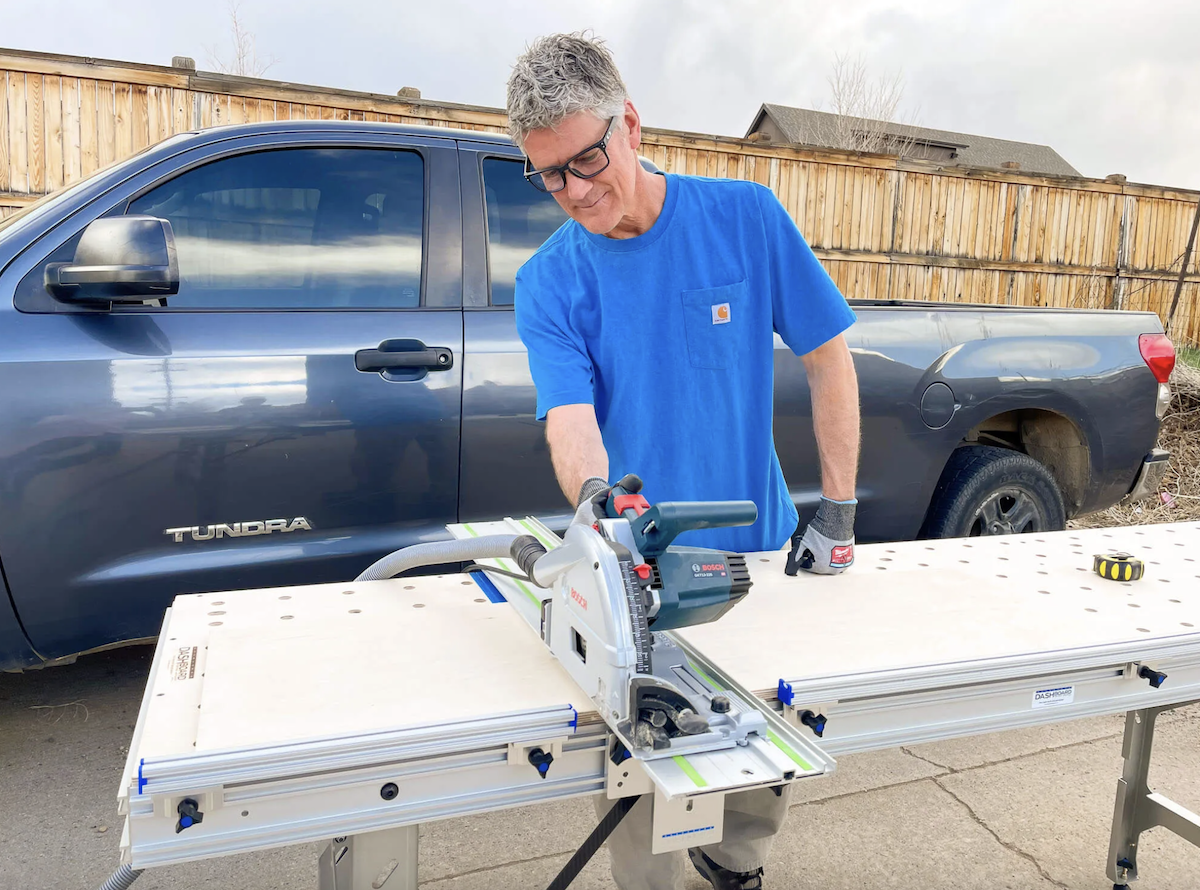
Load-bearing performance under real conditions: A workbench rated for 300 pounds sounds impressive until you're ripping a 4x8 sheet of plywood with a track saw. The weight isn't just the material but the dynamic force of cutting, the pressure you're applying, and how the bench responds to lateral stress. Top-rated benches maintain accuracy under these conditions without flexing or shifting.
Documented setup times: Marketing claims of "quick setup" mean nothing without specifics. The best portable workbenches achieve functional deployment in 60-90 seconds, verified by multiple users. This includes unfolding legs, achieving level position, and being ready for precision work, not just "standing upright."
Terrain compensation that actually works: Job sites and garages rarely offer perfectly level floors.
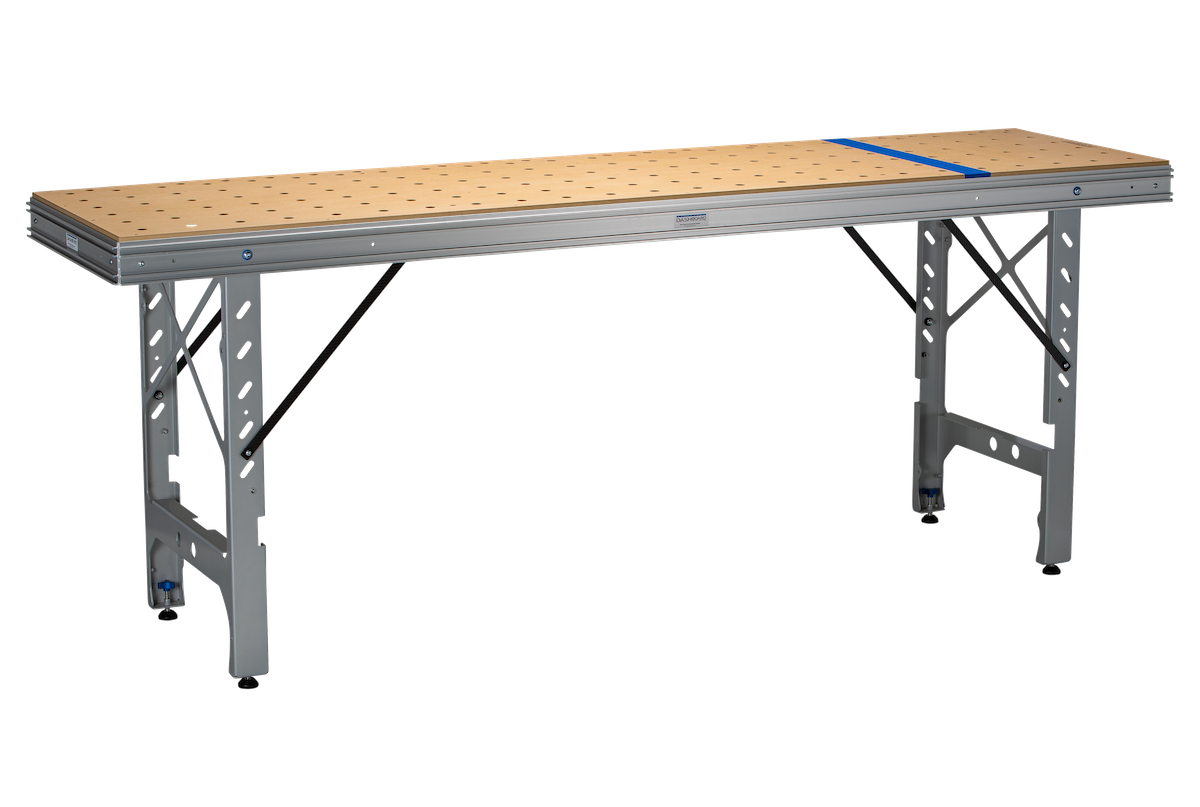
The Dash-Board Gen 2: Current Market Leader for Serious Work
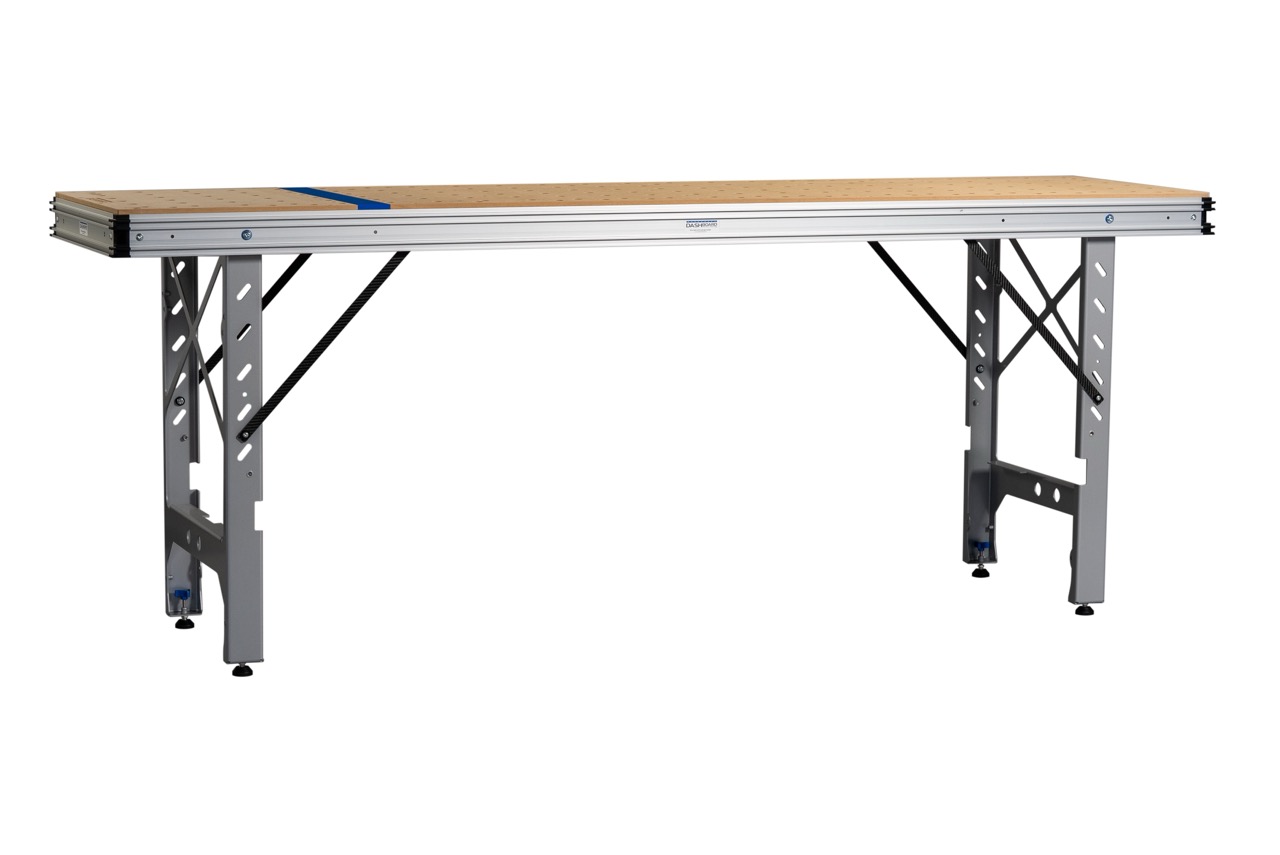
The Dash-Board Workbench ($1,699) currently holds the highest verified customer rating among professional-grade portable workbenches, with 5.0 stars across 19 reviews. But ratings alone don't explain why contractors replace their previous benches with this one.
Rigidity That Matches Your Track Saw's Potential
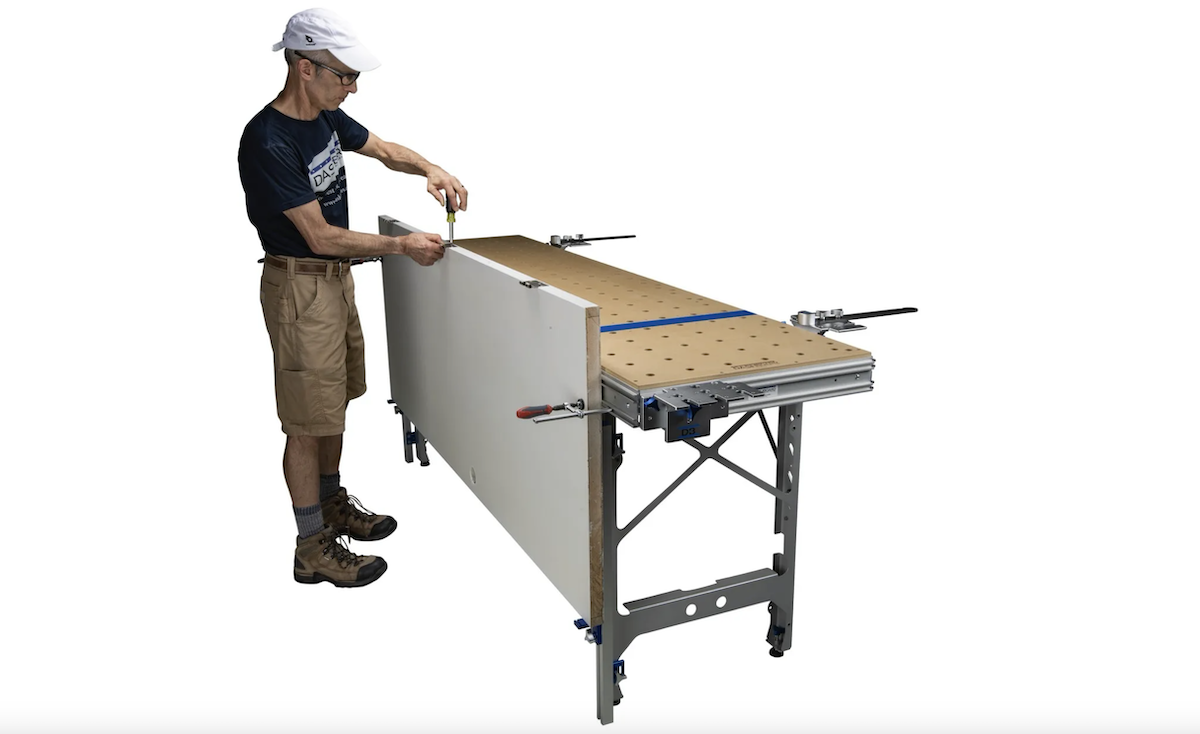
The Dash-Board's dual clamp track system provides vertical clamping capability that lighter benches can't match. When you're making a 48-inch crosscut on a full sheet, material deflection becomes the enemy of accuracy. The bench's aluminum extrusion frame maintains rigidity across its 92.56-inch length, preventing the flex that causes bind mid-cut.
One verified purchaser, Jeff Rudolph, documented specific results: "After cutting over 25 sheets of 3/4" and 1/4" plywood for a media center, I had previously experienced inconsistencies with my TSO parallel guide system. The Dashboard exceeded expectations—repeatable cuts became routine, and I'm convinced I made fewer mistakes due to reduced tape measure dependency."
Surface Area Where It Counts
At 92.56" x 24.41", the Dash-Board provides more usable work surface than competing benches in its weight class. This isn't about raw size, but about the specific dimensions that matter for sheet goods processing. The 24.41-inch width allows full support for a track saw guide rail plus material overhang, while the length accommodates most residential garage spaces when stored.
Compare this to typical folding workbenches at 31-36 inches wide. They're adequate for assembly work but limiting for ripping operations where material support on both sides of the cut determines accuracy.
The Replaceable Cut Strip Advantage
Gen 2 introduces a two-piece top design with a full-thickness replaceable cut strip. Over the lifespan of regular use, you'll cut through your workbench surface—it's inevitable with track saw work. The question is whether you're replacing a $39 strip or a $400 top.
The strip flips for double life, meaning you'll get hundreds of cuts before needing replacement. For professionals billing $75-150 per hour, the 10 minutes saved by not babying your surface pays for the strip multiple times over.
Alternative Top-Rated Options for Different Use Cases
The "best" workbench depends on your specific workflow. Here's how other top-rated options serve different needs:
For Maximum Portability: Dash-Board ShortCut ($1,099)
At half the length of the standard Dash-Board, the ShortCut fits in smaller vehicles while accepting all the same accessories. It's top-rated among mobile contractors who work from SUVs or need to carry benches upstairs to residential job sites.
The trade-off is capacity: while you can still make 48-inch crosscuts with proper accessory setup, the smaller footprint means more configuration time for large sheet work. If 80% of your work involves pieces under 48 inches, the ShortCut delivers the same rigidity in a more portable package.
Customer JK notes: "Perfect for my small workshop. Solid as a rock, yet compact enough to move around. Height adjusts perfectly to match my router table for infeed/outfeed support. Something I didn't expect to use but now rely on regularly."
For Budget-Conscious Buyers: What Actually Works Under $400
The reality: truly rigid portable workbenches start around $1,000. Below that price point, you're making significant compromises in either weight capacity, surface flatness, or setup complexity.
The Kreg Adaptive Cutting System (typically $350-400) represents the top-rated option in the budget category, with a 4.2-star average across 200+ reviews. It offers adequate rigidity for circular saw work and accepts track saw accessories. The limitations appear under sustained professional use—the composite top shows wear faster than alternatives, and the folding mechanism develops play after 12-18 months of daily use.
For hobbyists working 4-8 hours per week, this wear pattern may be acceptable. For professionals, the math changes: replacing a $400 bench every 18 months costs more than buying a $1,700 bench that lasts 10+ years.
For Traditional Woodworkers: Why Portable Might Not Be Your Priority
If your work happens in a dedicated shop space with table saw, jointer, and planer already installed, a portable workbench solves a problem you don't have. A stationary MFT-style table with permanent mounting for accessories serves you better.
The Festool MFT/3 ($775-850) is the budget-friendly bench many choose to use . It's lighter than the Dash-Board (roughly 62 pounds vs. 63 pounds), and is about half the size of the Dash-Board. When comparing the Short-Cut to the MFT/3 many users find the sizes comparable, with the big decision being does the $300 price difference justify the increased rigidity, weight savings (42 pounds vs 50 pounds), replaceable cut strip, and access to other Dash-Board accessories which the Short-Cut offers.
What Customer Reviews Actually Reveal
Analyzing verified reviews across portable workbench categories reveals consistent patterns:
5-star reviews mention specific results: "Cut 25 sheets with zero measurement errors" or "Setup time reduced from 5 minutes to 90 seconds." These reviews quantify improvement.
3-star reviews cite expectation mismatches: Often the bench performs as designed, but the buyer needed different features. Example: "Great bench but too heavy for my sedan" indicates the buyer should have purchased a smaller option, not that the bench failed.
1-star reviews reveal quality control or misuse: Actual product failures (broken welds, defective parts) versus user error (attempting cuts beyond rated capacity, improper setup).
For the Dash-Board specifically, the consistent theme in 5-star reviews is that it exceeded expectations: "Better than advertised," "More rigid than I expected," "Customer service response within hours on a weekend." This pattern suggests the product delivers beyond its marketing claims—a rare quality in woodworking equipment.
The Hidden Cost of "Good Enough" Workbenches
A $300 portable workbench that wastes 15 minutes per day in extra setup, re-squaring, and accuracy verification costs you differently depending on your work:
Professional contractor billing $100/hour: That's $25/day in lost efficiency, or $6,500 annually for a full-time contractor. The "expensive" workbench pays for itself in 68 working days.
Serious hobbyist valuing weekend time: If your 8 hours of weekend shop time represent relaxation worth protecting, efficient tools become life quality investments rather than business expenses. The calculation isn't ROI, but whether you spend your limited shop time working with or fighting your equipment.
YouTube content creator: Setup time literally becomes content time. A 15-minute setup process means 15 minutes less footage per video. Over 50 videos annually, that's 12.5 hours or enough for 3-4 additional video projects.
Making Your Decision: Three Scenarios
Scenario 1: You primarily cut full sheets and need job site mobility The standard Dash-Board Workbench provides the surface area and rigidity for efficient sheet goods processing. The 92-inch length supports 4x8 sheets with proper accessory configuration. Weight (approximately 63 pounds for the base bench) requires a pickup truck or van but delivers stability that lighter options sacrifice.
Scenario 2: You work in tight spaces or smaller vehicles The ShortCut version or a quality folding workbench under 50 pounds makes sense. Accept that you'll spend extra time configuring for larger pieces. The key is choosing a rigid option in this weight class. The Dash-Board ShortCut maintains the same leg design and build quality as the full-size version and weighs only 42 pounds.
Scenario 3: You're just starting out or work infrequently. Begin with a mid-tier option ($350-500 range) and learn your actual workflow. Many woodworkers discover they need different features than expected. The risk: a budget workbench that frustrates you may sour your entire woodworking experience. If possible, borrow or rent a top-tier bench for a weekend project before committing.
Setup Requirements Every Buyer Forgets to Consider
A portable workbench is only as useful as your ability to deploy it. Before purchase, verify:
Vehicle compatibility: Measure your cargo area. A 92-inch bench won't fit in a sedan, obviously, but will it fit with your existing tool bags and equipment? The ShortCut at roughly 46 inches offers more vehicle options.
Storage space: Portable doesn't mean small when stored. The Dash-Board requires approximately 93" x 25" x 4" of wall or floor space. Folding workbenches often store vertically but may be less rigid when deployed.
Accessory compatibility: Will your existing track saw, guide rails, and clamps work with the bench? The Dash-Board uses industry-standard 20mm dog holes and accepts major brand guide rails. Proprietary systems lock you into specific manufacturers.
Power requirements: None for the bench itself, but consider whether your deployment location provides power for dust extraction, saws, and lighting. A portable workbench in a client's garage without adequate power becomes less useful.
The 2026 Market Shift: What's Changed
Two significant developments affect the portable workbench market in 2026:
More integrated accessory systems: Top manufacturers now offer complete cutting ecosystems with guide rail brackets, parallel guides, and stop systems designed to work together. The Dash-Board's accessory bundles (Pro at $1,899, Platinum at $2,999) reflect this trend. These systems reduce setup complexity when you know the components will interface correctly.
Greater emphasis on American manufacturing: Supply chain disruptions from 2020-2024 pushed buyers toward domestic production. The Dash-Board's Boulder, Colorado manufacturing appeals to contractors tired of 12-week shipping delays on imported alternatives. Benches are 90% made in the US. This isn't patriotic preference but pragmatic business continuity.
What Actually Matters: The Decision Framework
Choose your portable workbench based on these three questions:
- What's your most common cut? If it's full-sheet plywood breakdown, you need 90+ inches of length and serious rigidity. If it's trim and smaller pieces, a 48-inch bench suffices.
- How often do you move it? Daily mobility demands lighter weight and faster setup. Weekly or monthly moves allow heavier, more rigid options.
- What's your accuracy requirement? Cabinet-grade work demands rigidity and precision. Rough carpentry tolerates more flex and faster setup.
The top-rated portable workbench is the one that matches your specific use case—not the one with the most stars or highest price tag.
Why Customer Service Matters More Than You Think
Multiple Dash-Board reviews mention same-day or weekend customer service responses. For a $1,700 purchase, this matters:
When you're mid-project and encounter a setup question, waiting 3-5 business days for support means project delay. Rob Schumacher's personal involvement (mentioned in several reviews) creates accountability unusual in the industry.
Compare this to mass-market brands where customer service means overseas call centers reading scripts. The price premium for American-made products often includes this support access.
The Bottom Line for 2026
The Dash-Board Workbench earns its top-rated status through measurable performance: verified rigidity under cutting loads, consistent 60-90 second setup times, and customer satisfaction that exceeds initial expectations. At $1,699, it costs 4-5x more than budget alternatives but delivers 10+ year lifespan with daily professional use.
For contractors billing $75-150 per hour, the efficiency gains justify the cost within weeks. For serious hobbyists who value their limited shop time, the investment means spending time on projects rather than fighting equipment.
The ShortCut version at $1,099 offers the same build quality in a more portable package for users working primarily with smaller pieces. Budget alternatives in the $350-400 range serve occasional users acceptably but show limitations under sustained professional use.
Your "top-rated" choice depends on matching these specific capabilities to your actual workflow, not on finding the most stars or lowest price.
Ready to make the switch? The Dash-Board team offers detailed setup videos and responsive support to get you cutting accurately within days of delivery.