Your Cart
Product Title
$0
$0
-
+
Your cart is empty.
Add Discount Code?
Add Cart Note?


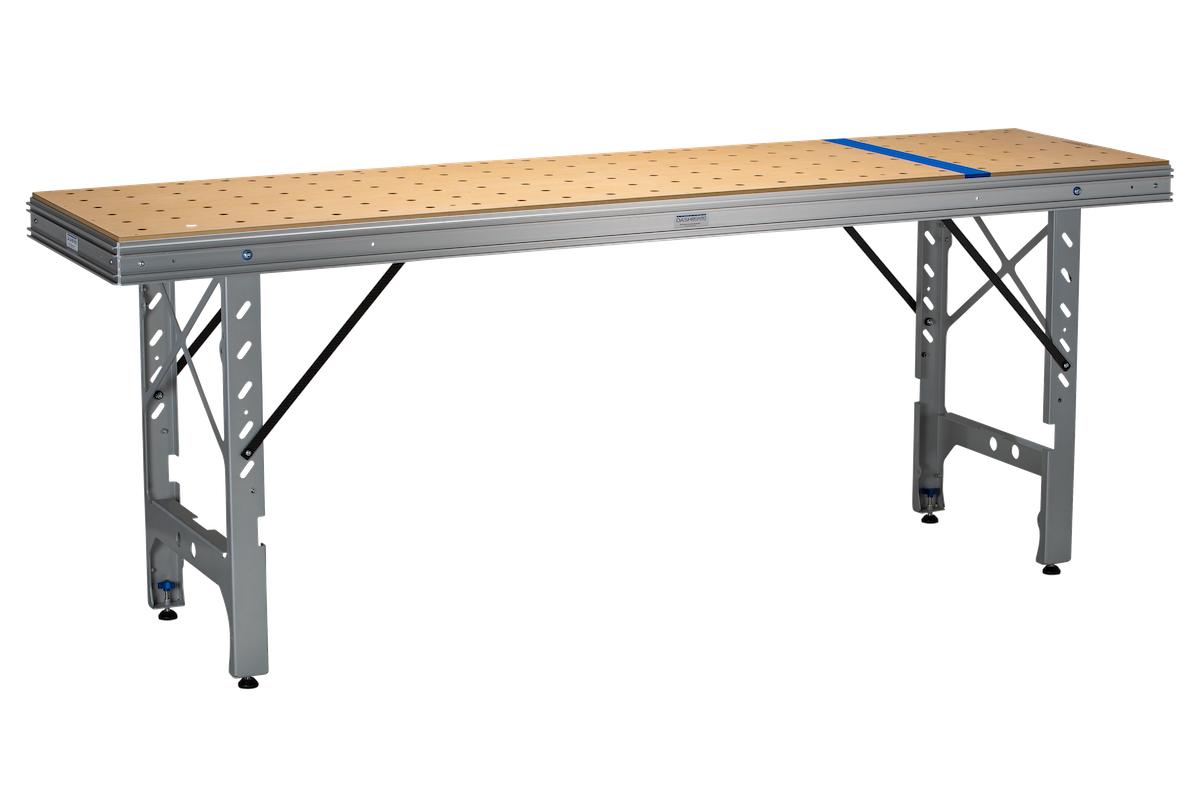
A 10x12 garage, basement corner, or apartment balcony doesn't mean you sacrifice precision woodworking. The constraint is space, not capability.
Here's how to choose a workbench that maximizes small space potential without compromising build quality.
Small workshop success depends on three factors: equipment that stores compactly, surfaces that serve multiple functions, and workflow that doesn't require constant reconfiguration. A workbench dominates floor space when deployed, so it must justify that footprint through versatility.
The numbers define "small space" differently for different users. A hobbyist working in a 100-square-foot corner needs different solutions than a professional cabinet maker in a 2000-square-foot shop. But both face the same core challenge: stationary tools occupy permanent floor space while portable solutions require storage when not in use.
Customer Jack K Clark's situation typifies small space constraints: "This is the perfect replacement for the MFT/3 in my very small shop space." The ShortCut workbench he references occupies roughly 46 inches of length when deployed, half the footprint of full-size benches, while maintaining the rigidity needed for precision work.
Before evaluating workbenches, document your actual available space. Not the room dimensions, but the usable workspace accounting for doors, windows, stored items, and movement clearance.
Deployment footprint: A workbench needs clearance beyond its physical dimensions. A 46-inch bench requires roughly 54-60 inches total to account for material overhang during cuts.
Storage footprint: Folding workbenches store vertically (requiring wall mounting capability) or horizontally (occupying floor space). A 46-inch folding bench stored against a wall needs 6.5 inches of depth including mounting hardware. Horizontal storage means the bench occupies floor space permanently.
Material staging area: Woodworking requires space adjacent to your bench for material before and after cutting. A full 4x8 plywood sheet demands at least 50 inches of length and 100 inches of width total (bench plus staging area). If processing only smaller stock, you can work in tighter quarters.
Safety clearance: OSHA recommends 36 inches of clearance around power tool work areas. In micro-workshops, this shrinks to "enough room to not trip or bump stored items during operation." Minimum practical clearance is 18-24 inches behind the operator during cuts.
Measure your space and subtract immovable obstacles:
A 12x20 garage typically yields 60-80 square feet of actual working space after accounting for garage door operation, vehicle clearance, and storage shelving.
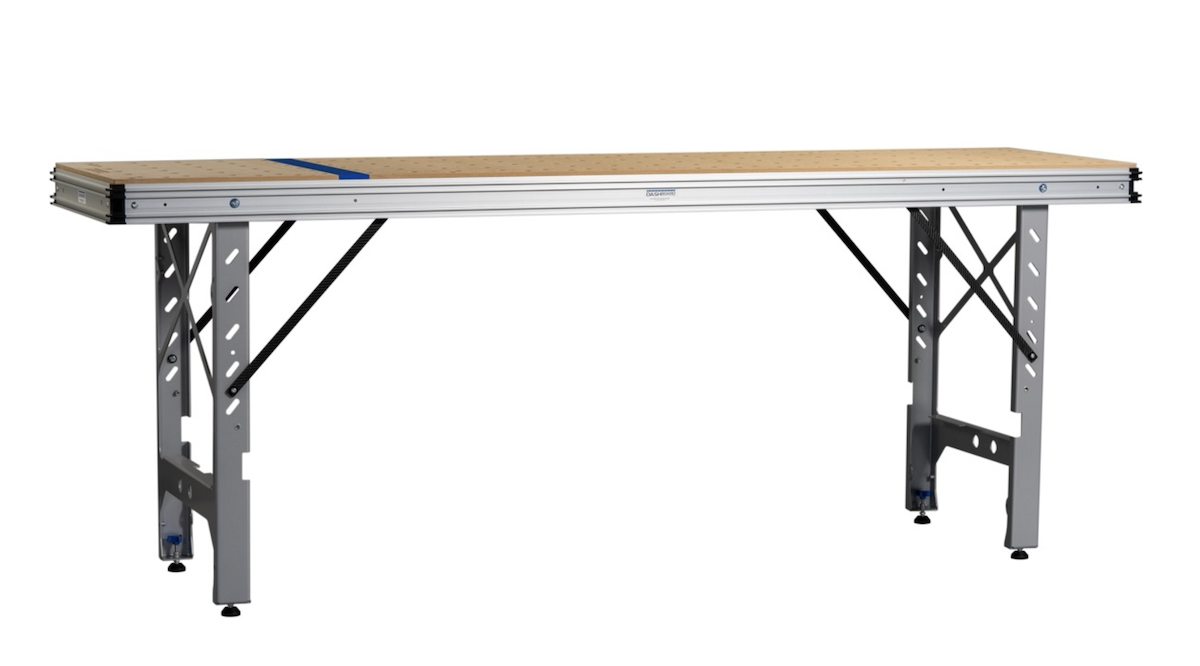
The Dash-Board ShortCut Workbench ($1,099) represents purpose-built small space design. At roughly 46 inches long (half the length of the standard 92-inch Dash-Board), it fits spaces where full-size benches can't.
Stephen LaRoche's experience captures the trade-off: "I am amazed at the construction and how light and sturdy it is. I can move it about in my garage with ease because it's so light, and if I want to fold it up and take it someplace else it's so easy."
The ShortCut weighs approximately 42 pounds (vs. 63 for full-size), making single-person setup and storage genuinely practical. Peter Michaelson confirms the rigidity isn't sacrificed: "Well-engineered, rugged, very stable and well-built."
The ShortCut isn't the only option for constrained spaces. Understanding alternatives helps match solution to specific constraints.
Budget folding benches like the Black+Decker Workmate series collapse to 4-6 inches thick for wall storage. They serve occasional users making fewer than 10 cuts monthly. The limitations become obvious under sustained use: composite tops wear quickly, folding mechanisms develop play after 6-12 months, and rigidity suffers compared to dedicated woodworking benches.
These excel for assembly tasks, light carpentry, and hobbyists who need a workspace 2-3 times monthly. They fail for track saw work requiring precision or professionals billing hourly who can't waste time fighting bench deflection.
Wall-mounted benches that fold down from vertical storage appeal to extreme space constraints. They occupy zero floor space when stored, deploying only during use. The construction requires solid wall attachment capable of supporting 200+ pounds at a 90-degree cantilever.
The disadvantages compound: installation requires stud location and serious mounting hardware, portability is zero (you've permanently modified the space), and deflection at full extension limits heavy cutting operations. They suit general carpentry and assembly work better than track saw operations.
Rolling carts with 24x36 inch work surfaces offer storage and workspace in one unit. Tools store in drawers below, the top provides a work surface, and casters enable repositioning. Maximum versatility comes at the cost of rigidity—casters and drawer weight mean the structure can't match solid bench legs for cutting stability.
These complement rather than replace dedicated workbenches. Use them for tool storage and light assembly while maintaining a proper bench for precision cutting.
Some small space users choose full-size benches (like the 92-inch Dash-Board) and solve storage through vertical wall mounting or overhead ceiling hoists. This works when workspace height exceeds 10 feet and wall construction supports the weight.
The advantage is unrestricted capability during use. The disadvantage is setup complexity—mounting/dismounting a 63-pound bench overhead isn't quick. This suits users who deploy their bench for multi-day projects rather than quick one-off cuts.
A compact workbench's real value emerges through accessory integration. The right additions transform 46 inches of bench into a system handling full-sheet processing.
Track Stars (sold in pairs, $299) mount to bench edges, extending support beyond the physical bench dimensions. In small space setups, they enable:
JK's review emphasizes their utility: "Worth the wait. This is an amazing upgrade from a regular MFT. I also appreciated the options provided to support my Mafell system. The table is solid as a rock, yet compact enough to move around."
Guide Rail Brackets ($359) lock your track saw rail perpendicular to a fence, removing the 2-3 minutes typically spent squaring each crosscut. In small spaces where efficiency matters, this time savings compounds across multiple cuts.
The brackets also enable breaking down full sheets on a compact bench by making accurate, repeatable cuts without tape measure verification. Set the stop once, make identical cuts indefinitely.
The Rip Gauge ($129) replicates your saw blade kerf, allowing stop setup based on finished dimensions rather than calculating blade thickness. Parallel Guides (set of 2, $129) provide reference surfaces for accurate rips without measuring.
Together, these eliminate nearly all tape measure use during cutting operations. This matters in small spaces where there's limited room to maneuver 25-foot tape measures around full sheets of plywood.
Small workshops succeed through intelligent workflow rather than equipment quantity. These patterns maximize limited square footage:
Mount French cleats at 48-inch intervals along walls. Store accessories, guide rails, and tools on matched cleats for quick access. The ShortCut workbench itself can hang on heavy-duty cleats when not in use, occupying ~7 inches of wall depth.
This system outperforms cabinets and shelving in micro-workshops because it's infinitely reconfigurable and maintains clear sight lines to stored items.
Process sheet goods outside the shop when possible. Make rough breakdown cuts outdoors or in the driveway, bringing dimensioned pieces into the workspace for final cuts. This prevents maneuvering full sheets in 100-square-foot spaces.
For projects requiring indoor work, establish material flow: raw materials enter near the door, move through the cutting area, and exit near the door as finished pieces. Avoid workflows that require rotating full sheets 180 degrees mid-process.
Your workbench serves cutting, assembly, and finishing. Plan accessories that store quickly to convert between functions. A track saw setup dismounts in 30 seconds, clearing the surface for assembly work.
Small space shops can't afford single-purpose surfaces. Every tool must justify its footprint through multiple applications.
Some users maximize small spaces by keeping workbenches mobile. The ShortCut deploys in a garage or driveway for cutting operations, then stores vertically inside. Weather permitting, this quintuples effective workspace.
Gabriel Perez adopted this workflow: "This allowed me to completely get rid of my table saw. My shop is very small and my table saw had to be in the middle of it to account for the infeed and outfeed distance. The dashboard system has provided better and cleaner cuts but wow, the dead-on repetition and accuracy of every cut is just so nice."
These proven configurations work in different space constraints:
Jack's situation represents typical garage workshop constraints. He needed precision cutting capability in the corner of a garage still housing vehicles. The ShortCut provided sufficient capacity for his projects while storing vertically when the garage needed vehicle access.
The key insight: perfect workshop layout matters less than having equipment that adapts to space availability. Some weekends, the full garage converts to a workshop. Others, the bench stores to accommodate vehicles.
Stephen LaRoche's review describes another common scenario: "I am a hobby wood carver. I can move it about in my garage with ease because it's so light. I was using vibrating tools on it and the table did not move. It's solid!"
Even for non-traditional woodworking like carving, the stable work surface matters. The ShortCut's rigidity accommodates vibrating power carving tools without walking across the floor, while portability enables moving the setup to follow natural light or seasonal temperature changes.
Though not explicitly referenced in reviews, some users deploy compact workbenches on apartment balconies with weather protection. This requires:
The ShortCut's 42 pound weight makes balcony deployment realistic where 70-pound alternatives wouldn't be.
The temptation in small spaces is buying several inexpensive tools that "seem" to cover all needs. A $150 folding bench plus a $200 miter saw stand plus a $100 work table equals $450 spent on equipment that all lacks rigidity and takes up more combined storage space than one $1,099 ShortCut.
Quality equipment costs more upfront but occupies less space and lasts longer. The ShortCut bench with proper accessories replaces multiple single-purpose tools.
First-time small shop builders often plan for deployed workspace but forget that accessories, guide rails, clamps, and safety equipment need storage too. A 100-square-foot shop needs 15-20 square feet dedicated to organized storage or you'll spend more time finding tools than using them.
Buying the largest affordable bench without measuring available space creates problems. A 92-inch bench in a 96-inch space leaves 2 inches of working clearance on each end, making material handling nearly impossible.
Better to choose the right-sized bench for your space and invest the remaining budget in accessories that multiply capability.
Choose your small space workbench based on these decision points:
If your space is under 100 sq ft and budget allows: The ShortCut workbench provides maximum rigidity and capability in minimal footprint. The $1,099 investment buys equipment lasting 10+ years of regular use.
If space exceeds 100 sq ft but you want portability: The ShortCut still makes sense. The reduced weight compared to full-size benches (42 lbs vs 63-75 lbs) means easier single-person repositioning.
If budget is constrained under $400: A quality folding workbench serves occasional users. Accept that rigidity and longevity will be limited. Budget Husky or Keter folding benches ($150-200) provide adequate surfaces for assembly and light cutting.
If projects never exceed 36-inch material width: Even budget benches serve this use case. The limitations of cheaper options (deflection, wear) matter less on smaller work pieces.
If professional income depends on efficiency: The ShortCut pays for itself through time savings. Michael M's comparison after switching from Kreg ACS: "It's better designed and easier to make accurate and repeatable cuts."
Woodworking in limited square footage has never been more viable. Modern portable workbenches like the ShortCut provide precision previously requiring dedicated 400+ square foot shops. The constraint shifts from space to intelligence: smart workflow beats square footage.
The ShortCut Workbench at $1,099 represents purpose-built small space engineering. It accepts all standard Dash-Board accessories, maintains the rigidity needed for professional work, and stores in half the space of traditional benches. The 5.0 star rating across 8 reviews (100% five-star ratings) indicates consistent performance across different users and applications.
Budget alternatives exist but sacrifice the precision and durability that make portable benches worthwhile. As Peter Michaelson concluded: "While the table is expensive compared to others on the market, the quality of the materials, design, robustness and adaptability are unmatched by other tables and more than offset its cost."
For micro-workshop users making more than occasional cuts, the investment in proper equipment determines whether the space becomes productive workspace or perpetual frustration. The ShortCut proves that a small footprint doesn't demand compromised capability.
Your best work just got possible in whatever space you have.
Ready to maximize your small space? The ShortCut Workbench ships with complete setup instructions and accepts the same accessory ecosystem as the full-size Dash-Board.
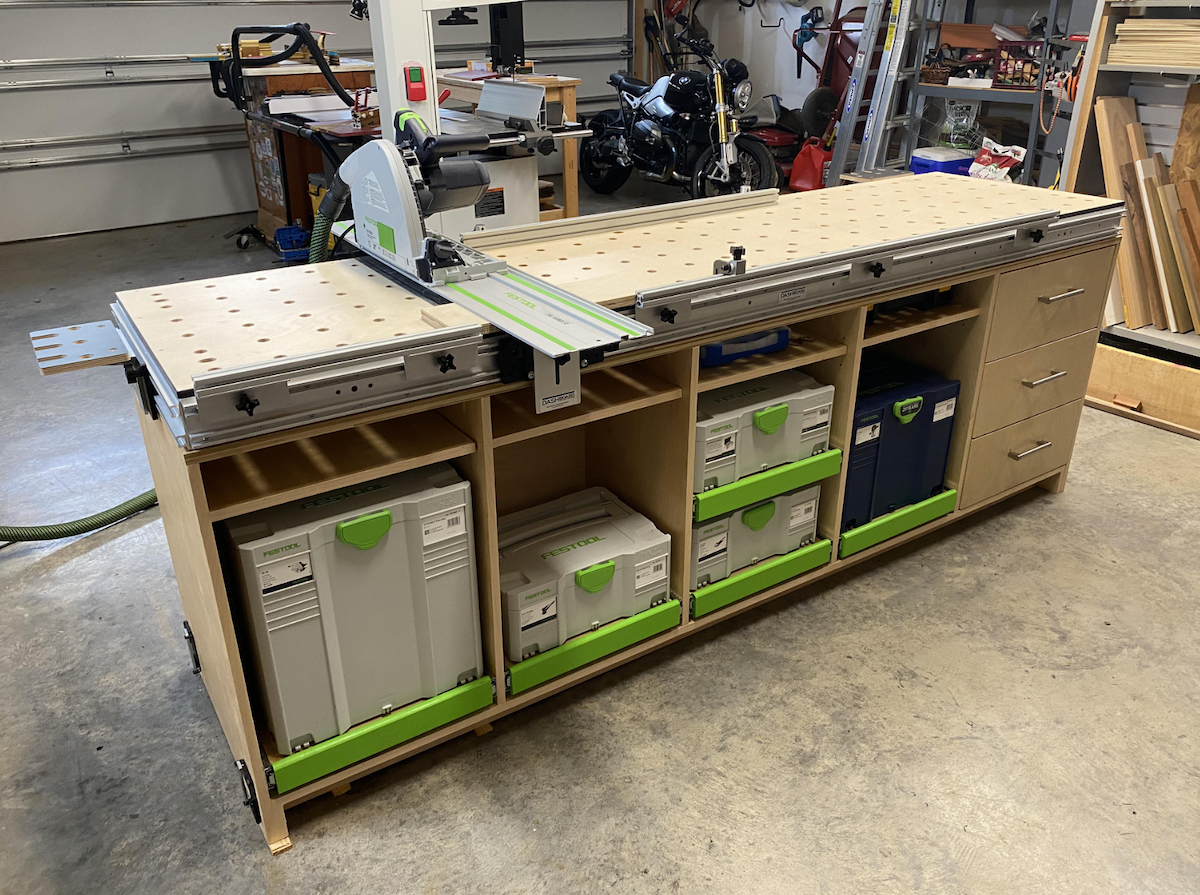
An MFT is a Multi-Function Table built around a perforated 20mm hole grid and guided cutting, letting you crosscut, clamp, sand, rout, and assemble all on one portable surface. It's a strong fit if you do precision crosscuts and sheet goods work, though drift and rigidity issues in some designs are why many owners upgrade to sturdier aftermarket benches and brackets.
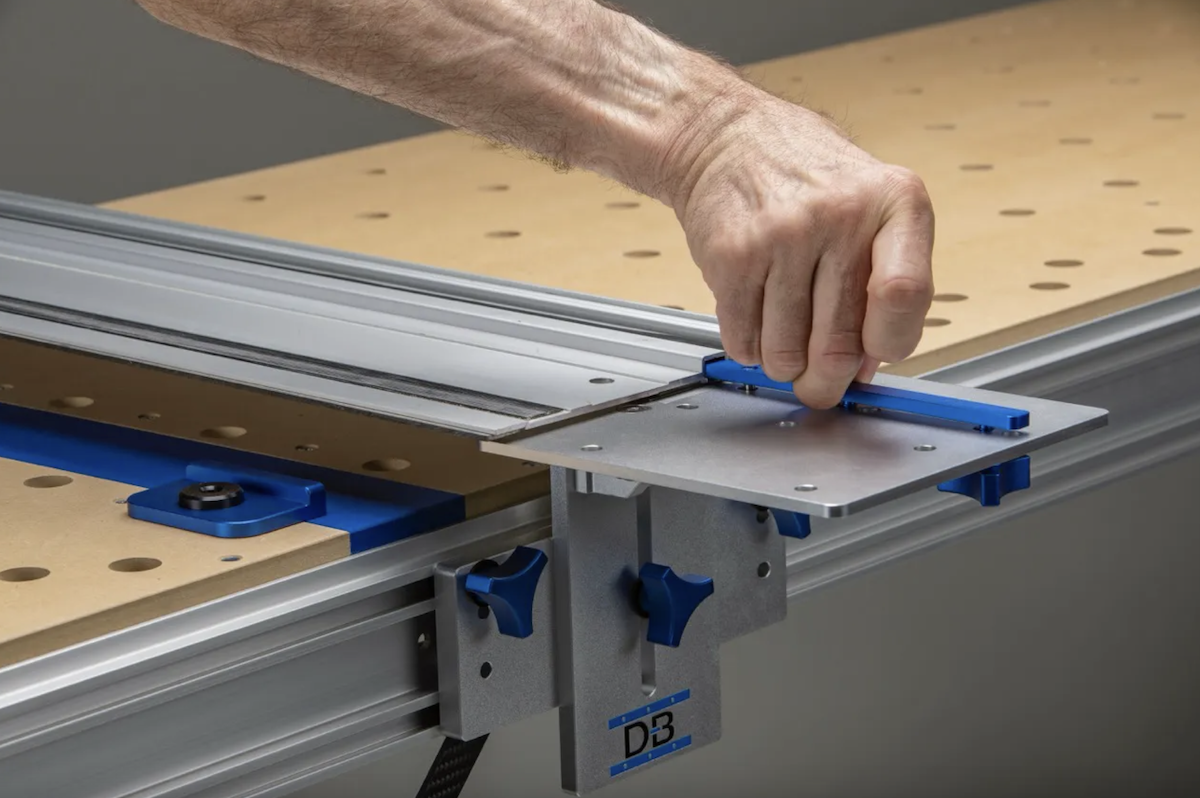
Track saw rail slip almost always comes down to dirty or worn grip strips, dusty or slick surfaces, or not enough downward pressure, and cleaning the strips plus clearing the workpiece solves most cases instantly. For repeatable, no-slip accuracy, clamps work but a fixed bench bracket system locks the rail in place for good.
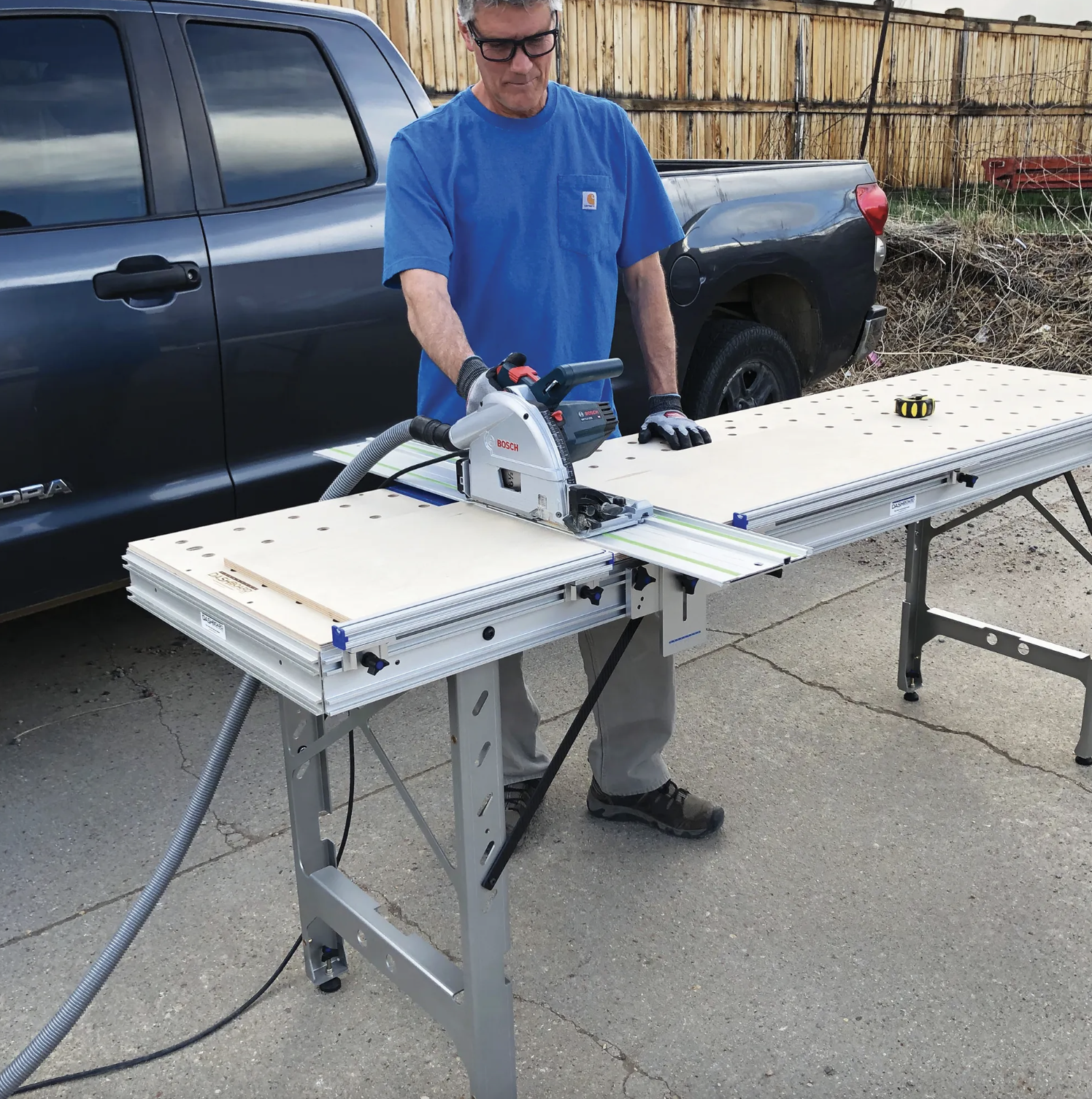
Scribing transfers the wall's true contour onto a cabinet edge so it fits tight against uneven walls and floors, and a portable bench that levels on the spot gives you the stable reference needed to mark and cut that line accurately. Level the piece, scribe to the widest gap, trim with the work fully supported, then test and refine until the fit sits flush.
Solid workholding is the whole game with edge banding, and a rigid portable bench with the right clamping accessories lets you present a panel flat or vertical for clean, even application. Lock the panel down, apply the banding steadily, then trim flush once the bond sets for crisp, consistent edges every time.

Straight edge cutting tools like track saws, guide rails, and guide rail brackets give woodworkers a fixed reference so cuts stay true instead of drifting off line. A rigid bench, squared rail, and the right accessories (fences, flip stops, parallel guides) turn one accurate cut into consistent, repeatable results every time.

Small angular errors don't cancel out — they stack. On a cabinet with dozens of joints, crosscuts that are off by even a fraction of a degree show up at assembly when fixing them means going back to the saw. This post covers how mechanical squaring with a track saw workbench eliminates the variable that causes the problem.
