A trim carpenter working a remodel last month told me he'd gone through three portable benches in two years. Each one started fine and degraded quickly. The legs loosened. The tops warped. The surface that was "stable enough" on day one turned into something he had to fight by month three. He wasn't asking for much. He just wanted to cut straight and not think about whether his bench was part of the problem.
That's the gap most mobile workbenches fall into. They're mobile, sure. But they're not workbenches in any meaningful sense. They're folding tables with aspirations.
The Problem with "Portable"
Most products marketed as mobile workbenches are designed around one priority: collapsing into a small package. That's a reasonable starting point, but it tends to dominate every other design decision. The legs fold with scissor mechanisms that flex under lateral force. The tops are thin to save weight. The height is fixed. The surface is bare, with no way to secure material or mount accessories.
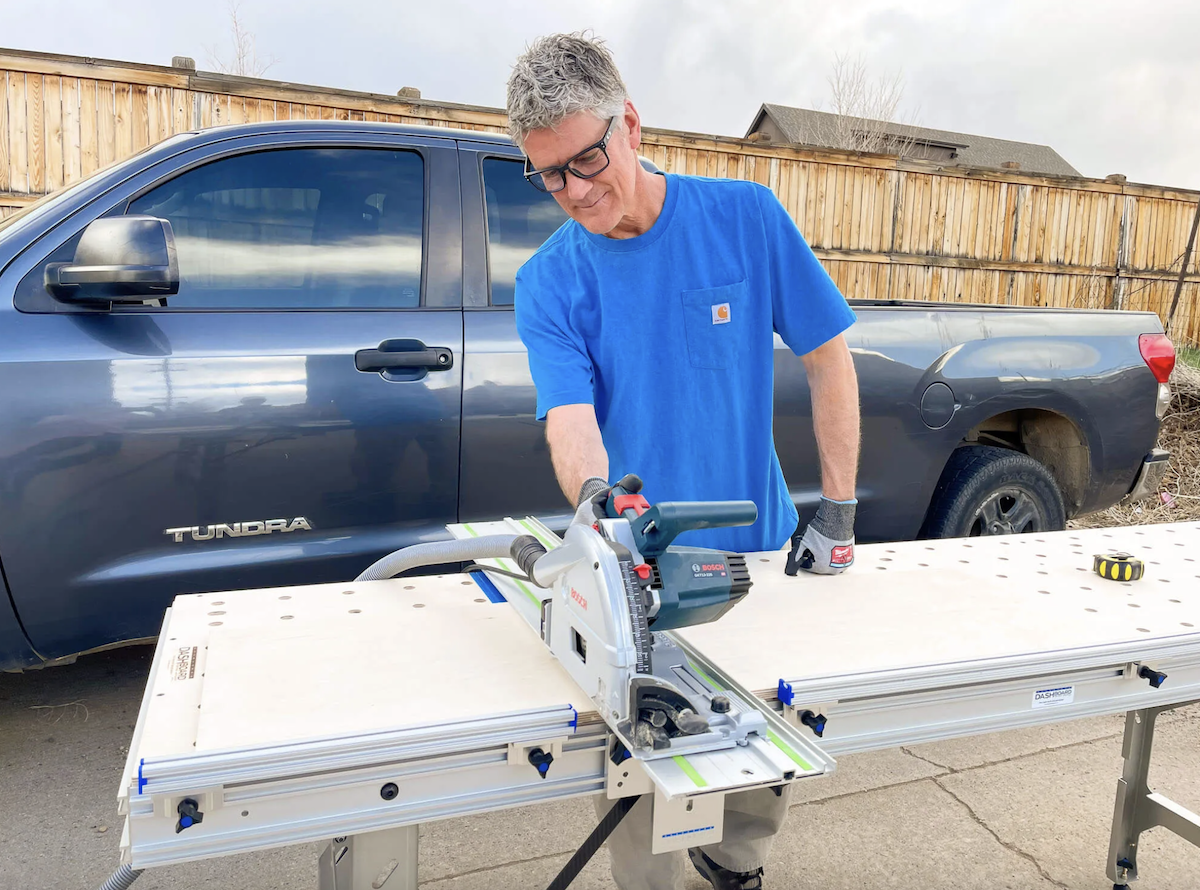
You can set a board on one of these benches and make a mark. You can do light assembly work. But the moment you push a track saw through a sheet of plywood and feel the whole surface deflect under load, you realize the bench wasn't designed for cutting. It was designed for folding.
A mobile workbench built for serious woodworking needs to solve a different problem: how do you get shop-level rigidity into something one person can transport and set up quickly?
What the Dash-Board Gets Right
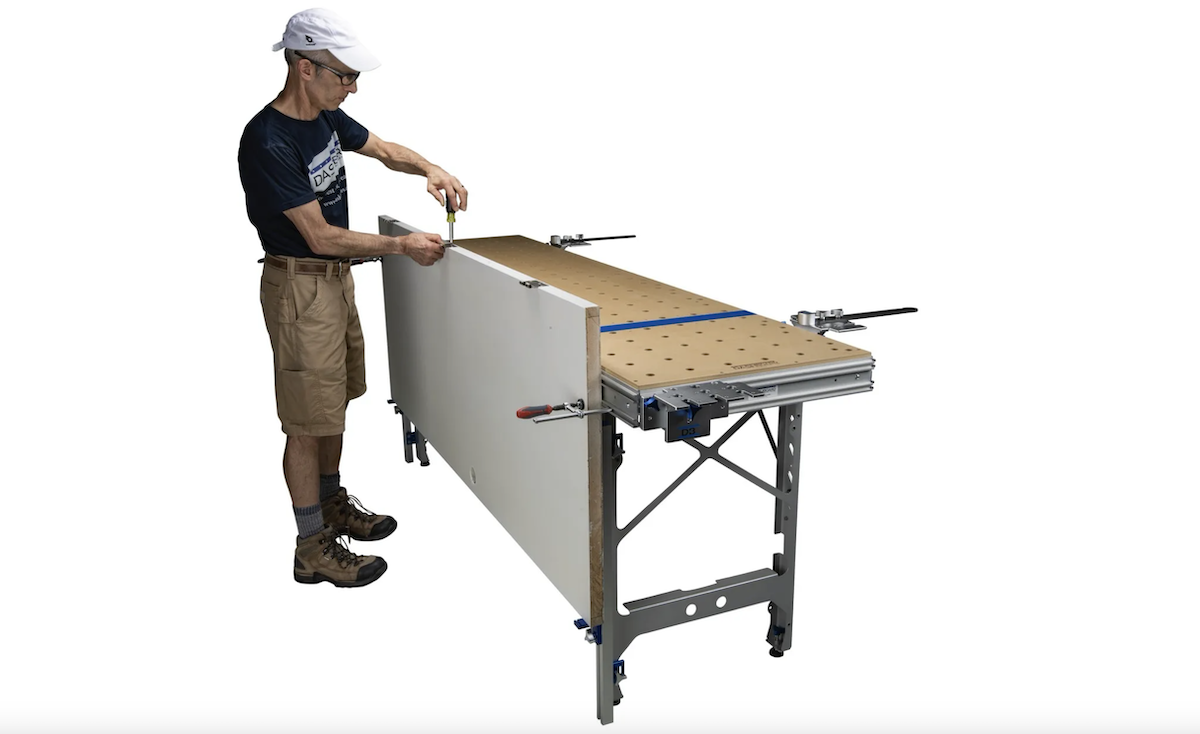
The Dash-Board Workbench ($1,699) was designed by Rob Schumacher in Boulder, Colorado. Rob spent years as an independent trim carpenter and cabinet installer before spending nearly a decade prototyping what became the Dash-Board system. The design priorities came directly from job site frustrations: the bench had to be rigid under real cutting loads, fast to deploy, and capable of handling full sheets without auxiliary support.
The work surface measures 92.56" x 24.41" at a working height of 35.5". That height is optimized for track saw work and comfortable standing posture during long cutting sessions. Each leg has an independent leveler that adjusts by hand, compensating for sloped garage floors, cracked driveways, or uneven job sites. The feet also pivot on their mounts to conform to angled surfaces.
Setup takes about a minute. Unfold the legs, lock them, dial in the levelers, and you're working. No tools, no hardware, no fiddling.
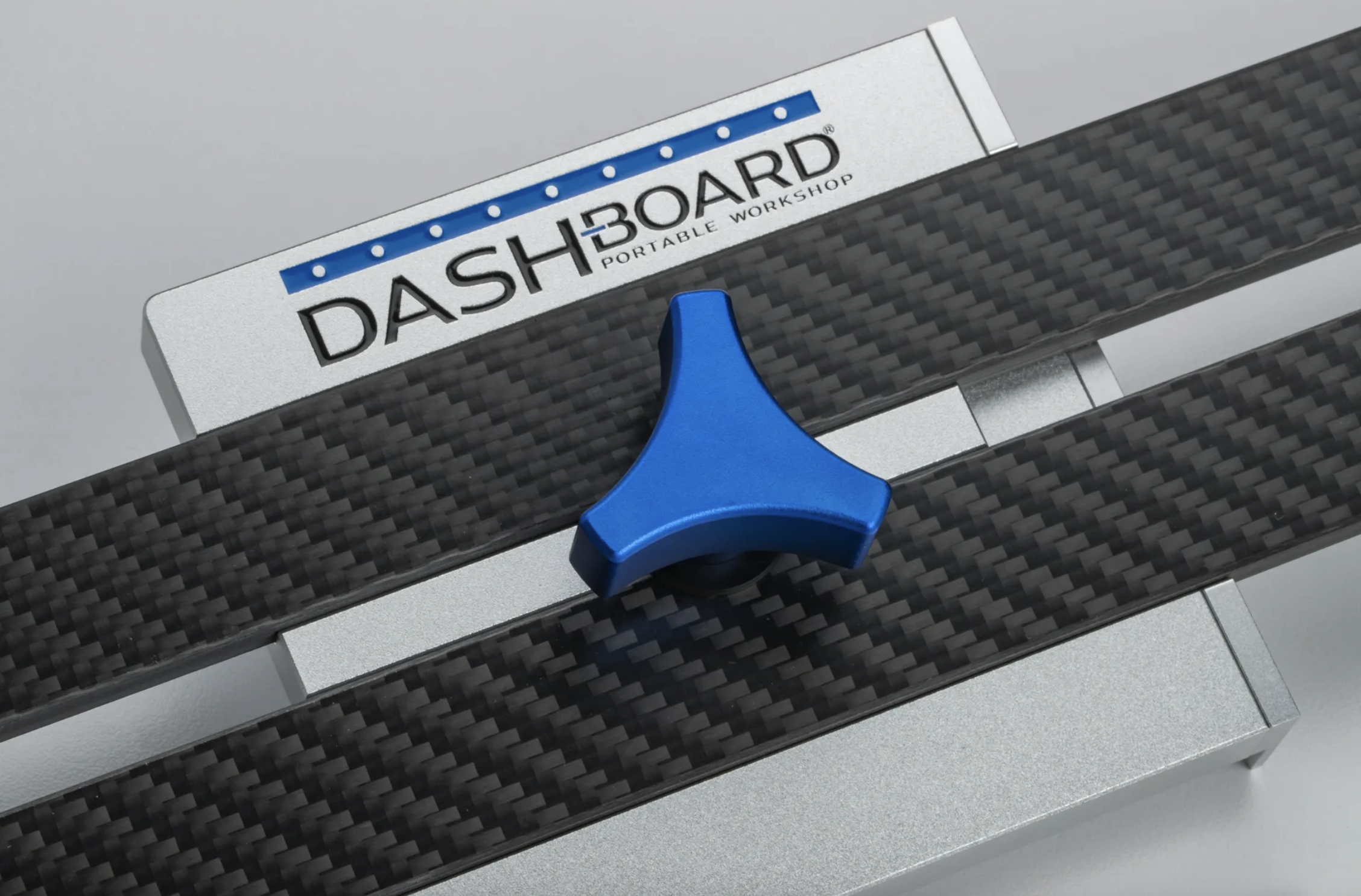
The bench top features a Gen 2 two-piece design with a replaceable cut strip. When your track saw inevitably cuts into the surface, the strip absorbs the damage. Flip it over for a fresh side. When both sides are spent, swap in a new strip for $33 to $39 instead of replacing the entire top. Dash-Board was the first to integrate a replaceable cut strip into a portable workbench.
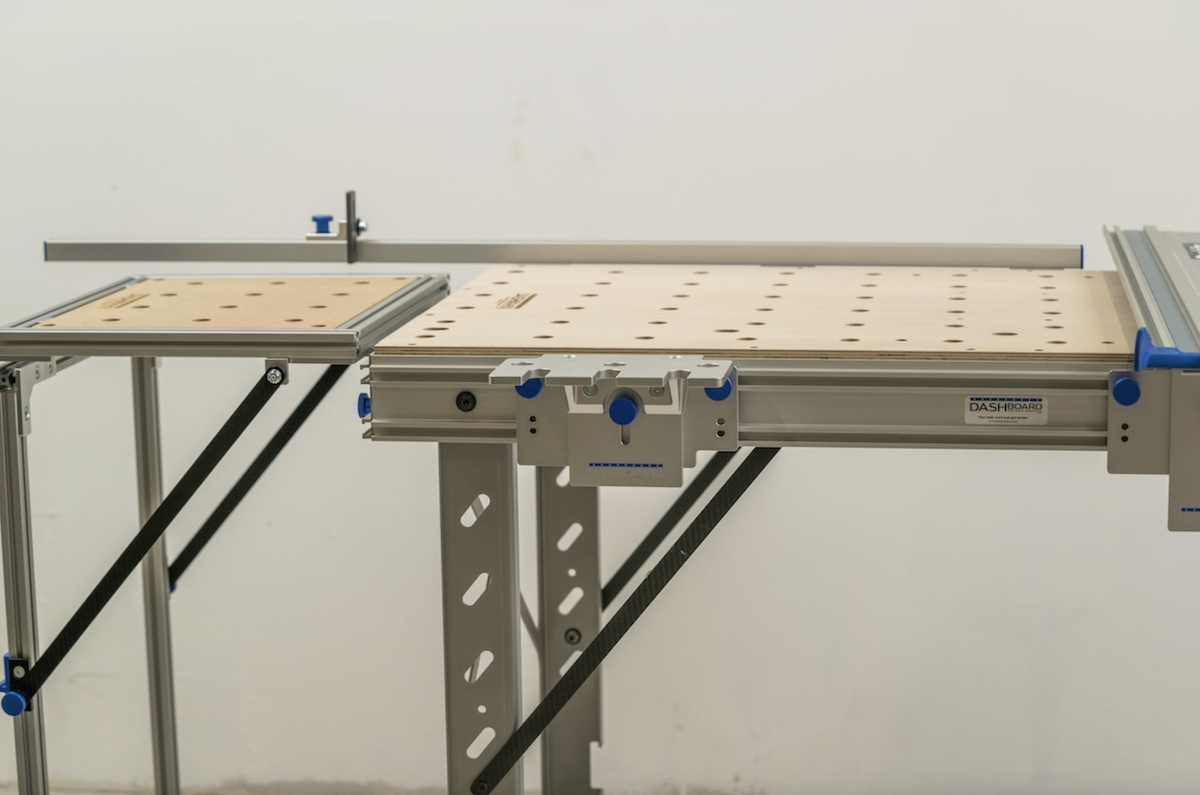
Two clamp tracks run along the sides of the bench. These T-tracks are the backbone of the accessory system. Guide Rail Brackets, Track Stars, and Outriggers all mount into these clamp tracks using T-bars and T-bolts, which means they attach to the side of the bench and can slide into any position along its length. The benchtop surface has a grid of 20mm dog holes for mounting fences, parallel guides, bench dogs, and SpiRail Dogs. These are two separate systems that work together: the clamp tracks handle side-mounted accessories, and the dog hole grid handles top-surface accessories.
With the right configuration of accessories and a track saw, the Dash-Board handles rips up to 100" (2540mm) and crosscuts over 48" (1219mm). Connect multiple benches end-to-end or side-by-side for larger setups, and the clamp tracks remain continuous across the connection.
The Accessory System (Without the Catalog)
I'm not going to list every accessory and its price here. You can see the full lineup at dashboardpws.com. What matters for understanding the mobile workbench concept is how the system works.
The accessories divide into two categories based on where they mount:
Clamp track accessories (mount on the T-tracks along the bench sides): Guide Rail Brackets hold your track saw's guide rail square for repeatable crosscuts. Track Stars provide height-adjustable support that extends your work surface beyond the bench edges. Outriggers fold out from the bench ends for full-sheet processing. All of these slide along the clamp tracks and lock at any position.
Dog hole accessories (mount in the 20mm holes on the benchtop): Surface Mount Fences establish reference edges for cuts and miter angles. Parallel Guides set consistent rip widths. SpiRail Dogs and bench dogs secure material and position accessories.
The key point is that every accessory installs without tools and configures in minutes. When you pack up the bench, the accessories come off just as fast. The whole system is designed to go from vehicle to fully configured cutting station and back again without wrenches, Allen keys, or frustration.
Who Actually Needs This
Not everyone does. If you have a dedicated shop with a cabinet saw, an outfeed table, and plenty of floor space, you might not need a mobile workbench at all. The Dash-Board isn't trying to replace a fully equipped stationary shop.
It's built for situations where the work moves. Contractors who cut on site. Cabinet installers who need precision in a client's garage. Remodelers who set up in a different house every week. And it's built for woodworkers whose shop space is limited or shared, where the bench needs to fold up against a wall or fit in a vehicle when it's not in use.
It's also built for anyone who's tired of compromising. If you've been cutting on sawhorses with a foam board underneath, or wrestling full sheets through a table saw in a space that's too small for it, the Dash-Board offers a real alternative that doesn't ask you to lower your standards.
The ShortCut for Tighter Spaces
The ShortCut ($1,099) is the compact version. Half the length of the full-size Dash-Board, same width, same height, same Gen 2 build quality, same accessory compatibility. With accessories, it handles rips over 90" (2286mm) and crosscuts over 48" (1219mm). If your vehicle or your shop can't accommodate the full-size bench, the ShortCut delivers the same system in a smaller package.
What Owners Say
The Dash-Board Workbench holds a 5.0-star rating across 19 reviews. Two that speak directly to the mobile workbench experience:
"I moved my shop to a smaller footprint and had to get rid of my 18' Striebig, vertical panel saw I had used for 20 years. The Dash-Board system has allowed me to make the same accurate cuts using a different system in a smaller area with more versatility due to the horizontal platform." — Ricky M., verified customer
"The Dash-Board fit and finish is outstanding and makes it easy to make extremely accurate cuts very easily. Exactly as advertised and worth the cost." — Ralph, verified customer
Bottom Line
A mobile workbench should move easily and work seriously. The Dash-Board does both because it was designed by someone who needed both, and who spent a decade refusing to compromise on either. It's not the cheapest option. It's the one that works.
Explore the system at dashboardpws.com or call (303) 376-5703. Free shipping on orders over $100 in the contiguous U.S.
Frequently Asked Questions
How long does it take to set up the Dash-Board? About a minute for the bench itself. The legs unfold and lock without tools, and the levelers adjust by hand. Adding accessories for a specific cutting task takes another few minutes.
Is the Dash-Board compatible with my track saw? The Guide Rail Bracket Set works with guide rails from Festool, Makita, DeWalt, Bosch, Mafell, and other major brands. SpiRail Dogs are also compatible across rail brands.
What's the difference between the Dash-Board and the ShortCut? The Dash-Board is the full-size bench at 92.56" long. The ShortCut is approximately 46" long. Both are the same width (about 24"), same height (35.5"), and share the same Gen 2 design and full accessory compatibility. The ShortCut is priced at $1,099 versus $1,699 for the full-size.
What does the replaceable cut strip do? When your track saw cuts into the bench surface, the blade hits a sacrificial strip instead of the main top. Flip the strip for a fresh side, or swap in a new one ($33 to $39) when both sides are worn. You never damage the actual bench top.
Can I connect multiple benches together? Yes. Dash-Board and ShortCut workbenches connect end-to-end and side-by-side without compromising the clamp tracks or the dog hole grid on either bench.