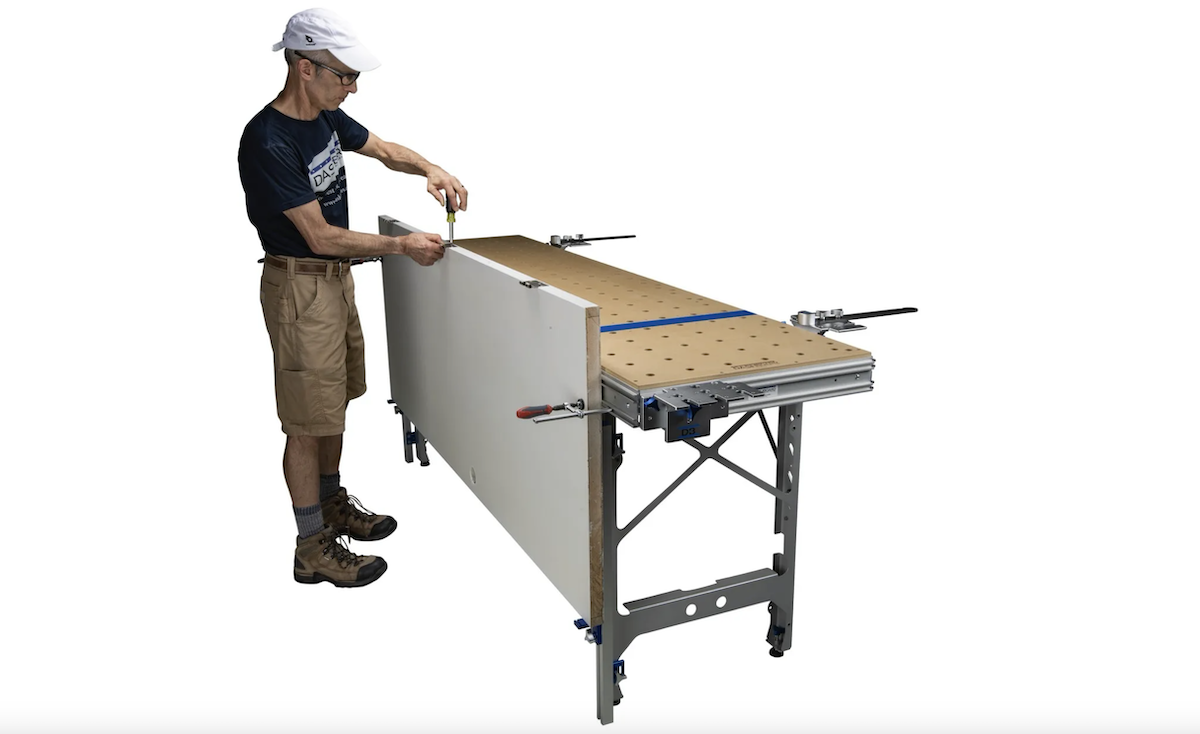
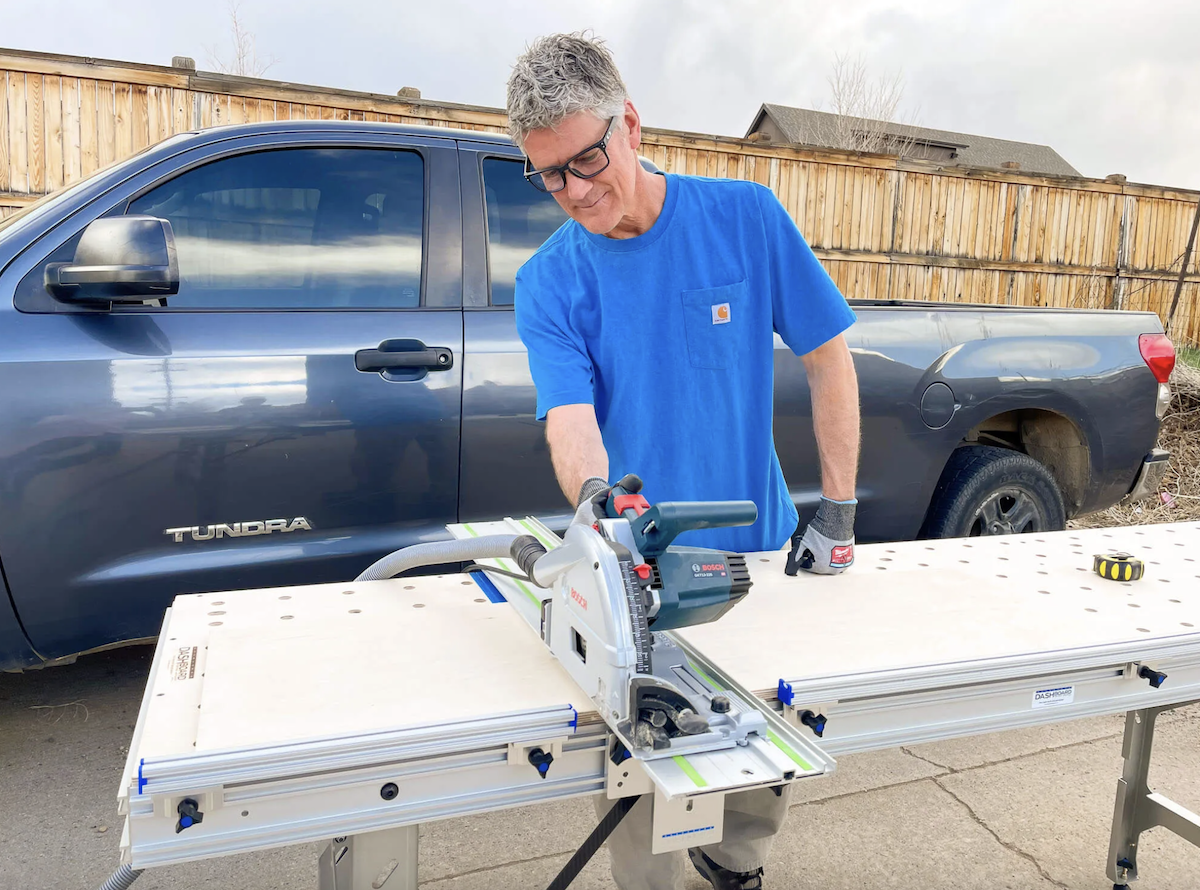
The construction industry in 2026 faces a perfect storm: labor shortages demanding 470,000 new workers, AI integration reshaping project management, and economic pressures forcing contractors to do more with less.
In this environment, your workbench choice isn't about features; it's about survival strategy.
Why Mobile Workbenches Matter More in 2026 Than Ever Before
Three converging forces make mobile workbench systems essential rather than optional this year:
Labor shortage reality: Construction needs nearly half a million new workers in 2026. You're working with smaller crews doing the same volume of work. Equipment that eliminates wasted motion and setup time directly compensates for missing hands.
Economic pressure: Material costs continue rising while bid competition intensifies. Wasting $500 in plywood per job because your cutting setup produces inaccurate results? That's money directly off your bottom line. Professional-grade mobile workbenches eliminate this waste.
Client expectations: Homeowners now spend months on Pinterest and HGTV before projects start. They expect precision work, clean job sites, and professional appearance. Rolling up with warped plywood on sawhorses doesn't inspire confidence in your $75,000 kitchen remodel.
The Setup Time Tax: 15 Minutes Daily = $6,500 Annually
Industry data shows contractors waste 15-20 minutes each morning setting up makeshift workstations. Let's calculate what that actually costs:
Traditional sawhorse + plywood setup:
- Unload sawhorses from truck: 3 minutes
- Find level spot, adjust height: 4 minutes
- Position plywood, check if warped: 3 minutes
- Verify setup is stable: 2 minutes
- Position tools and materials: 3 minutes
- Total: 15 minutes
Dash-Board mobile workbench:
- Unfold bench, lock legs: 45 seconds
- Adjust for uneven ground: 15 seconds
- Total: 60 seconds
Annual impact (250 work days):
- Time saved: 14 minutes daily = 58 hours annually
- At $100/hour billing rate = $5,800 in recovered billable time
- At $150/hour (cabinet installer rates) = $8,700
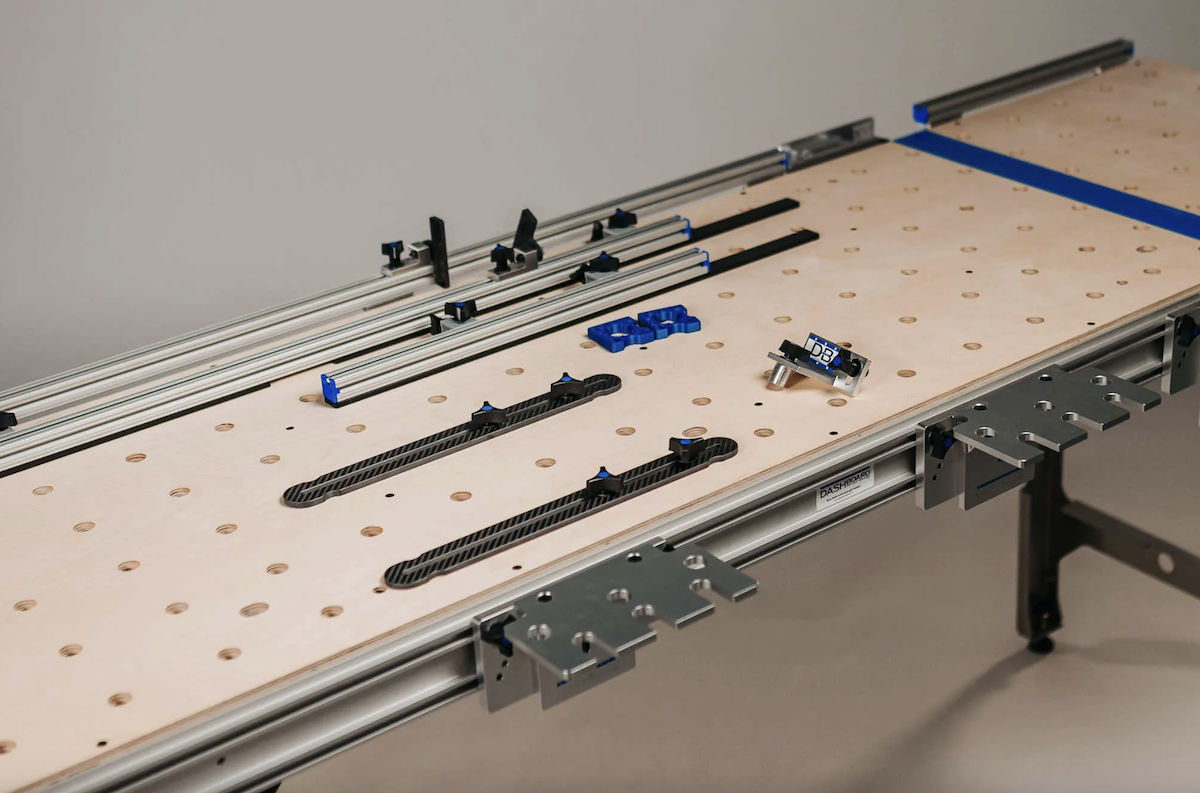
This doesn't account for mid-day repositioning, which traditional setups require but mobile workbenches handle in seconds.
Jeff Rudolph experienced this efficiency gain: "After watching many of Rob's videos I was convinced the Dashboard bench and accessories was the way to go. The system exceeded my expectations. Repeatable cuts are a breeze, rips and cross cuts on full sheets couldn't have been easier and the reduced need to use a tape, I'm convinced resulted in less mistakes. There was a definite increase in productivity."
Material Waste: The Hidden Profit Killer
2026's elevated material costs make accuracy more critical than ever. One ruined sheet of plywood costs $85-120. Most contractors processing sheet goods ruin 2-4 sheets per job through inaccurate cuts.
Budget folding bench scenario (typical accuracy):
- Flexible plastic top allows material shift: ±1/8"
- Wobbles under cutting pressure: ±1/16"
- Accumulated error on 48" crosscut: ±3/16" to ±1/4"
- Result: 2-3 sheets per job become offcuts or rework
- Cost: $200-300 per job in material waste
Professional mobile workbench (Dash-Board accuracy):
- Aluminum frame maintains flatness: ±1/64"
- Guide rail system with precision brackets: ±0.004"
- Repeatable cuts within tolerance: 0-1 ruined sheets per job
- Savings: $180-280 per job
At 40 jobs annually, professional equipment saves $7,200-11,200 in material costs alone. The $1,699 Dash-Board pays for itself in 6-8 jobs through eliminated waste.
Douglas Pelchat, a professional cabinetmaker, confirms: "An excellent upgrade to my MFT system. The brackets are sturdy, well-designed, and no tools required for set-up (so simple to use and extremely accurate and secure). No more constant checking to confirm that the rail is square to my fence. As a professional cabinetmaker, being confident in my set-up speeds production, reduces waste and makes the whole process flow smoothly."
2026 Industry Trends Driving Mobile Workbench Adoption
Trend 1: Modular and prefab construction going mainstream
More contractors are fabricating components off-site or in garage workshops before installation. This requires:
- Precision cutting for components that must fit together perfectly
- Clean working environments (client driveways, not muddy job sites)
- Ability to work in multiple locations without compromising accuracy
Mobile workbenches enable the precision assembly work that modular construction demands.
Trend 2: AI and digital project management
83% of construction professionals now use AI tools daily for scheduling, resource management, and progress tracking. This digital transformation extends to field equipment:
- Less tolerance for "close enough" because digital measurements expose inaccuracies
- Tighter schedules requiring faster, more efficient field operations
- Real-time progress reporting where delays from poor equipment become visible
Contractors using digital PM tools need field equipment that matches that precision.
Trend 3: Smaller crews doing more
Labor shortages aren't resolving in 2026. Successful contractors are:
- Investing in equipment that multiplies individual productivity
- Eliminating tasks that don't directly produce revenue
- Using tools that require less physical strain (preserving aging workforce)
A mobile workbench that one person can deploy in 60 seconds fits this strategy. Sawhorses requiring two people to set up safely don't.
Trend 4: Just-in-time delivery and reduced on-site storage
Material costs and job site congestion are pushing contractors toward just-in-time delivery. This means:
- Processing materials immediately upon arrival
- Working in tighter spaces with less staging area
- Needing mobile setups that adapt to constrained environments
Mobile workbenches shine in these scenarios. Fixed cutting stations don't.
Vehicle Integration: How Top Contractors Store Mobile Workbenches
The 2026 contractors work from increasingly organized vehicles. Successful mobile workbench integration follows these patterns:
Cargo van setup (Ford Transit, Mercedes Sprinter):
- Dash-Board ShortCut ($1,099) at 46" length fits behind driver's seat
- Folds to 6.5" thick, stores vertically against van wall using E-track
- Weight (42 lbs) allows single-person handling
- Alternative: Full Dash-Board mounted horizontally under roof rack
Pickup truck setup:
- Full Dash-Board (92.75" length) slides under tonneau cover
- Stored on bed slide system for easy access
- Weight (60-65 lbs) manageable for tailgate loading
- Some contractors build vertical wall mount inside cap
Trailer setup:
- Full Dash-Board mounts to trailer wall brackets
- Drops down for use, folds flat during transport
- Trailer becomes mobile workshop for multi-day jobs
- Particularly effective for cabinet installers and finish carpenters
The key metric: seconds from vehicle to working. If retrieval takes 5+ minutes, you'll leave it in the truck.
Breaking Down Cost by Contractor Type
Residential remodeler (solo or 2-person crew):
- Annual jobs: 25-40
- Average job value: $15,000-50,000
- Critical needs: Client impression, clean job sites, accuracy
- Recommendation: Dash-Board ShortCut ($1,099) + Guide Rail Brackets ($359)
- ROI: 3-4 months through time savings and reduced material waste
Gabriel Perez exemplifies this: "The dashboard system has provided me better and cleaner cuts but wow the dead on repetition and accuracy of every cut is just so nice. Love it. I bought the Outrigger Bundle. This allowed me to completely get rid of my table saw. My shop is very small and my table saw had to be in the middle of it to account for the infeed and outfeed distance."
Cabinet installer / finish carpenter:
- Annual jobs: 40-80
- Average job value: $8,000-25,000
- Critical needs: Precision, speed, repeated accuracy
- Recommendation: Full Dash-Board ($1,699) + Pro Accessories Bundle ($1,899)
- ROI: 6-10 weeks through eliminated rework and faster throughput
Trim carpenter / door installer:
- Annual jobs: 60-120
- Average job value: $2,000-8,000
- Critical needs: Volume throughput, portability, job-to-job efficiency
- Recommendation: Dash-Board ShortCut ($1,099) + Track Stars ($299) + Door and Panel Supports ($199)
- ROI: 8-12 weeks through setup time savings
General contractor / handyman:
- Annual jobs: 80-150
- Average job value: $1,000-5,000
- Critical needs: Versatility, adequate quality, low cost
- Recommendation: Budget folding bench ($70-150) adequate for this use case
- ROI: N/A - professional equipment unnecessary for this workload
Real Contractor Math: Three Scenarios
Scenario A: High-volume trim carpenter
- Billing rate: $120/hour
- Works 250 days annually
- Traditional setup: 15 minutes daily = 62.5 hours lost = $7,500
- Material waste: 50 jobs × $50 average = $2,500
- Total annual cost of poor equipment: $10,000
- Dash-Board investment: $1,699
- Payback: 7 weeks
Scenario B: Weekend cabinet maker
- Billing rate: $0 (opportunity cost $60/hour)
- Works 100 days annually (weekends)
- Traditional setup: 20 minutes daily (less experience) = 33 hours lost = $2,000
- Material waste: 20 projects × $80 average = $1,600
- Total annual cost: $3,600
- Dash-Board investment: $1,699
- Payback: 24 weeks (6 months)
Scenario C: Occasional DIYer
- Works 20 days annually
- Setup time savings: 6 hours = $0 (not billing anyone)
- Material waste: Maybe 1 sheet annually = $100
The Terrain Problem: Why Leg Adjustment Matters in 2026
Job sites are never flat. Driveways slope for drainage. Garage floors crack and heave. Patios have drainage pitch. Budget workbenches with fixed legs rock on uneven surfaces, creating instability that ruins cuts.
The Dash-Board's independent leg adjustment compensates for up to 2 inches of height variation. Each leg adjusts separately with hand-tightened knobs. No tools. Thirty seconds to stabilize on any surface.
This matters because:
- Client driveways (primary workspace for residential contractors) are always sloped
- Garage floors develop cracks and settlement over time
- Outdoor patios pitch for drainage
- Basement floors are rarely level
A wobbly bench on uneven ground isn't just annoying. It produces inaccurate cuts that waste material and time.
Stephen LaRoche discovered this: "I received my Dash-Board Shortcut a little over a week ago and I am amazed at the construction and how light and sturdy it is. I was using some vibrating tools on it and the table did not move. It's solid!"
Accessory Ecosystem: Building Out As You Grow
Smart contractors start with core equipment and add accessories based on actual workflow needs:
Phase 1: Base system
- Dash-Board or ShortCut bench
- Immediate benefit: Setup time reduction, basic stability
- Cost: $1,099-1,699
Phase 2: Precision cutting (3-6 months)
- Add Guide Rail Bracket Set ($359)
- Enables repeatable crosscuts, eliminates measuring errors
- Combined cost: $1,458-2,058
Phase 3: Production efficiency (6-12 months)
- Add Track Stars ($299 pair) + Rip Gauge ($129)
- Enables rapid rip cuts, offcut support
- Combined cost: $1,886-2,486
Phase 4: Full capability (12+ months)
- Add Surface Mount Fences ($129-189), Parallel Guides ($129)
- Complete system for all sheet goods processing
- Full investment: $2,300-3,000
This phased approach spreads cost over time while immediately delivering core benefits. You're not paying for capabilities you won't use for months.
The Competition: How Dash-Board Compares in 2026
Festool MFT/3 ($735):
- Smaller surface (30x40") limits full-sheet work
- Excellent tool precision and tool accessory ecosystem
- Good for: Small shop work, contractors processing smaller pieces
- Limited for: Full-sheet processing, larger cabinet work
Dennis May owned both: "Very well built I am very impressed. I had the Festool bracket and this far exceeds the quality."
Budget folding benches ($70-150):
- Adequate for assembly and light duty
- Plastic tops flex and warp over time
- Good for: Occasional use, miter saw stands, assembly
- Poor for: Precision cutting, daily professional use, sheet goods
DIY Paulk-style benches ($300-500 in materials):
- Customizable to exact needs
- Heavy and bulky (80-120 lbs, 4x8 footprint)
- Good for: Shop use, contractors with truck/trailer
- Poor for: Daily transport, multiple locations, solo operators
Dash-Board system ($1,099-2,899 depending on configuration):
- Full-size cutting capacity with true portability
- 60-second bench setup, one-person handling
- Professional-grade accuracy and durability
- Colorado manufacturing with same-day support
What Changes in 2026: Maintenance and Replacement
Professional contractors replace budget benches every 18-24 months. Plastic fatigues, legs strip out, surfaces warp. Total cost over 10 years: $400-700 in replacement benches plus cumulative waste.
The Dash-Board uses replaceable components:
- Cut strip: Replace when worn (flip once for double life)
- Knobs and hardware: Standard sizes, easily replaced
- Aluminum frame: Doesn't wear out under normal use
Expected lifespan with daily professional use: 10+ years. The initial investment amortizes to $170 annually versus $200-350 for continuous budget bench replacement.
Peter Michaelson frames this long-term thinking: "While the table is expensive compared to others on the market, the quality of the materials, design, robustness and adaptability are unmatched by other tables and more than offset its cost. For those who are serious about woodworking and want to improve their shop and their woodworking experience, this table is a welcome addition."
The Customer Support Factor Nobody Prices In
When equipment fails mid-job, response time = money. Budget imports ship from overseas with zero customer support. Email goes unanswered. Replacement parts don't exist.
The Dash-Board ships from Colorado. Multiple reviews mention same-day email responses, including weekends. When you're on a job and need an answer, this matters.
Jeff Rudolph: "I believe one of the most important characteristics of a company is the quality of the support for their products. In this regard Dashboard is stellar. Their replies to my emails asking for help were quick and helpful. I have even gotten responses on the weekend."
Calculate the value: One instance of equipment failure costing 4 hours of a $100/hour crew = $400 lost revenue. Good support prevents this.
Making the Decision: Match Equipment to Business Stage
Starting out (Year 1-2):
- Budget constraints real, building client base
- Quality work matters but volume is low
- Action: Budget folding bench adequate, invest profits in marketing
Established (Year 3-5):
- Consistent work flow, reputation built
- Time efficiency becomes profit driver
- Action: Invest in Dash-Board ShortCut or full system
Scaling (Year 5+):
- Multiple crews or high-volume operation
- Equipment efficiency multiplies across team
- Action: Full Dash-Board system per crew, accessories as needed
The mistake contractors make: staying with beginner equipment after reaching professional volume. Your equipment should match your income and workload.
2026 Bottom Line: Equipment as Competitive Advantage
Labor shortages, material costs, and client expectations create an environment where equipment efficiency directly determines profitability. The contractors who thrive in 2026 aren't necessarily the best craftsmen—they're the ones who eliminate waste, work faster, and present more professionally.
Mobile workbenches aren't about convenience. They're about competitive positioning. When your competitor shows up with sawhorses and you unfold a precision workbench system in 60 seconds, clients notice. When you produce accurate cuts while they're measuring twice and cutting thrice, you finish faster and waste less.
The math is straightforward:
- Setup time savings: $5,800+ annually
- Material waste elimination: $7,200+ annually
- Professional appearance: Priceless (but measurable in higher win rates)
- Total annual value: $13,000+
The Dash-Board costs $1,699. Payback period for working professionals: 6-10 weeks.
Choose equipment that matches your business goals. If you're billing $100+ per hour and working 200+ days annually, professional mobile workbench systems aren't luxuries—they're necessities.
Dash-Board Workbench: $1,699 | ShortCut: $1,099 | Pro Bundle: $1,899 | Free shipping over $100
Made in Colorado, USA | Same-day customer support | (303) 376-5703