Your Cart
Product Title
$0
$0
-
+
Your cart is empty.
Add Discount Code?
Add Cart Note?


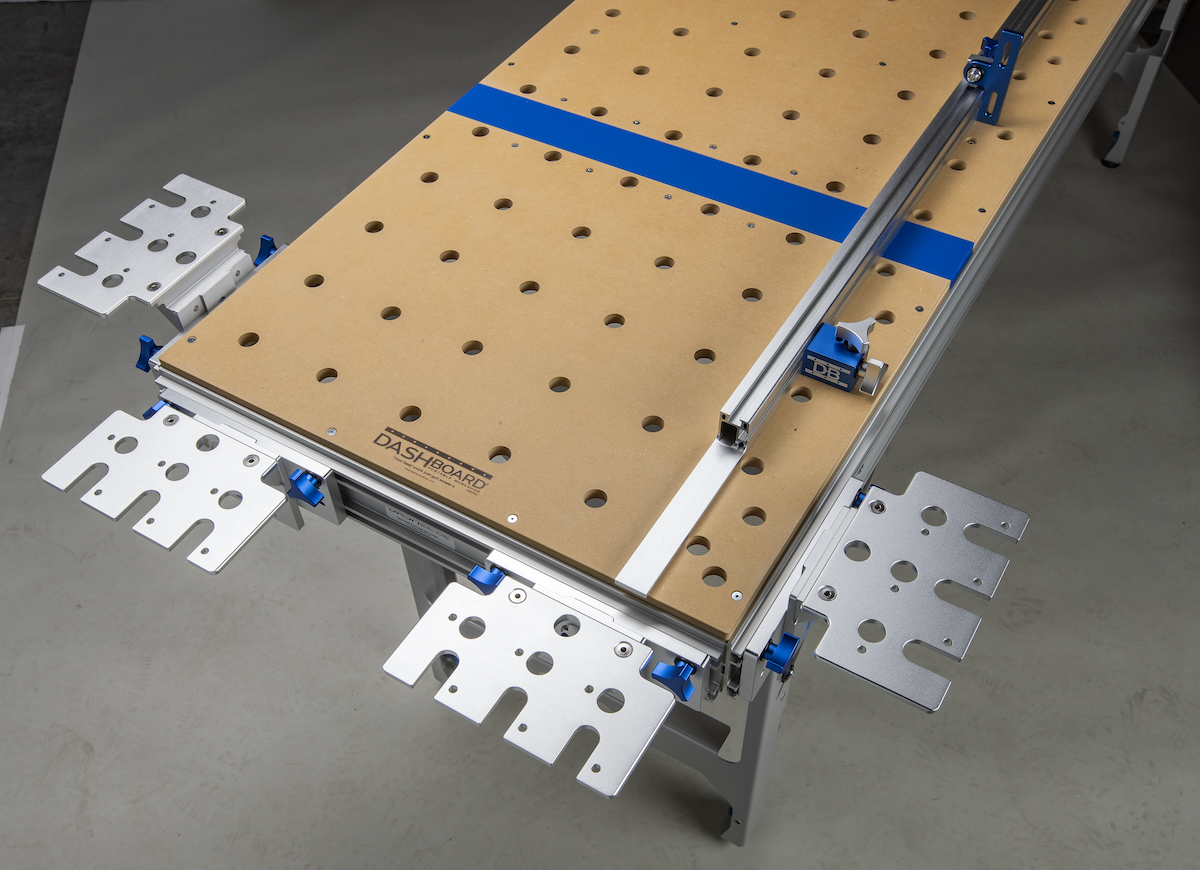
For years, woodworkers have used foam insulation to break down sheet goods, but this method is outdated.
It often forces you onto your knees, creates unnecessary waste, and limits your control over cuts.
The Dash-Board system offers a superior solution by elevating your work, increasing efficiency, and reducing physical strain.
While foam insulation is often used as a sacrificial surface to protect your saw blade, it has significant downsides:
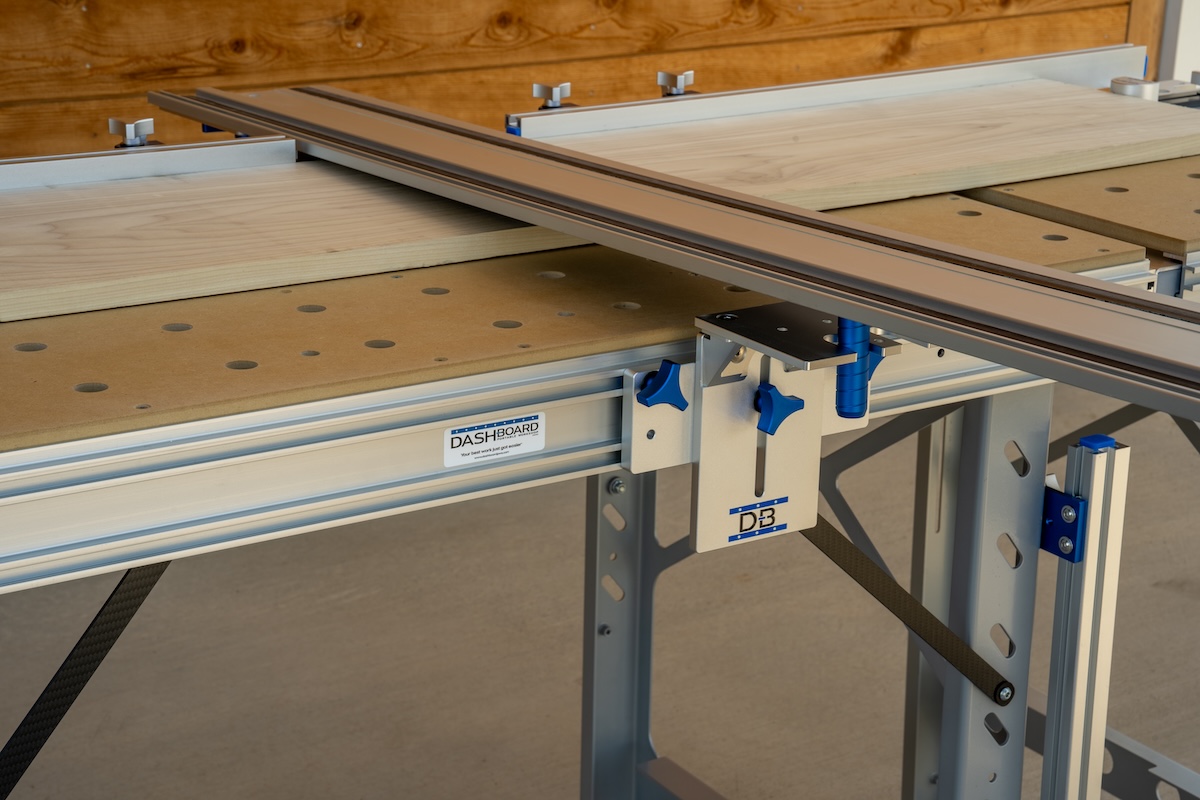
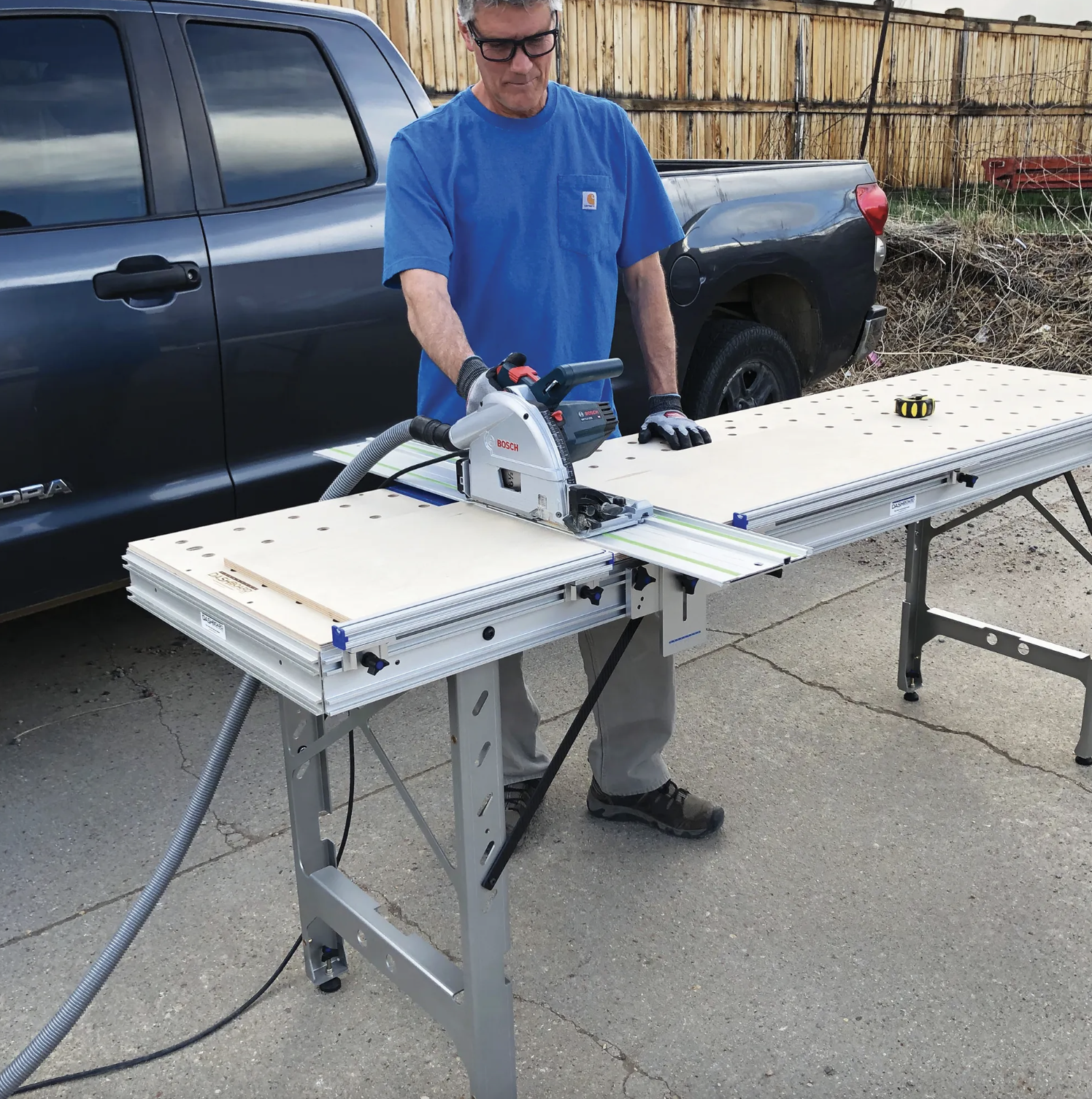
The Dash-Board system eliminates the need for foam insulation by elevating your materials to a comfortable height.
You can stand while cutting, which reduces strain and allows for better visibility and control.
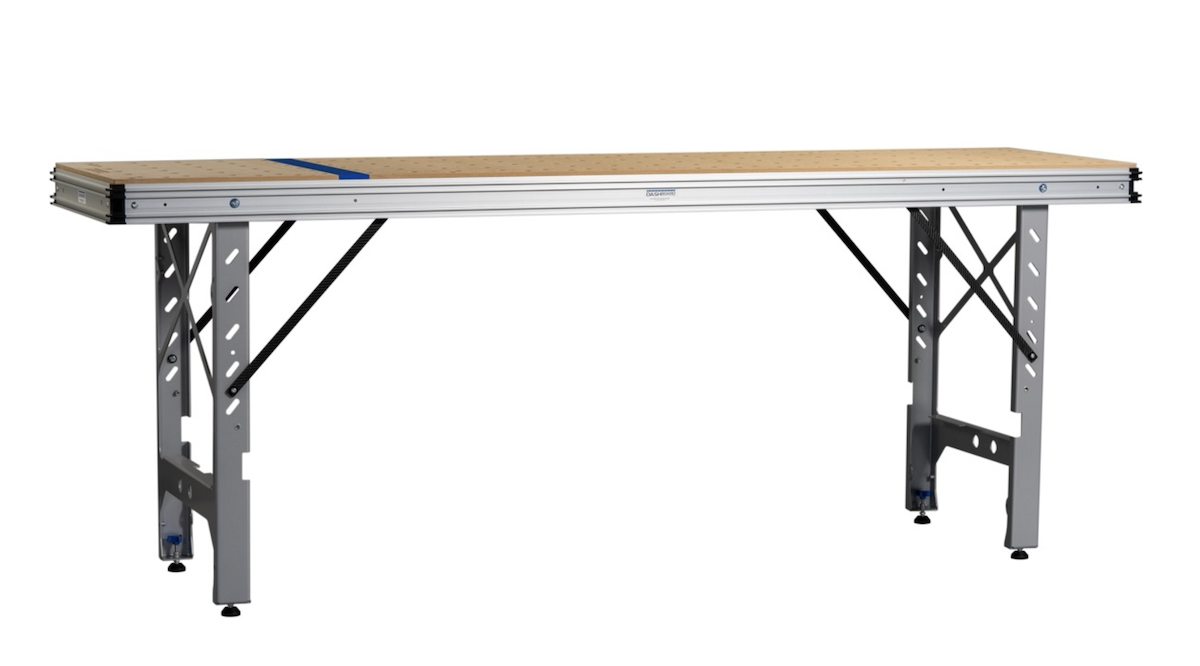
Made from durable, carefully chosen, precisely machined materials, including aluminum and carbon fiber, the Dash-Board provides a stable work surface that becomes the literal and figurative foundation of your workspace.
Our design incorporates two methods to ensure that cutting happens in a way that does not damage the workbench.
First, crosscuts are directed over a replaceable cut strip, which keeps the bench top from becoming a sloppy crosshatch of saw kerfs going in all directions.
Second, longer cuts are oriented off the edge of the bench, where the blade cuts only the workpiece and the air beneath it.
Cutting on foam can result in inaccurate cuts due to its instability. The Dash-Board, on the other hand, is designed to work seamlessly with track saws and guide rails, ensuring precision every time.
Its design accommodates Festool-type guide rails and other major brands, so you can maintain perfect alignment without worrying about shifting or sagging materials.
.jpeg)
When you need to mount workpieces vertically, Dash-Board’s Door & Panel Supports allow you to handle doors and panels with ease. Integrating with both the Dash-Board and Dash-Board ShortCut, these unique, adjustable supports make managing workpieces large and small easy and convenient, transforming your workstation into a versatile, 21st century door bench and then some.
Foam breaks down and creates waste, but the Dash-Board is built to last. With its precision-machined benchtop and custom aluminum frame, the system offers durability and accuracy, providing long-term value for your workshop. It’s a one-time investment that eliminates the need for disposable materials.
Designed with woodworkers in mind, the Dash-Board improves productivity. The stable, elevated surface allows you to work more comfortably and efficiently, reducing setup time and physical strain. Its compatibility with multiple track saws means you’ll get precise, repeatable cuts without hassle.
Foam insulation may have been the go-to method for breaking down sheet goods, but it's far from ideal.
The Dash-Board system offers a more efficient, ergonomic alternative to traditional methods. Elevate your woodworking experience: Ditch the foam and enjoy better precision, comfort, and accuracy with Dash-Board.
Yes, it’s designed to work with Festool-type guide rails and other major brands.
It provides a stable, elevated surface that ensures precise, controlled cuts with no shifting.
Yes, with the addition of the Door & Panel Supports, it makes working with even large pieces vertically easy and efficient.
Absolutely! It’s designed for quick setup and can be easily transported to job sites.
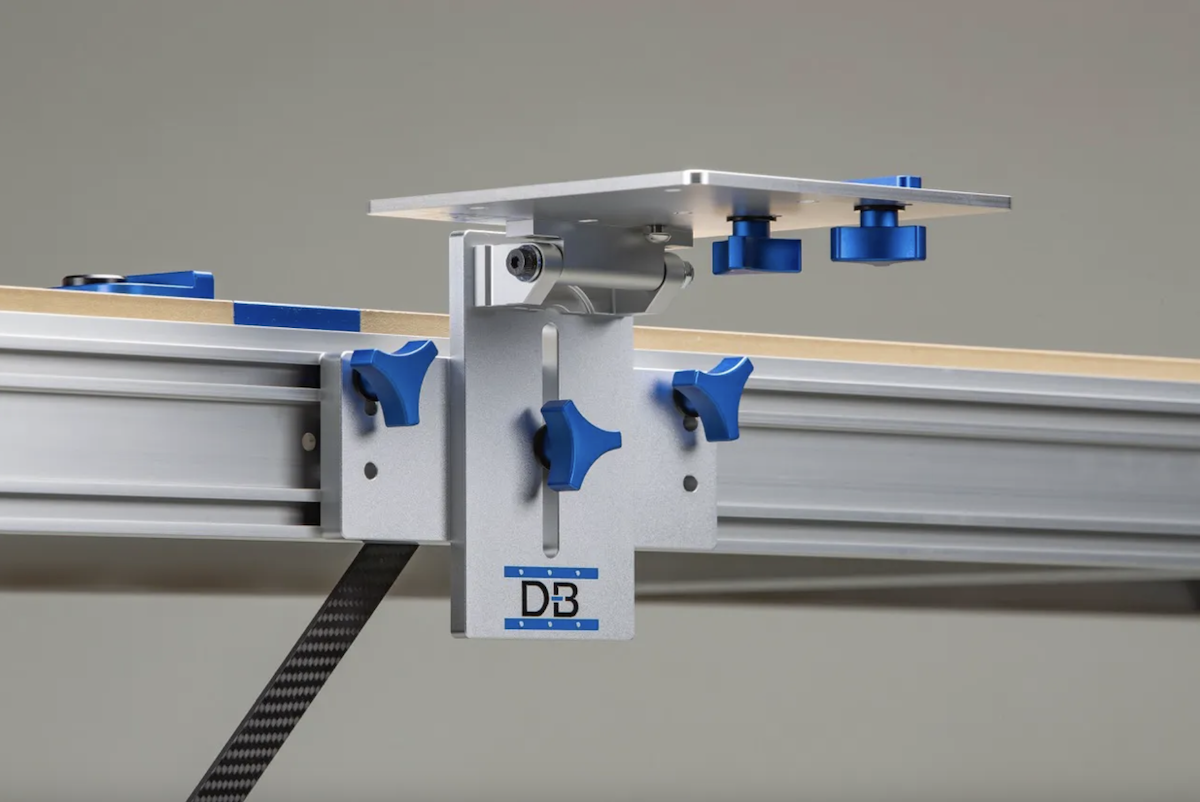
Guide rail brackets hinge your track saw rail to a fixed, repeatable 90-degree position on the bench, so you calibrate square once instead of re-checking it before every cut. Rigid, machined construction with no play is what lets the rail hold that reference through height changes and daily use, turning setup into a one-time task rather than a recurring chore.
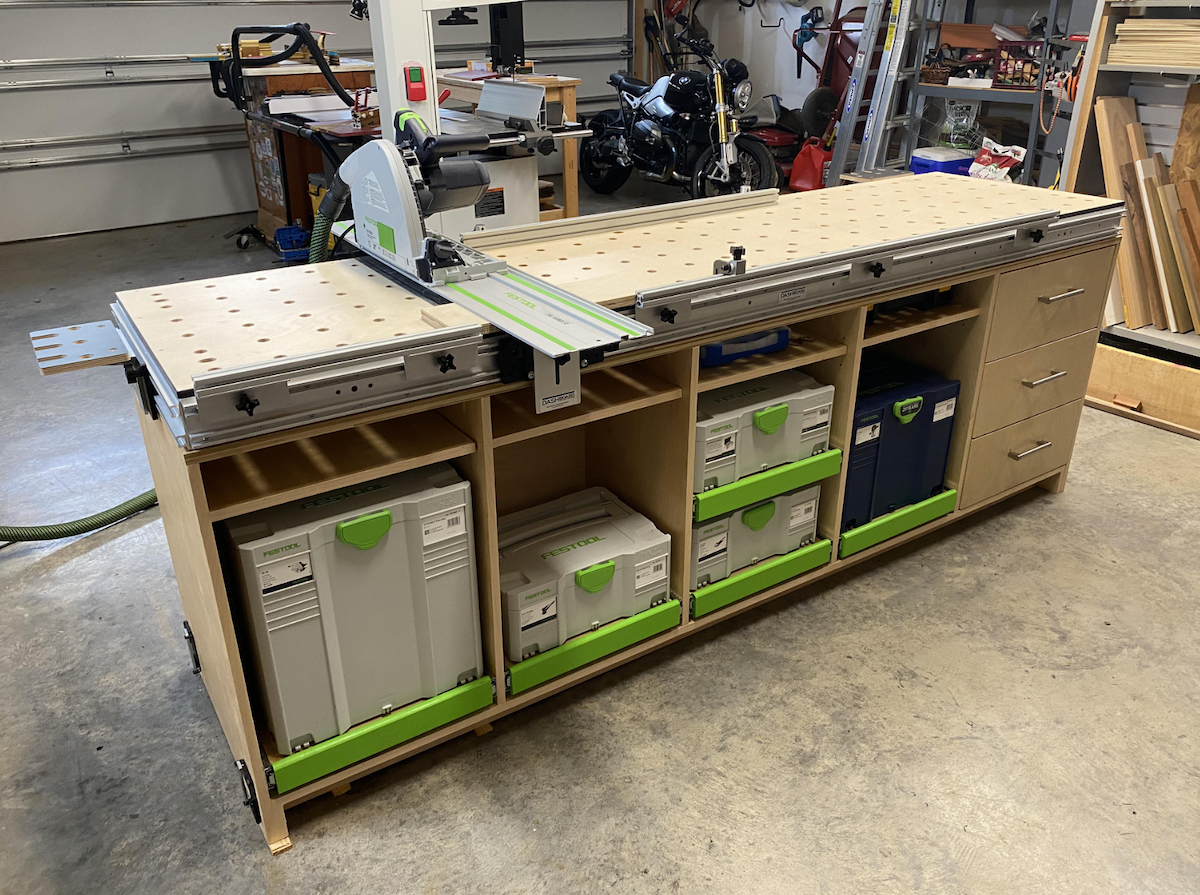
An MFT is a Multi-Function Table built around a perforated 20mm hole grid and guided cutting, letting you crosscut, clamp, sand, rout, and assemble all on one portable surface. It's a strong fit if you do precision crosscuts and sheet goods work, though drift and rigidity issues in some designs are why many owners upgrade to sturdier aftermarket benches and brackets.
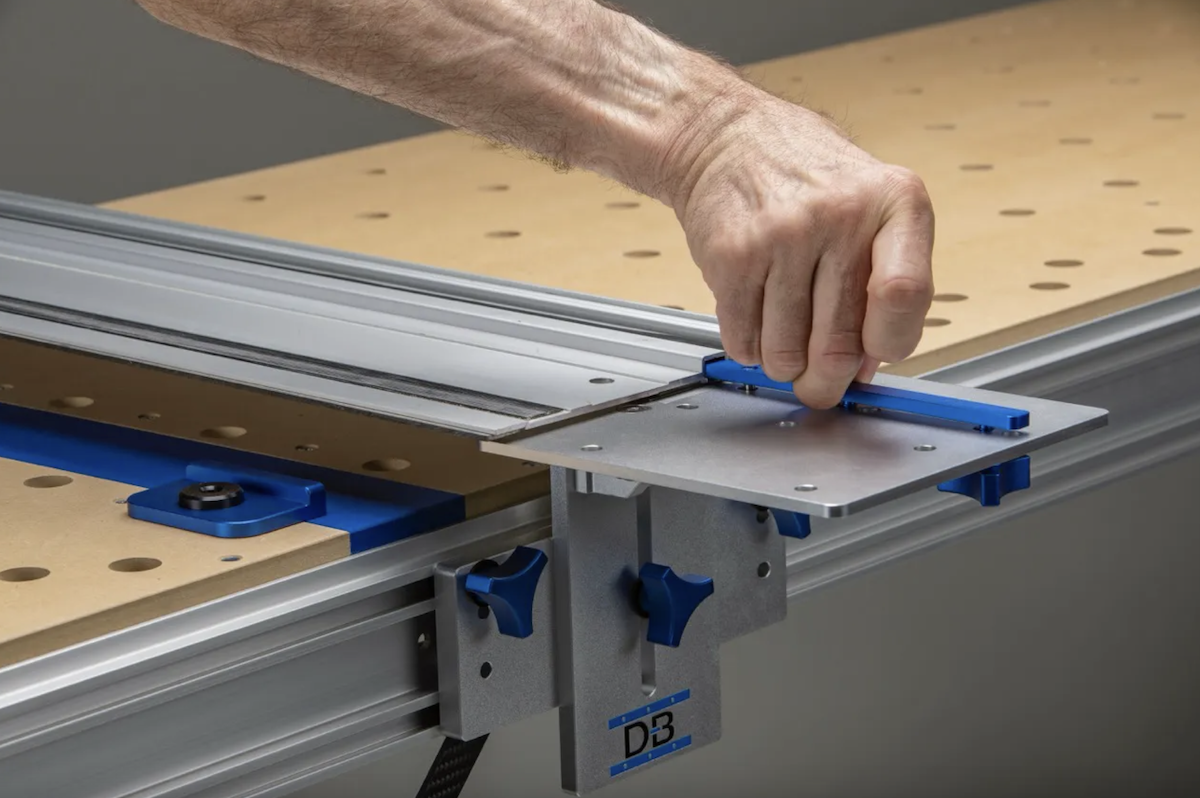
Track saw rail slip almost always comes down to dirty or worn grip strips, dusty or slick surfaces, or not enough downward pressure, and cleaning the strips plus clearing the workpiece solves most cases instantly. For repeatable, no-slip accuracy, clamps work but a fixed bench bracket system locks the rail in place for good.
Scribing transfers the wall's true contour onto a cabinet edge so it fits tight against uneven walls and floors, and a portable bench that levels on the spot gives you the stable reference needed to mark and cut that line accurately. Level the piece, scribe to the widest gap, trim with the work fully supported, then test and refine until the fit sits flush.
Solid workholding is the whole game with edge banding, and a rigid portable bench with the right clamping accessories lets you present a panel flat or vertical for clean, even application. Lock the panel down, apply the banding steadily, then trim flush once the bond sets for crisp, consistent edges every time.

Straight edge cutting tools like track saws, guide rails, and guide rail brackets give woodworkers a fixed reference so cuts stay true instead of drifting off line. A rigid bench, squared rail, and the right accessories (fences, flip stops, parallel guides) turn one accurate cut into consistent, repeatable results every time.
