Your Cart
Product Title
$0
$0
-
+
Your cart is empty.
Add Discount Code?
Add Cart Note?


The woodworking landscape has transformed dramatically, and one decision can make or break your workflow: choosing between a Multi-Function Table (MFT) system and a traditional workbench.
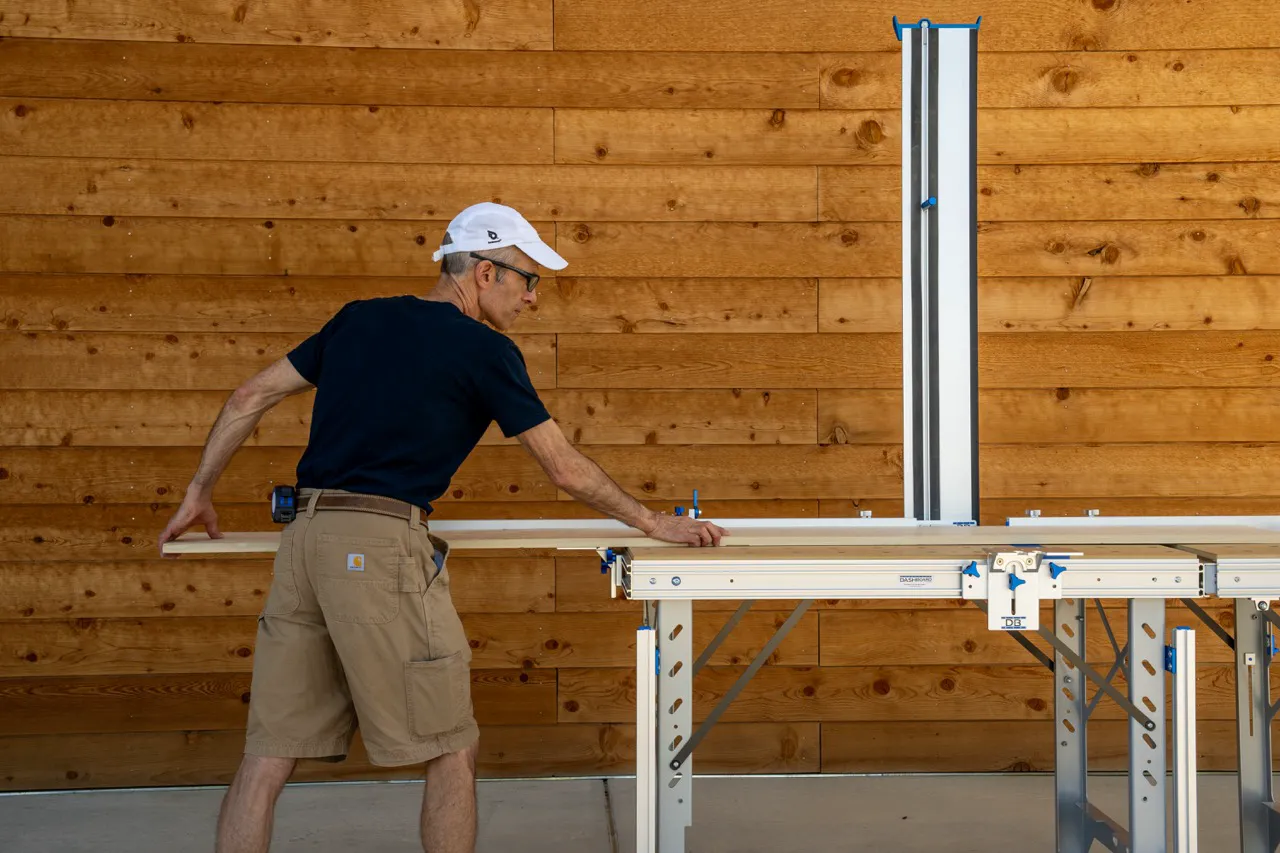
Choose a Traditional Bench if:
Choose an MFT System if:
For modern woodworking, especially if you're building cabinets or working with sheet goods, an MFT system like the Dash-Board offers game-changing efficiency. For traditional furniture making and hand tool work, nothing beats a solid workbench.
Many professionals ultimately end up with both - a traditional bench for hand tool work and furniture making, plus an MFT system for precise cutting and sheet goods processing. This combination provides maximum versatility for any project.
Want to see the difference? Visit our YouTube or Website to learn more!
Yes, if you mainly work with power tools and sheet goods. The Dash-Board MFT system handles 90% of typical hobbyist needs, from cutting sheet goods to assembling cabinets. However, if you plan to do significant hand tool work or traditional furniture making, you might want to consider a traditional bench or hybrid setup.
A traditional workbench typically requires a permanent space of at least 24 square feet (6' x 4'), plus working room around it. An MFT system like the Dash-Board needs only 16 square feet (8' x 2') when in use and can be collapsed and stored against a wall when not needed, taking up just a few inches of depth.
Traditional benches are intuitive but mastering all their capabilities can take years. An MFT system has a steeper initial learning curve (about 1-2 days to get comfortable), but once you understand the grid system and setup procedures, you'll be working faster and more precisely than ever before. Dash-Board provides comprehensive video tutorials to accelerate this learning process.
For straight cuts and 90-degree crosscuts, absolutely. The Dash-Board MFT system consistently achieves accuracy within 0.004 inches across full sheets of plywood - something practically impossible to match with a traditional bench and hand-guided tools. However, for complex joinery and hand tool work, a traditional bench offers control that an MFT can't match.
While a traditional bench might seem cheaper initially ($500-1500 for DIY), an MFT system often proves more economical long-term for modern woodworking. The Dash-Board system ($1699) typically pays for itself within a year through reduced material waste (up to 30% less waste), faster project completion (40% faster on average for sheet goods), and the ability to take on more precise work. Plus, maintenance costs are minimal - just occasional replacement of the cut strip.
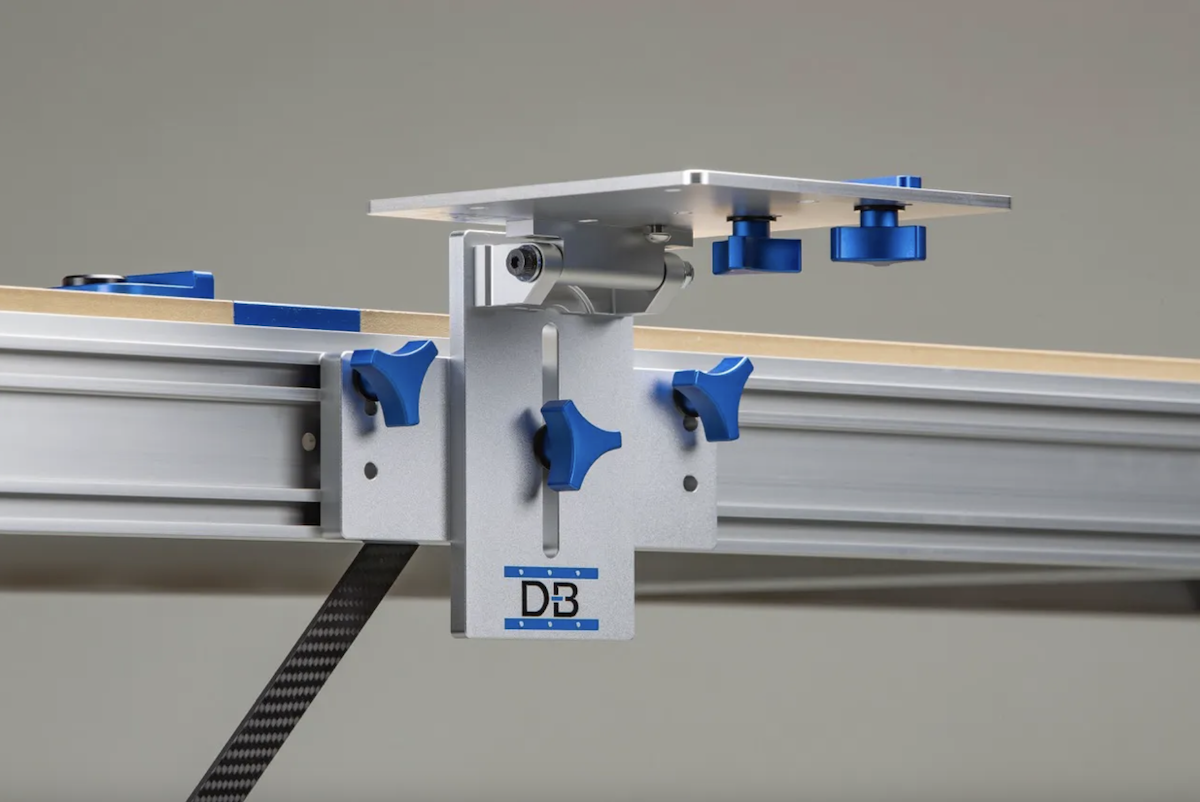
Guide rail brackets hinge your track saw rail to a fixed, repeatable 90-degree position on the bench, so you calibrate square once instead of re-checking it before every cut. Rigid, machined construction with no play is what lets the rail hold that reference through height changes and daily use, turning setup into a one-time task rather than a recurring chore.
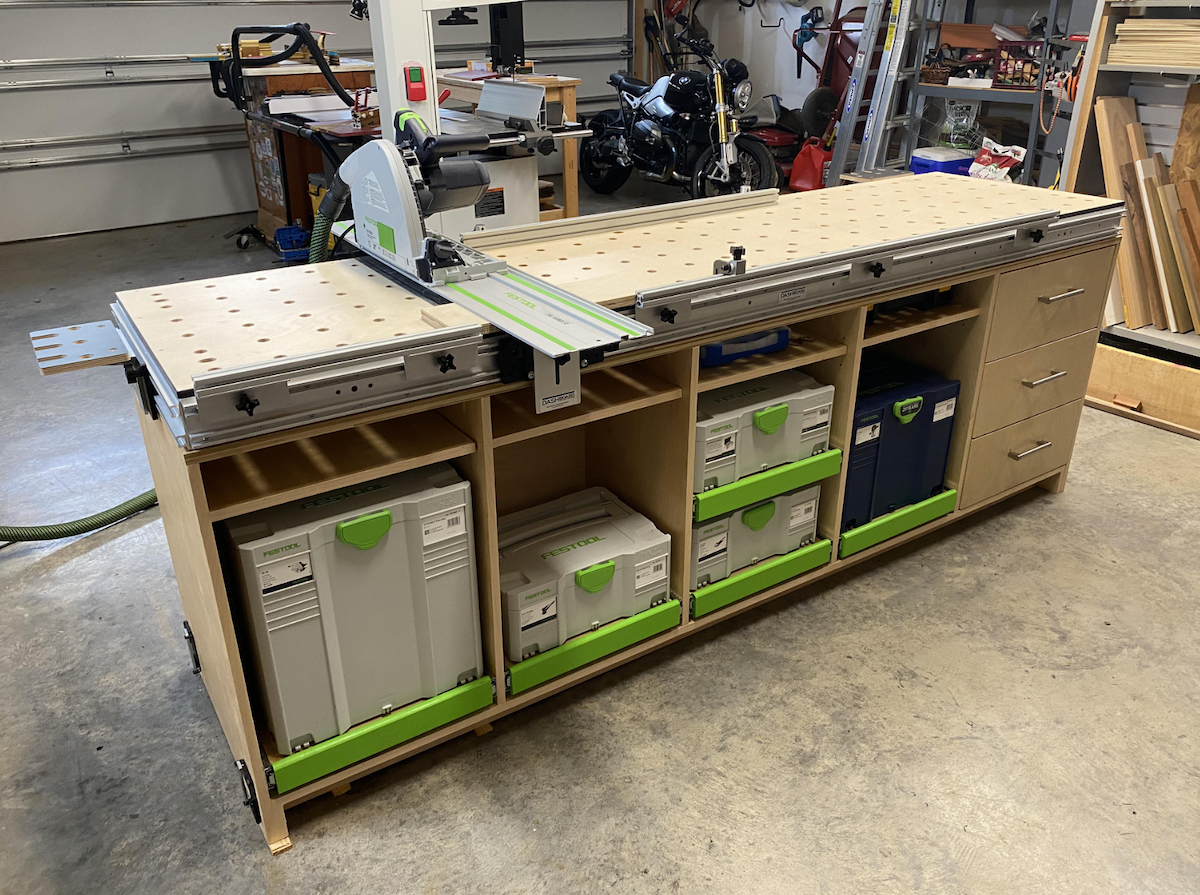
An MFT is a Multi-Function Table built around a perforated 20mm hole grid and guided cutting, letting you crosscut, clamp, sand, rout, and assemble all on one portable surface. It's a strong fit if you do precision crosscuts and sheet goods work, though drift and rigidity issues in some designs are why many owners upgrade to sturdier aftermarket benches and brackets.
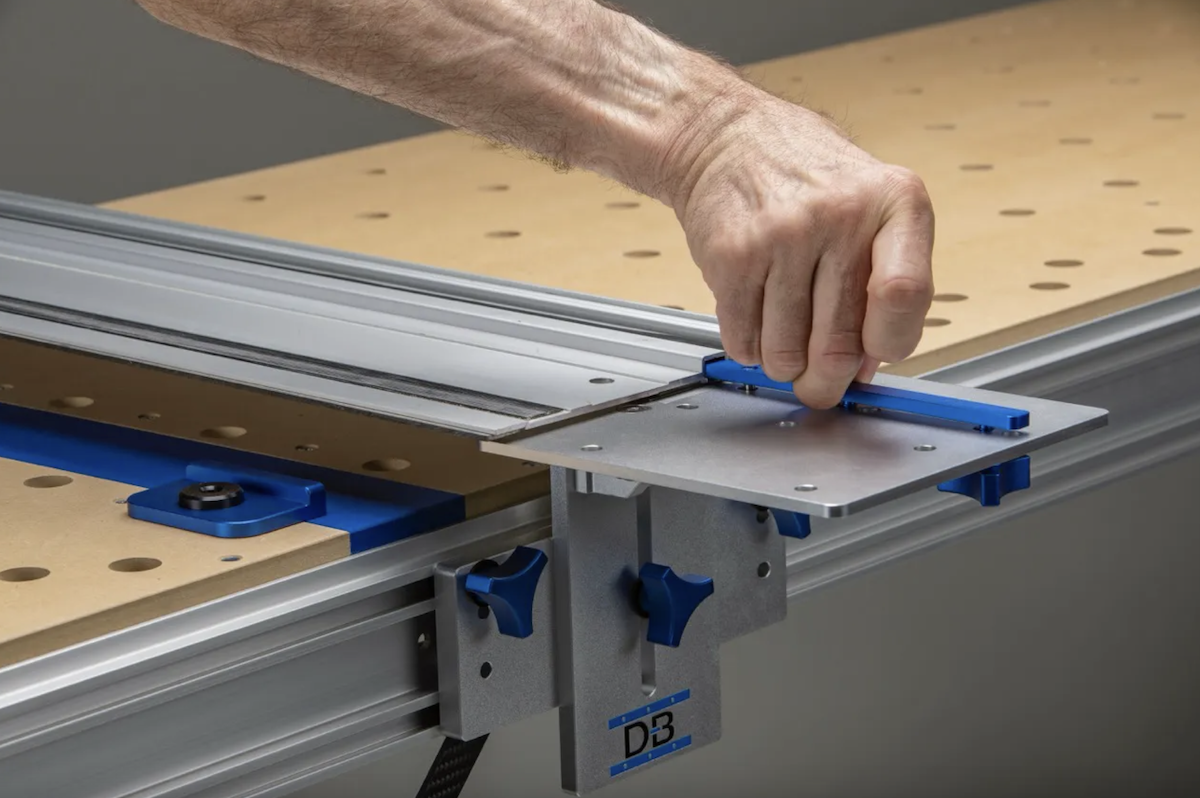
Track saw rail slip almost always comes down to dirty or worn grip strips, dusty or slick surfaces, or not enough downward pressure, and cleaning the strips plus clearing the workpiece solves most cases instantly. For repeatable, no-slip accuracy, clamps work but a fixed bench bracket system locks the rail in place for good.
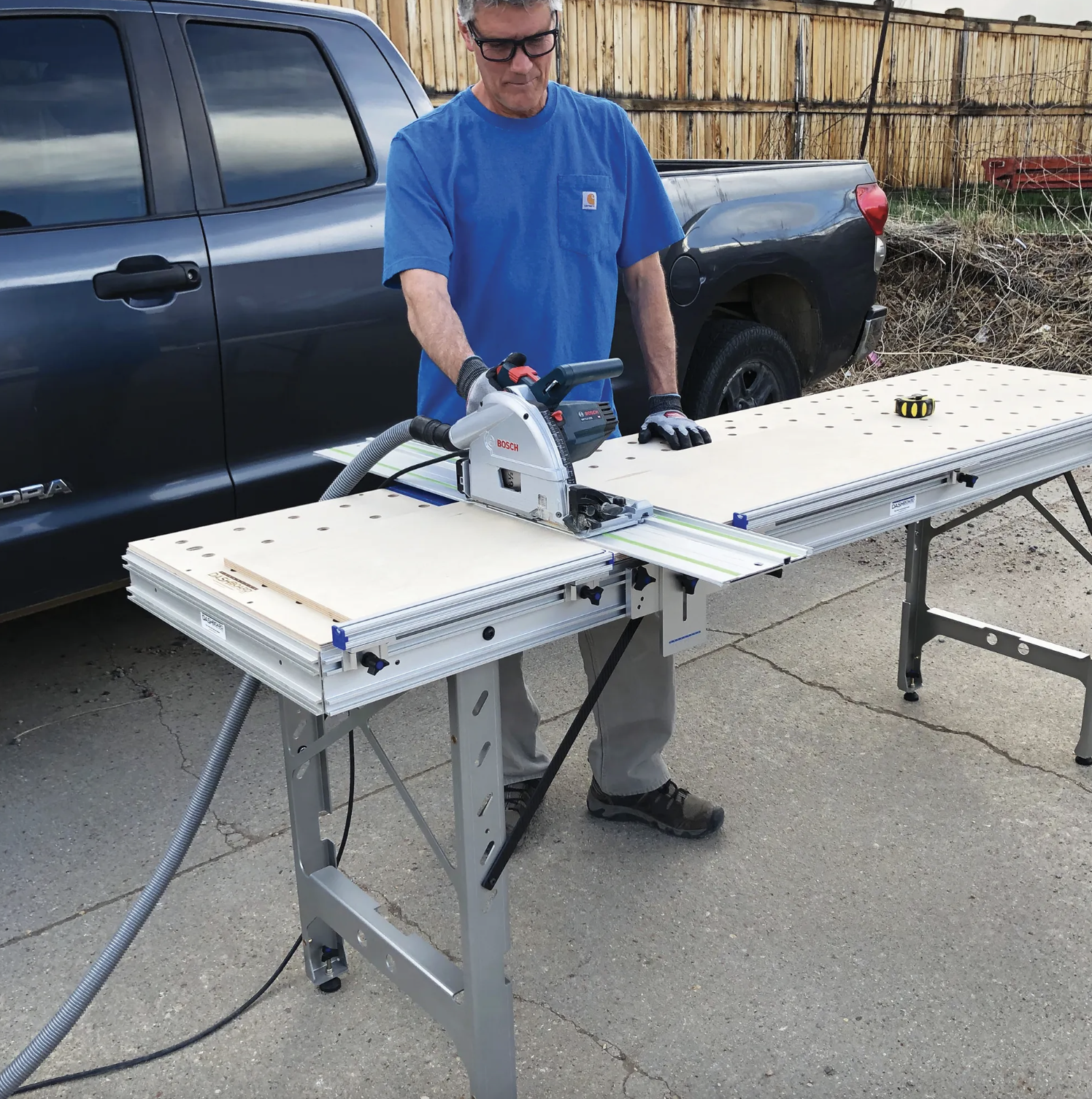
Scribing transfers the wall's true contour onto a cabinet edge so it fits tight against uneven walls and floors, and a portable bench that levels on the spot gives you the stable reference needed to mark and cut that line accurately. Level the piece, scribe to the widest gap, trim with the work fully supported, then test and refine until the fit sits flush.
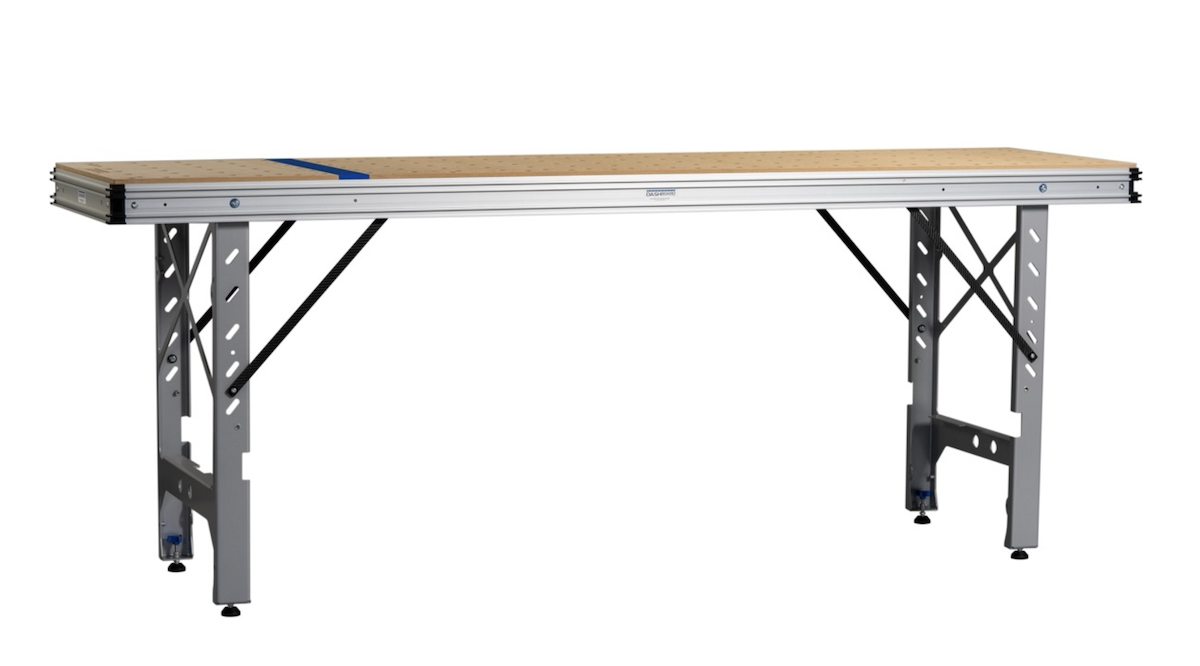
Solid workholding is the whole game with edge banding, and a rigid portable bench with the right clamping accessories lets you present a panel flat or vertical for clean, even application. Lock the panel down, apply the banding steadily, then trim flush once the bond sets for crisp, consistent edges every time.

Straight edge cutting tools like track saws, guide rails, and guide rail brackets give woodworkers a fixed reference so cuts stay true instead of drifting off line. A rigid bench, squared rail, and the right accessories (fences, flip stops, parallel guides) turn one accurate cut into consistent, repeatable results every time.
