Your Cart
Product Title
$0
$0
-
+
Your cart is empty.
Add Discount Code?
Add Cart Note?


.jpeg)
The smell of sawdust hangs in the air. Your grandfather's massive oak workbench dominates the center of your shop—sturdy, reliable, immovable. And therein lies the problem.
Today's woodworker often resembles a nomad more than a stationary craftsman. We work in garages that double as parking spaces, temporary job sites, and increasingly smaller urban apartments.
The romance of that heirloom bench collides with modern reality: we need mobility without sacrificing capability.
The journey from the 1970s Black+Decker Workmate to today's sophisticated portable systems reveals an evolution of thinking about what woodworkers actually need:
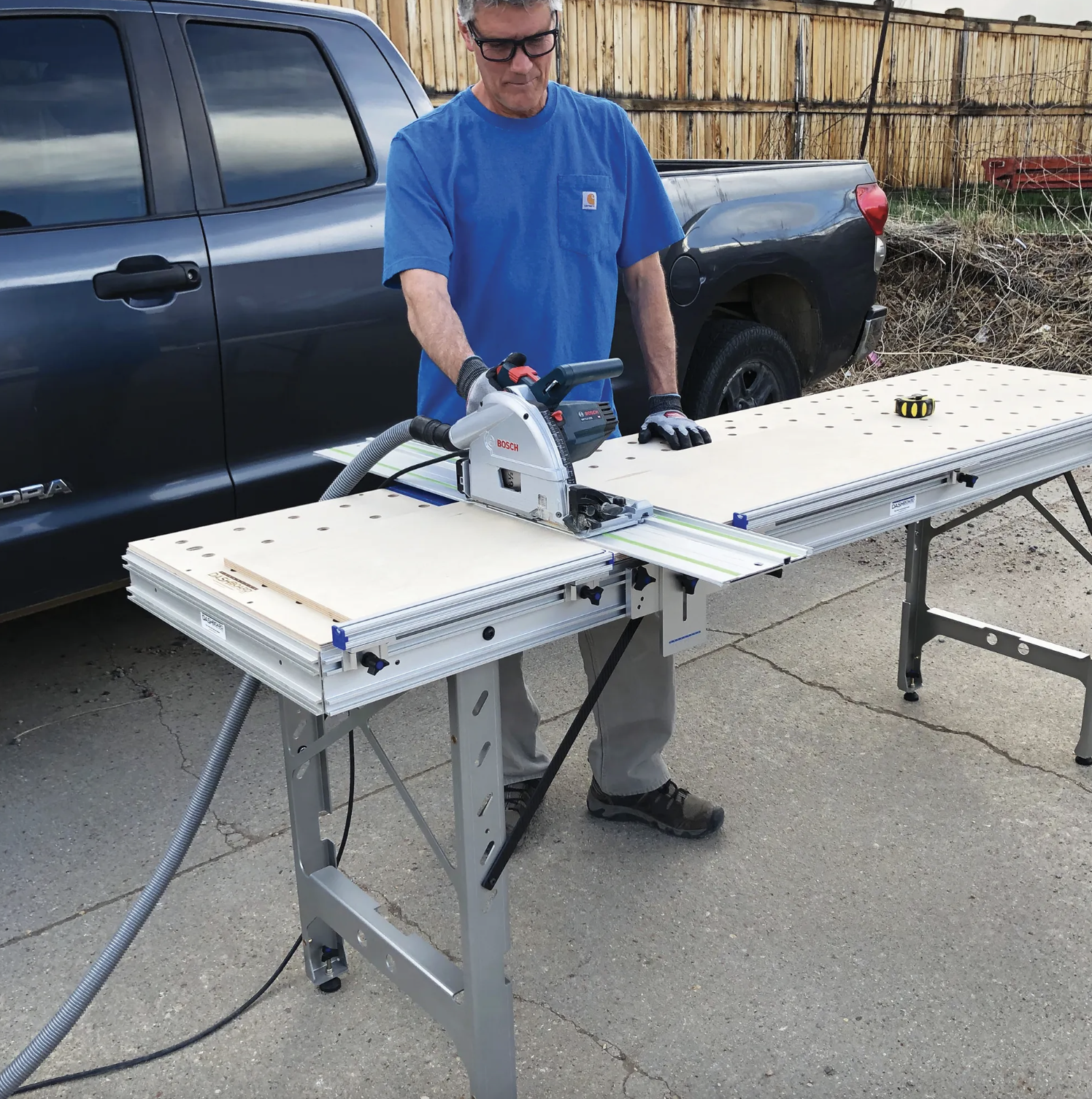
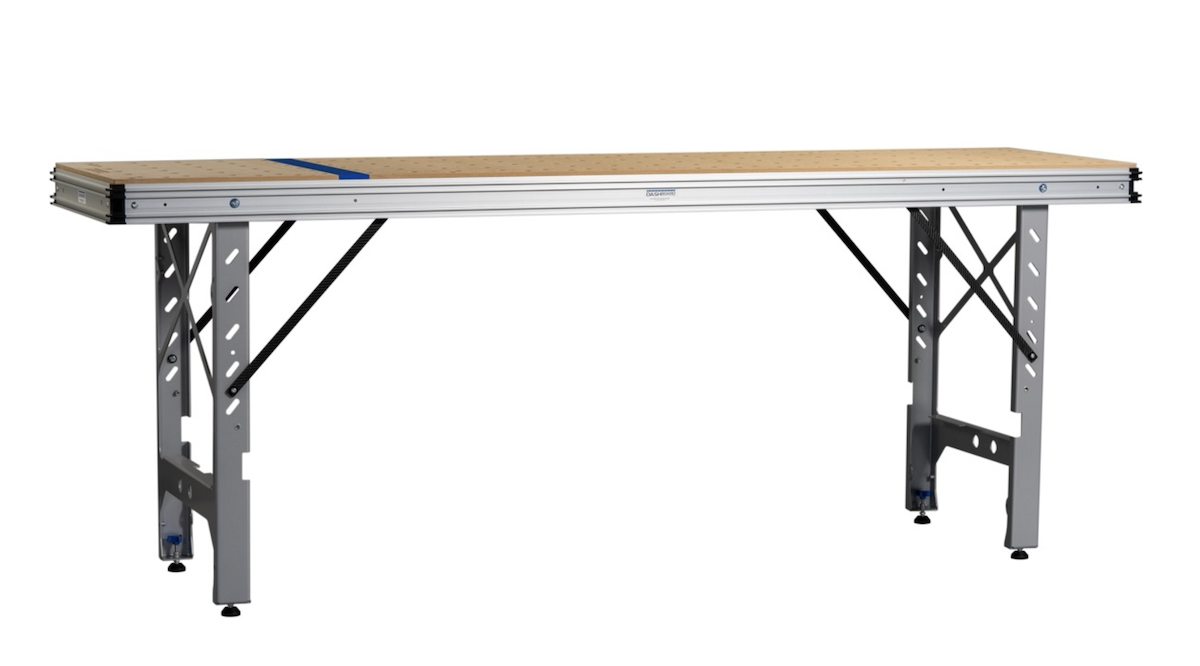
The Dash-Board Workbench exemplifies this evolution. At 92.56" × 24.41" × 3.5", it provides substantial work surface while remaining transportable. Its patented design allows setup in about a minute—transforming from transport mode to full workshop capability nearly anywhere.
But beyond specifications lies a philosophical difference: these systems are designed to empower rather than constrain.
Let's cut through marketing speak and examine tangible differences:
Weight: Traditional workbenches often exceed 200 pounds, while even substantial modern portable systems like the Dash-Board remain manageable at approximately 60 pounds.
Setup time: Traditional setups can take hours to assemble or disassemble. Modern systems like the Dash-Board require approximately one minute.
Precision capability: Modern systems enable repeatable accuracy that was previously possible only with stationary equipment:
Space efficiency: When not in use, modern systems collapse to a fraction of their operational footprint—critical for those working in multi-purpose spaces.
Despite clear advantages, transitioning from traditional to modern systems isn't without hurdles:
Investment reality: Quality modern systems represent a significant investment. The Dash-Board Workbench starts at $1,699, with accessory bundles potentially adding another $1,000-2,000. This reflects both material quality and engineering sophistication—but requires commitment.
Mental adjustment: Years of working on traditional benches create muscle memory and habits that take time to reprogram. Modern systems often employ different work-holding methods and workflow approaches.
Tool ecosystem: Maximum benefit comes from integrating compatible tools—particularly track saws, which may represent additional investment for those coming from a table saw-centric workshop.
Learning curve: Mastering all capabilities of comprehensive systems takes time. As one Dash-Board user noted: "I've been biting at the bit to get out to using it... I'm quite impressed with the dog holes accuracy."
.jpeg)
Modern portable workshop systems transcend being merely a surface. They become platforms supporting entire workflows through carefully designed accessories:
This system approach means techniques previously requiring stationary machinery become possible with portable equipment—breaking down sheet goods, producing consistent identical parts, and maintaining professional standards anywhere.
For those considering the move to modern portable systems, consider these approaches:
Ultimately, transitioning from traditional to modern portable workshop systems involves personal calculation balancing numerous factors:
The answer isn't universal. Some woodworkers will maintain traditional benches for certain operations while adopting modern portable systems for others. Some will transition entirely to modern approaches. Others will stick with traditional methods.
What's undeniable is the capability modern systems like the Dash-Board now offer—precision and versatility previously impossible in portable form.
The transition from traditional to modern portable workshop systems isn't just about new tools—it's about new possibilities.
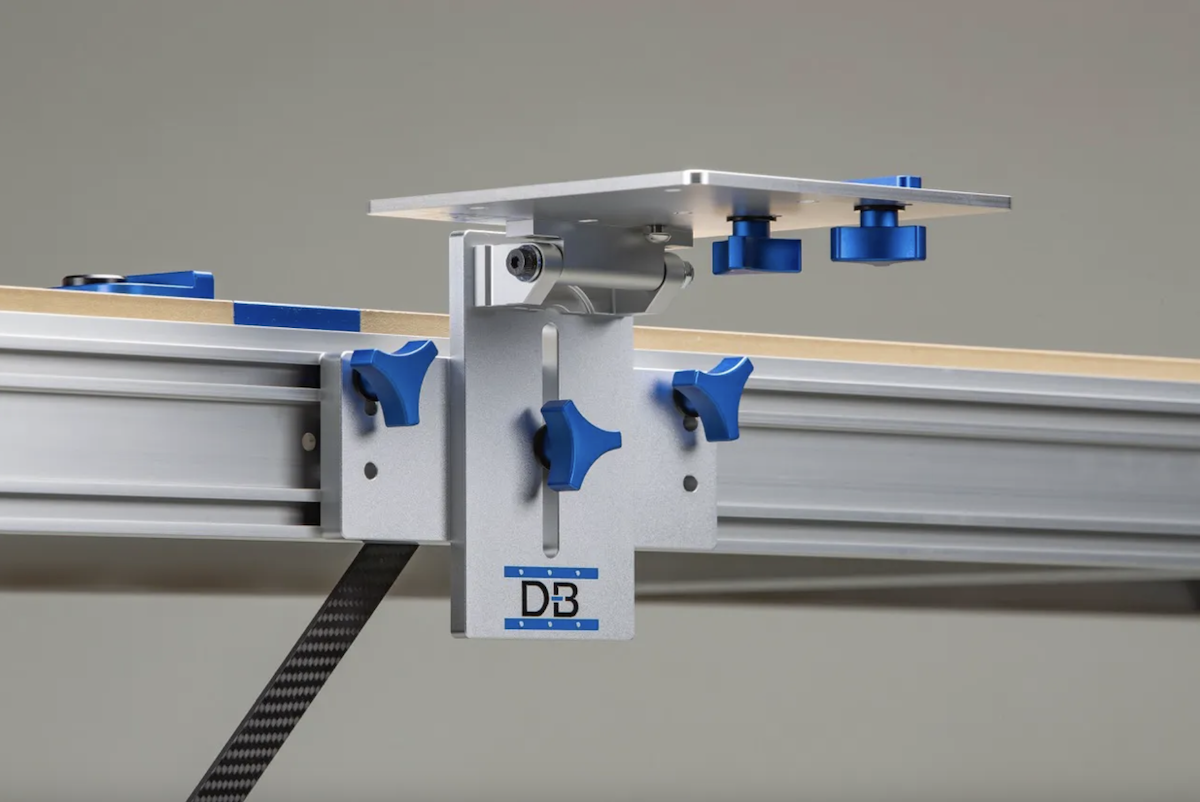
Guide rail brackets hinge your track saw rail to a fixed, repeatable 90-degree position on the bench, so you calibrate square once instead of re-checking it before every cut. Rigid, machined construction with no play is what lets the rail hold that reference through height changes and daily use, turning setup into a one-time task rather than a recurring chore.
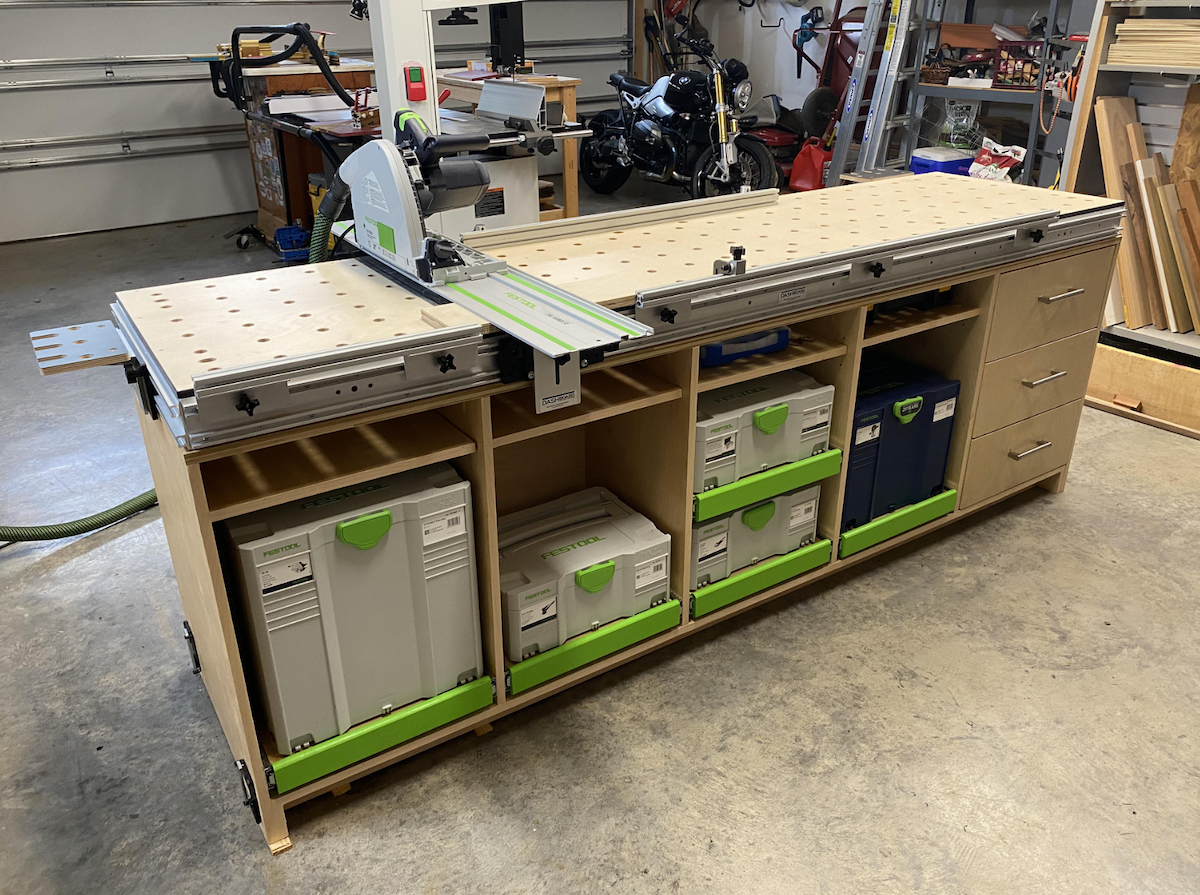
An MFT is a Multi-Function Table built around a perforated 20mm hole grid and guided cutting, letting you crosscut, clamp, sand, rout, and assemble all on one portable surface. It's a strong fit if you do precision crosscuts and sheet goods work, though drift and rigidity issues in some designs are why many owners upgrade to sturdier aftermarket benches and brackets.
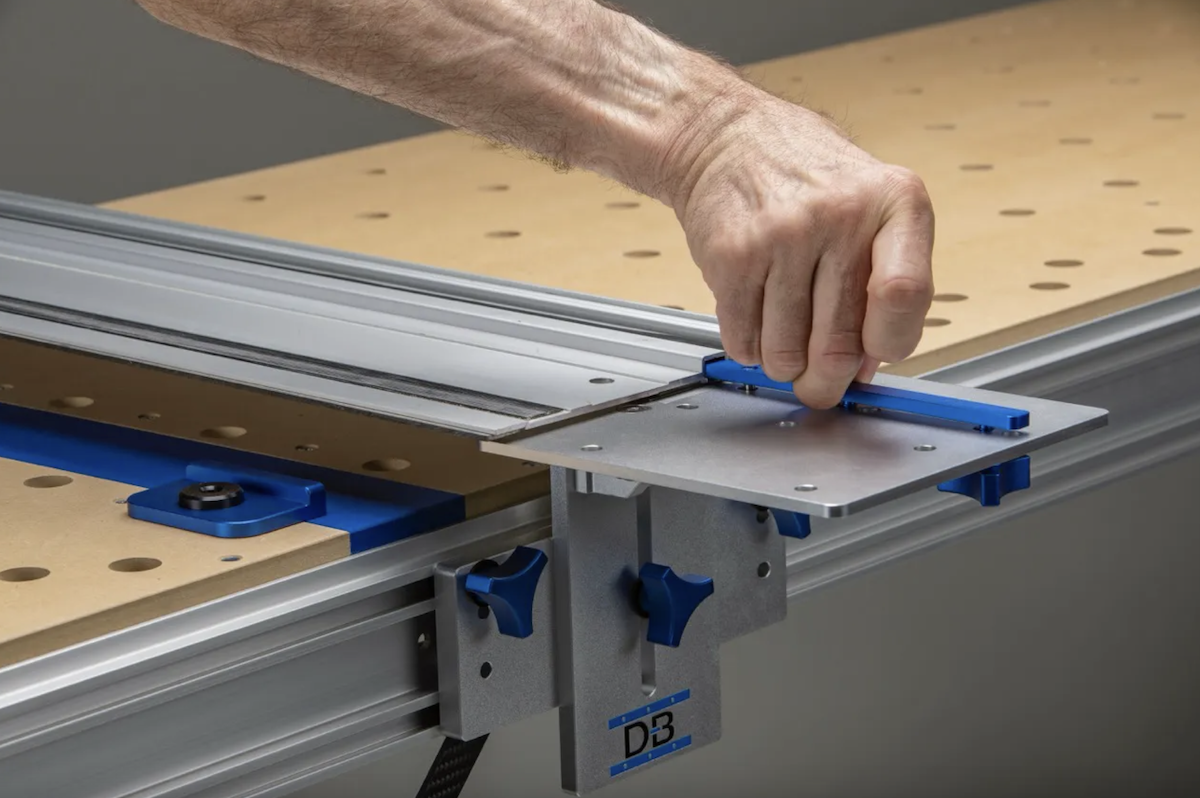
Track saw rail slip almost always comes down to dirty or worn grip strips, dusty or slick surfaces, or not enough downward pressure, and cleaning the strips plus clearing the workpiece solves most cases instantly. For repeatable, no-slip accuracy, clamps work but a fixed bench bracket system locks the rail in place for good.
Scribing transfers the wall's true contour onto a cabinet edge so it fits tight against uneven walls and floors, and a portable bench that levels on the spot gives you the stable reference needed to mark and cut that line accurately. Level the piece, scribe to the widest gap, trim with the work fully supported, then test and refine until the fit sits flush.
Solid workholding is the whole game with edge banding, and a rigid portable bench with the right clamping accessories lets you present a panel flat or vertical for clean, even application. Lock the panel down, apply the banding steadily, then trim flush once the bond sets for crisp, consistent edges every time.

Straight edge cutting tools like track saws, guide rails, and guide rail brackets give woodworkers a fixed reference so cuts stay true instead of drifting off line. A rigid bench, squared rail, and the right accessories (fences, flip stops, parallel guides) turn one accurate cut into consistent, repeatable results every time.
