Your Cart
Product Title
$0
$0
-
+
Your cart is empty.
Add Discount Code?
Add Cart Note?


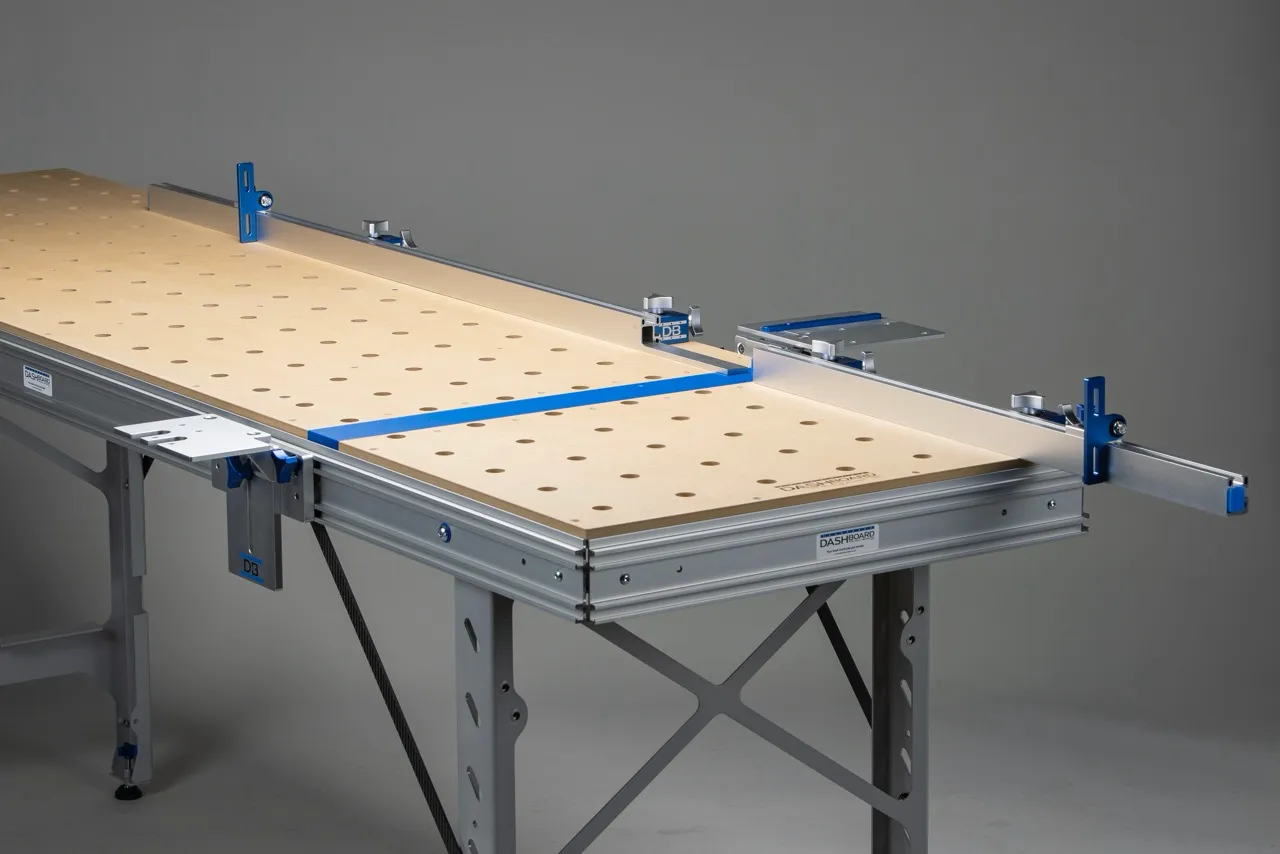
A well-maintained workbench ensures accurate cuts, smooth operations, and years of reliable service.
Here's your straightforward guide to keeping your woodworking bench in prime condition.
Address these issues immediately:
Consider professional servicing if you experience:
Your workbench is an investment in your craft. These simple maintenance steps will keep it performing at its best for years to come. For serious issues or complete restorations, consult with a professional woodworking equipment specialist.
Apply paste wax every 3-4 months under normal use. If your bench sees heavy daily use or you work with particularly sticky materials, you may need to wax monthly. Always use a non-silicone paste wax to avoid potential finishing problems with your woodworking projects.
Use compressed air first to remove loose debris. For stubborn buildup, use a 20mm dowel wrapped with fine-grit sandpaper to gently clean the holes. Never use water or cleaning solutions that could cause swelling or damage. A dedicated hole-cleaning brush can also be helpful for regular maintenance.
First, check that your floor is level where the bench sits. Then inspect and adjust the leg levelers if your bench has them. If the bench top itself has warped, you may need to flatten it using a hand plane or consider replacing the top. For structural issues, consult with a professional.
Keep your workshop's relative humidity below 60% using a dehumidifier if necessary. Regularly clean metal components with a dry cloth and apply a light coat of machine oil or paste wax. For T-tracks specifically, a dry PTFE lubricant can provide good protection without attracting dust.
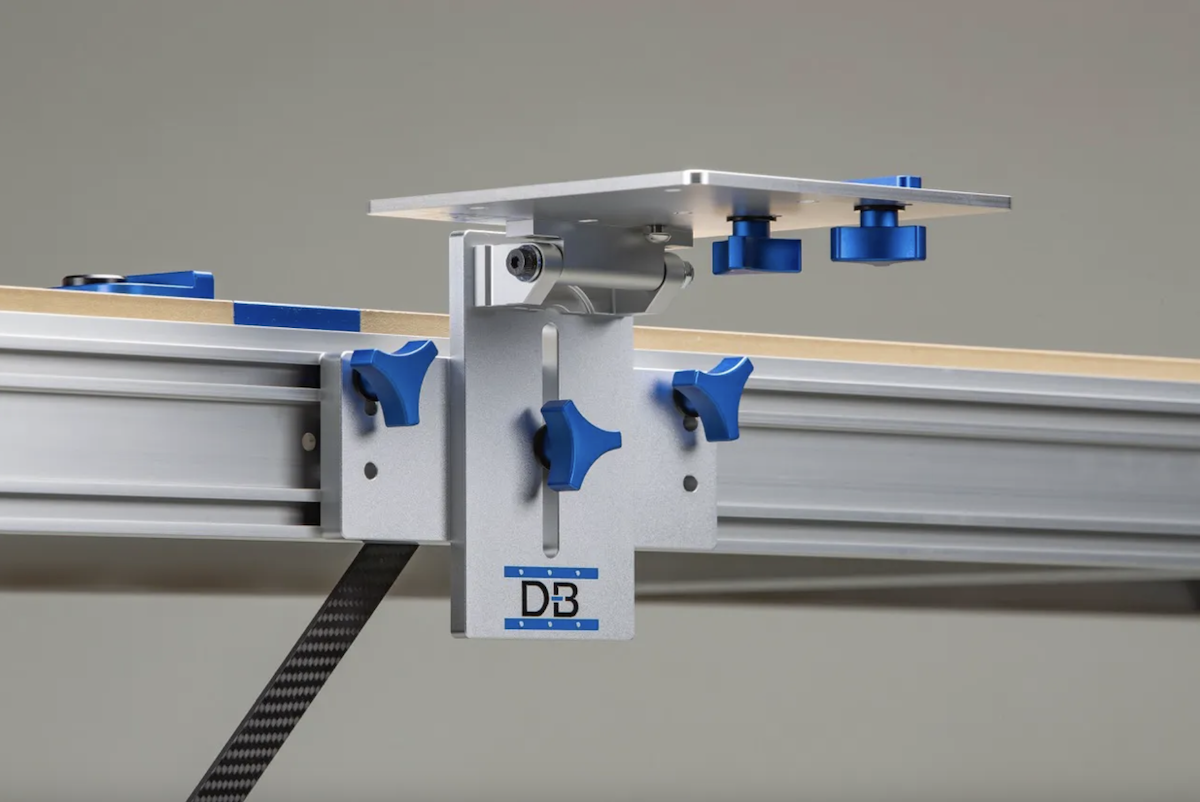
Guide rail brackets hinge your track saw rail to a fixed, repeatable 90-degree position on the bench, so you calibrate square once instead of re-checking it before every cut. Rigid, machined construction with no play is what lets the rail hold that reference through height changes and daily use, turning setup into a one-time task rather than a recurring chore.
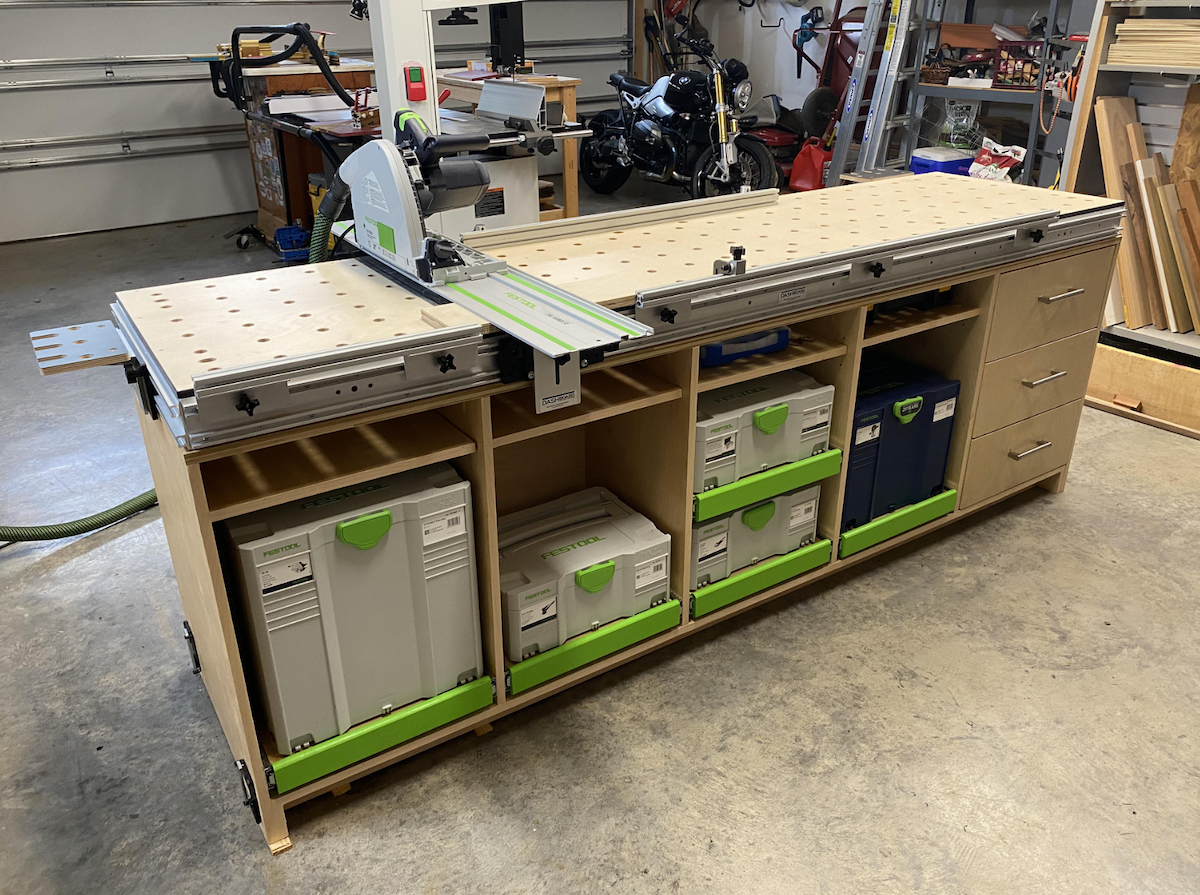
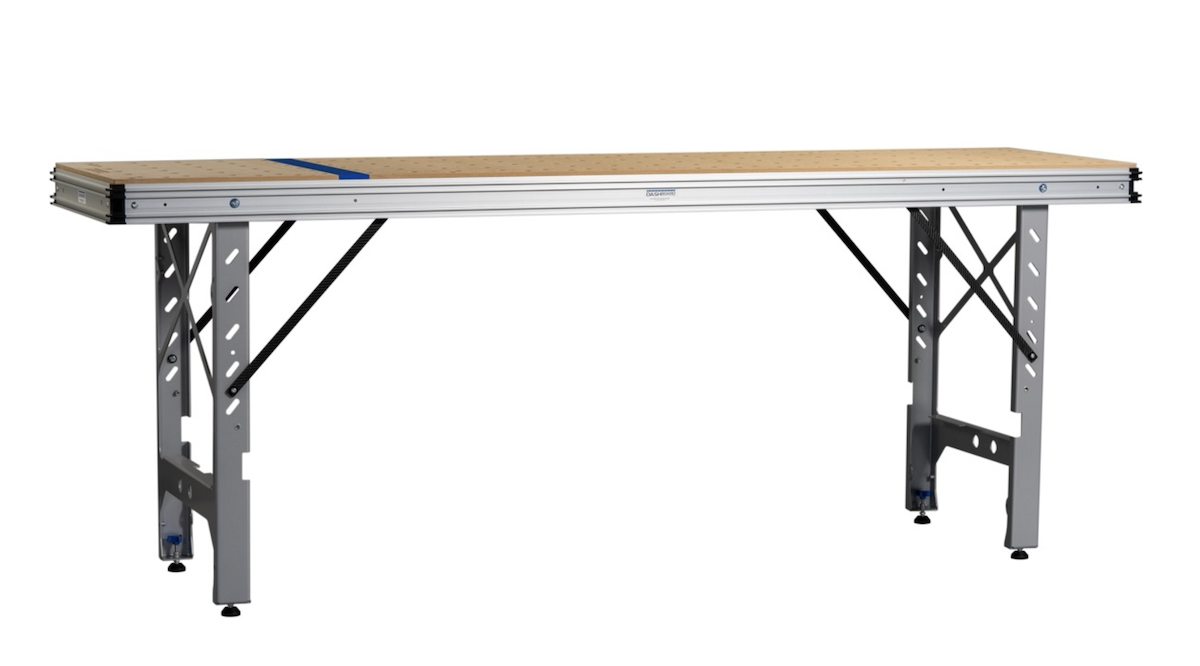
An MFT is a Multi-Function Table built around a perforated 20mm hole grid and guided cutting, letting you crosscut, clamp, sand, rout, and assemble all on one portable surface. It's a strong fit if you do precision crosscuts and sheet goods work, though drift and rigidity issues in some designs are why many owners upgrade to sturdier aftermarket benches and brackets.
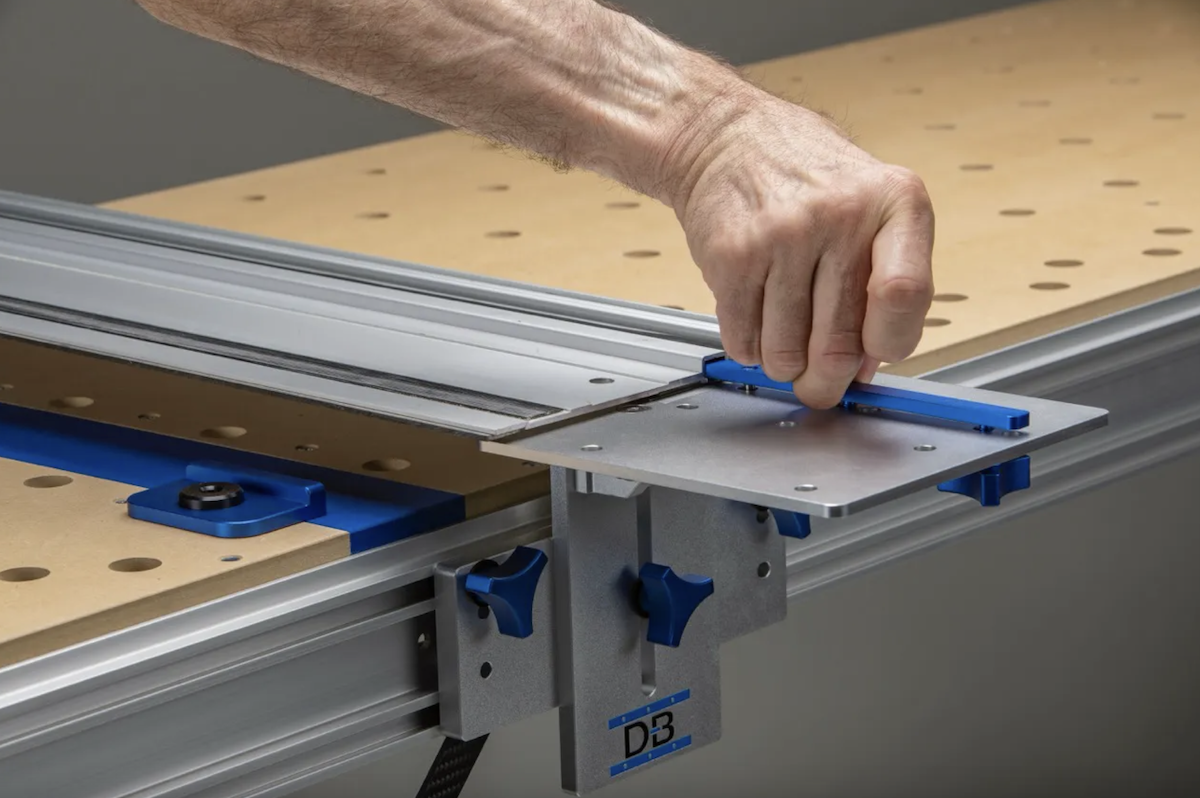
Track saw rail slip almost always comes down to dirty or worn grip strips, dusty or slick surfaces, or not enough downward pressure, and cleaning the strips plus clearing the workpiece solves most cases instantly. For repeatable, no-slip accuracy, clamps work but a fixed bench bracket system locks the rail in place for good.
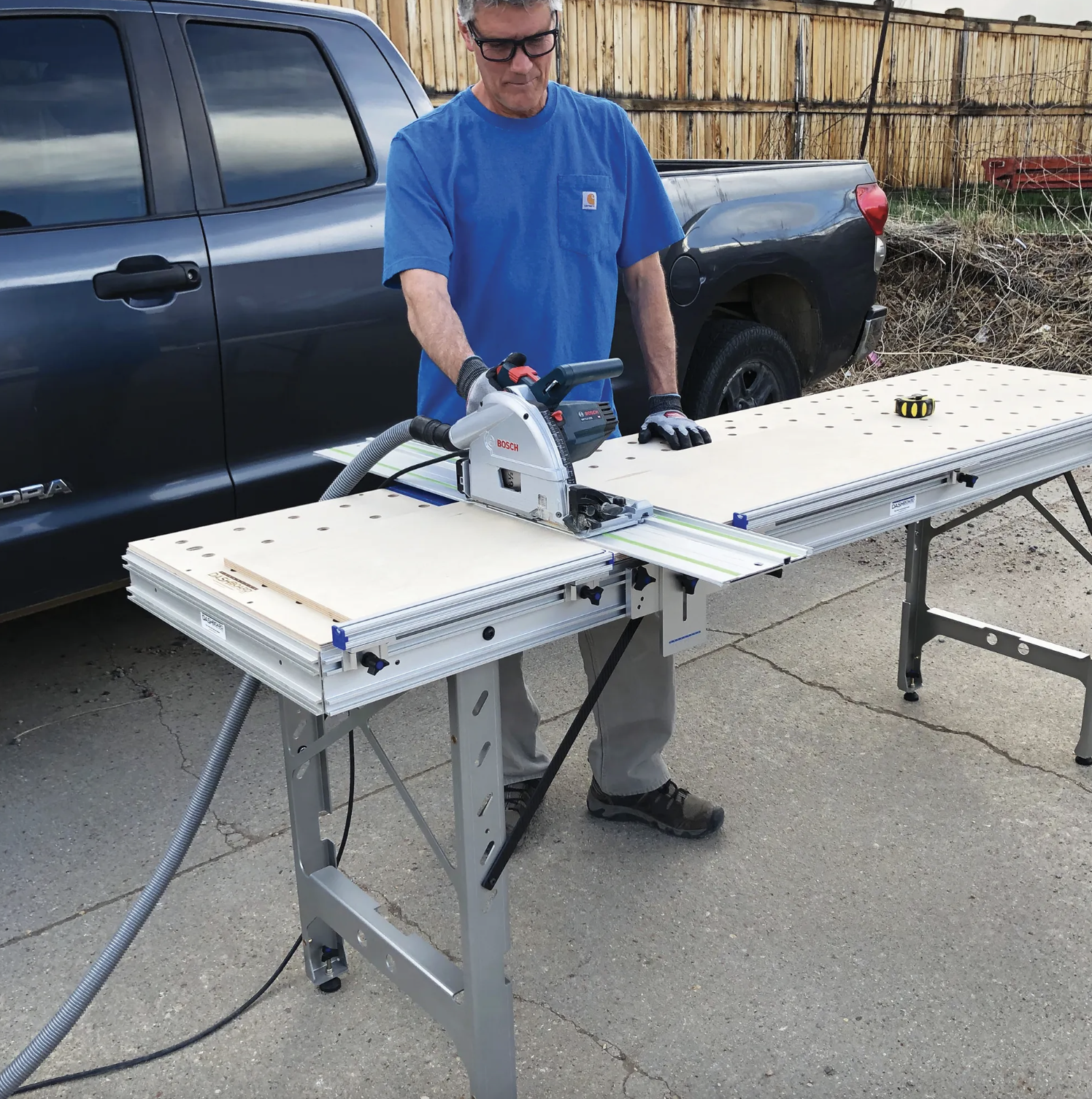
Scribing transfers the wall's true contour onto a cabinet edge so it fits tight against uneven walls and floors, and a portable bench that levels on the spot gives you the stable reference needed to mark and cut that line accurately. Level the piece, scribe to the widest gap, trim with the work fully supported, then test and refine until the fit sits flush.
Solid workholding is the whole game with edge banding, and a rigid portable bench with the right clamping accessories lets you present a panel flat or vertical for clean, even application. Lock the panel down, apply the banding steadily, then trim flush once the bond sets for crisp, consistent edges every time.

Straight edge cutting tools like track saws, guide rails, and guide rail brackets give woodworkers a fixed reference so cuts stay true instead of drifting off line. A rigid bench, squared rail, and the right accessories (fences, flip stops, parallel guides) turn one accurate cut into consistent, repeatable results every time.
