Your Cart
Product Title
$0
$0
-
+
Your cart is empty.
Add Discount Code?
Add Cart Note?
Workbench Comparison
Plenty of good woodworkers build their own MFT-style table, and plenty of our customers started that way. Building costs less cash and fits your shop exactly. Buying costs more upfront and gives you the build time back, with a bench that folds flat and goes to the job.
Last updated

Tradeoffs vary with your tools and design
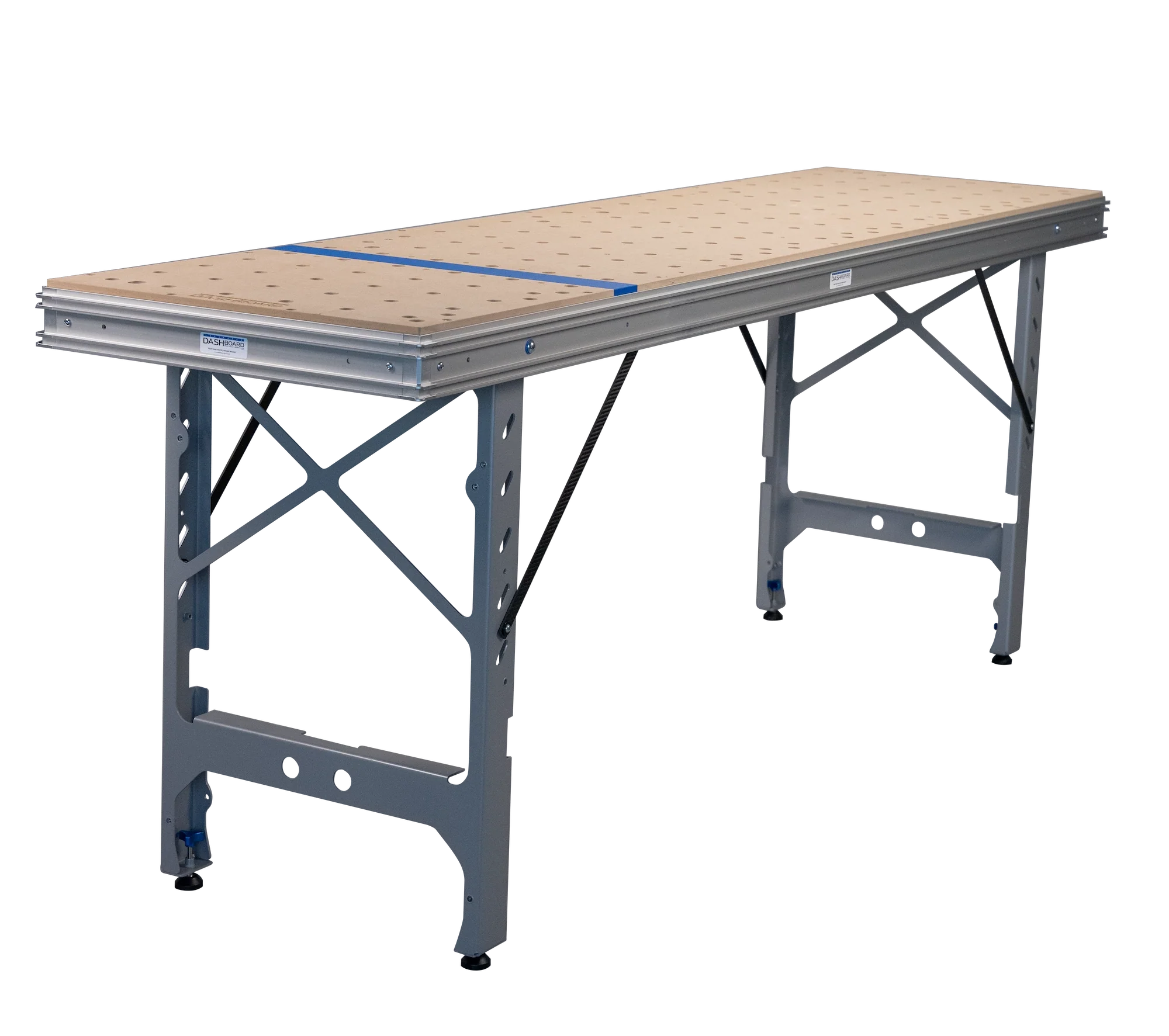
SIDE BY SIDE
Time, materials, and precision, without the sales pitch.
| Factor | DIY MFT Table | Portable MFT Table |
|---|---|---|
| Upfront cash | Materials, plus any jigs, bits, or hardware you don't already own | A finished bench, ready to use |
| Your time | Design, cutting, drilling, and assembly. Depends on your design and tools. | Unfold, level, and work in about a minute |
| Tools needed | A way to cut the top square, a 20mm drilling method, clamps, and basic shop tools | None to set up |
| Hole accuracy | As accurate as your jig and layout | Precision-machined 2-piece top |
| Top material | Usually MDF or plywood, in the thickness you choose | Precision-machined 2-piece MDF top |
| Cutting into the top | The top is the sacrificial surface unless you add a replaceable strip | Replaceable Cut Strip you can flip and reuse |
| Size and height | Any size and height you choose | 91.81" x 23.56" (Dash-Board) or 45.81" x 23.56" (ShortCut), 35.5" working height |
| Portability | Depends on the build. Folding legs take extra design work. | Folds to 3.5" (Dash-Board) or 6.5" (ShortCut) |
| Guide rail mounting | Your own hinge or bracket design, or T-track along the edge | Guide Rail Bracket Set mounts tool-free in the side clamp tracks |
| Clamping | 20mm dog holes, plus any T-track you add | 20mm grid plus clamp tracks on both sides |
| Changing it later | Rebuild or modify it any time | Add accessories or connect more benches |
Portable specs shown are for the Dash-Board Workbench and ShortCut Workbench.
IF YOU'RE BUILDING
Four stages, and where most of the time goes.
01 / PLAN
Decide how big the top needs to be for the work you do, and what height suits you. This is where DIY shines: it can fit your shop exactly.
Watch for: Leave room for clamping and rail mounting around the edges.
02 / TOP
Most builders use MDF or plywood. Every fence and stop registers off this top, so square edges matter more than anything else here.
Watch for: A top that's slightly out of square shows up in every crosscut.
03 / HOLES
20mm holes on an even grid are the standard for MFT-style tops. Builders use a drilling guide system, a CNC-cut top, or a drill press with a 20mm Forstner bit.
Watch for: Hole spacing and squareness decide how accurate your dogs and stops will be.
04 / BASE
The base can be a torsion box, a cabinet, or folding legs. Then add a way to hold a guide rail, like a hinge or T-track for brackets.
Watch for: Folding legs and light weight take the most extra design time.
ALREADY BUILT ONE?
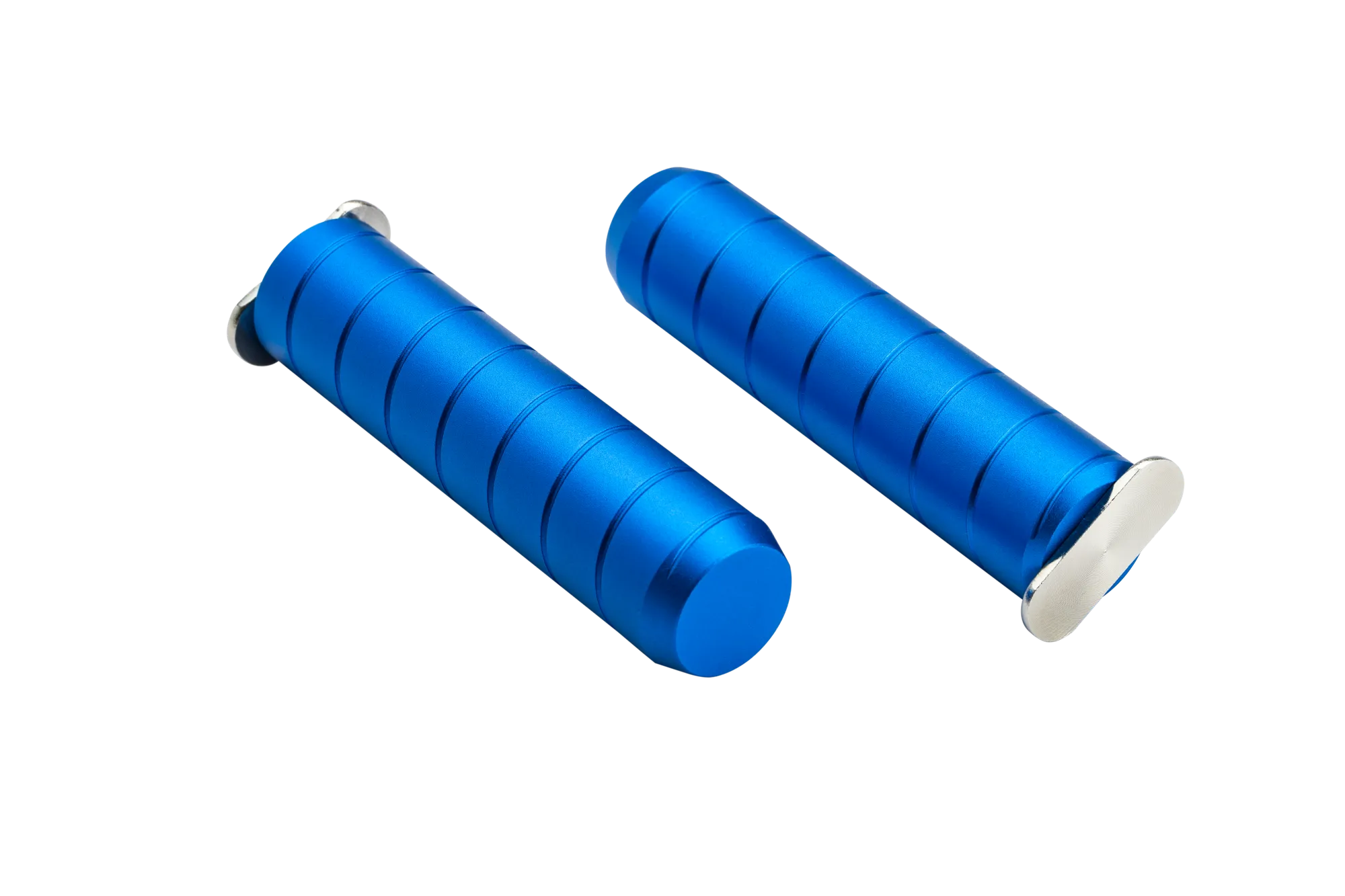
You don't have to choose all at once. Our hole-mounted accessories work on any top drilled to 20mm, and the Guide Rail Bracket Set works on tables with T-track along the edge.
“Got the [Bench] Dogs fast. Great fit, I use a 20mm Forstner bit in drill press or hand drill and I got great results. Dogs are sturdy, easy to grip and low fatigue.”
“The [Guide Rail Bracket Set] works like a charm on my custom made MFT style table.”
QUESTIONS
Building or buying? Rob answers questions directly at (303) 376-5703.
In cash, usually yes, especially if you already own the tools. The bigger cost is time, plus any jigs, bits, or hardware you need to drill accurate holes.
Sheet material for the top, usually MDF or plywood, a way to cut it square, a method for drilling 20mm holes on an even grid, material for the base, and hardware for mounting a guide rail.
20mm holes on an evenly spaced grid. That's the standard our Bench Dogs, SpiRail Dogs, and other hole-mounted accessories are built for.
Most builders use a drilling guide system, a CNC-cut top, or a drill press with a 20mm Forstner bit and a careful layout. The accuracy of your holes decides the accuracy of every dog, fence, and stop that registers on them.
Our Bench Dogs, SpiRail Dogs, Parallel Guides, and fences with Fence Blocks mount in 20mm holes, so they work on a top drilled to 20mm. The Guide Rail Bracket Set mounts in T-tracks, so your table needs T-track along the edge for the brackets.
It depends on the build. Many DIY tables are built for the shop. Making one fold flat and stay light takes extra design work. The Dash-Board folds to 3.5" and sets up in about a minute with no tools.
Both are common. MDF is flat and consistent. Plywood is lighter for its thickness and holds up better if it gets wet. Our benches use a precision-machined 2-piece MDF top.
When your time is worth more than the savings, when you need to take the bench to job sites, or when you want it ready to work the day it arrives. Plenty of people build their own first and switch later.
Ready to skip the build? Talk to Rob, the inventor, directly.

Questions about our products? View our extensive resources and educational videos or reach out to us Monday-Friday.
