Your Cart
Product Title
$0
$0
-
+
Your cart is empty.
Add Discount Code?
Add Cart Note?


.webp)
In today's urban environments, not everyone has the luxury of a spacious garage or dedicated workshop.
But here's the good news: with smart planning and the right equipment, you can create a highly functional workshop in even the most compact spaces.
Whether you're a professional craftsperson working in tight quarters or a passionate DIYer making the most of a small area, this guide will help you transform your limited space into an efficient workshop.
The cornerstone of any workshop, regardless of size, is the workbench. In small spaces, you need a solution that's both compact and versatile.
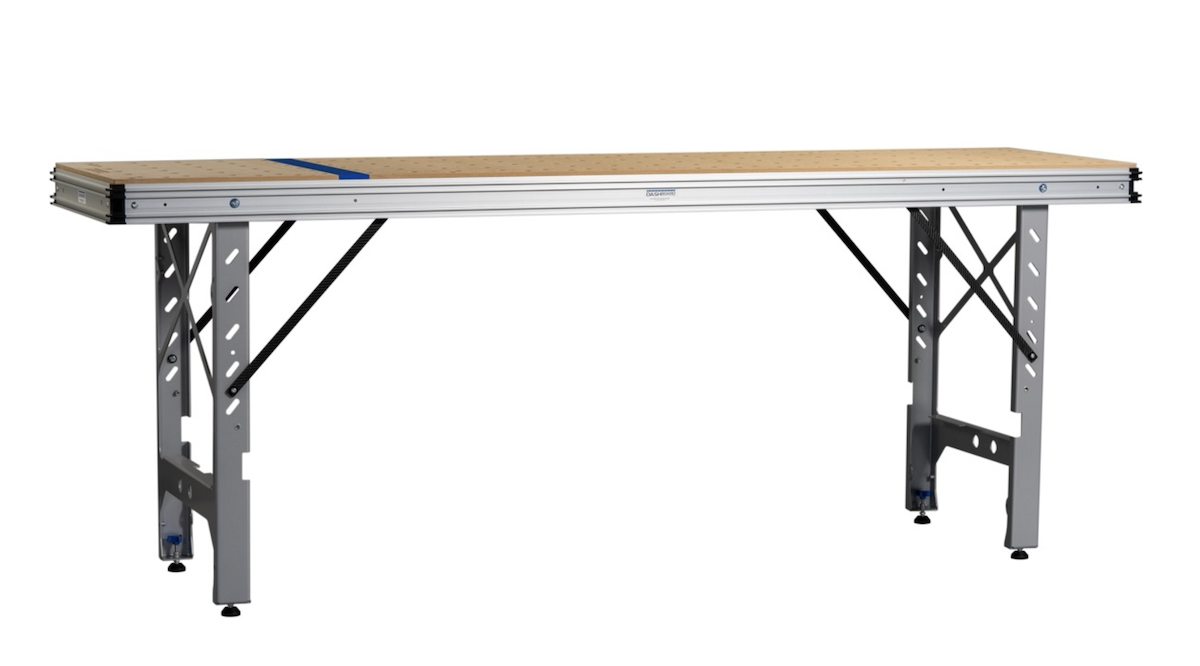
The ShortCut Workbench from Dash-Board exemplifies this perfect balance – it's specifically designed for confined spaces while maintaining professional-grade capabilities. At just 46.75" long x 24.5" wide x 35.5" tall, it occupies minimal floor space while providing ample work surface.
Despite its compact footprint, the innovative design allows for rips over 90 inches and crosscuts exceeding 48 inches, proving you don't have to compromise on project scope just because you're working in a smaller space.
What sets this workbench apart is its thoughtful construction. The precision-machined 2-piece MDF bench top is supported by a proprietary anodized aluminum extrusion frame, creating a structure that's both lightweight (just 42 lbs) and incredibly sturdy, capable of handling static loads up to 300 lbs. The addition of carbon fiber leg braces and the aluminum TopLink™ system ensures exceptional stability without adding unnecessary bulk.

Your workshop should adapt to your needs.
The ShortCut's lightweight, portable design means you can:
In small workshops, every inch counts.
Look for equipment that serves multiple functions:
A well-organized small workshop can actually improve your workflow.
Here's how:
Working in a small space requires thoughtful project management:
The right accessories can dramatically enhance your workshop's capabilities. For instance, the ShortCut Workbench's compatibility with various accessories allows you to:
“This was a great investment for my shop/small business. The type of purchase you think "I wish I bought this earlier" specifically (for me) with the Outrigger Bundle. This allowed me to completely get rid of my table saw. My shop is very small and my table saw had to be in the middle of it to account for the infeed and outfeed distance of the wood. It was such an inconvenience and frankly I ended up using my table saw as a table (that had no function). The dashboard system has provided me better and cleaner cuts but wow the dead on repetition and accuracy of every cut is just so so nice. Love it…”
- Gabriel P.
When setting up your compact workshop, safety should never be compromised. Keep these essential guidelines in mind:
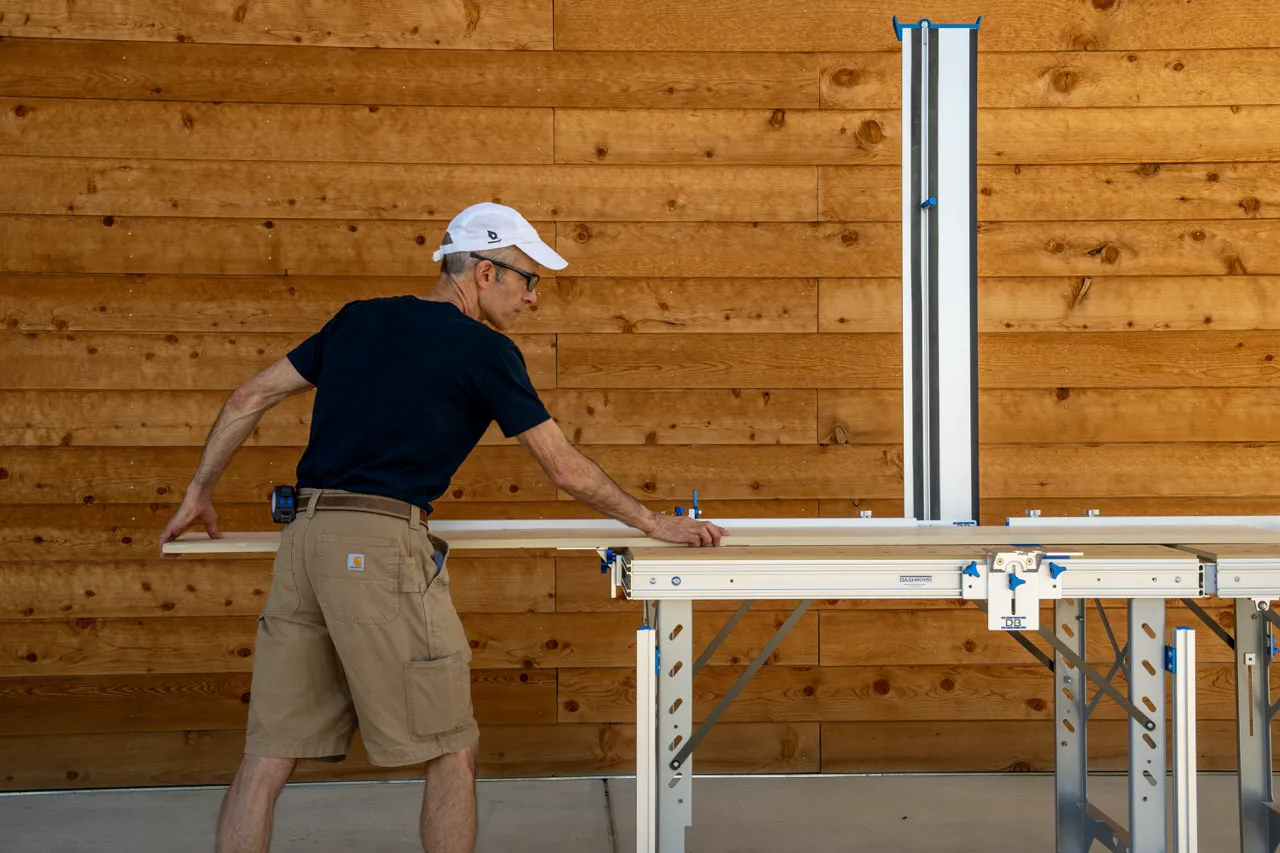
Creating a functional workshop in a small space isn't about compromising – it's about making intelligent choices. With innovative solutions like the ShortCut Workbench and thoughtful organization, you can build a workshop that rivals larger spaces in both capability and efficiency.
Remember, a well-planned mini workshop can actually offer advantages over larger spaces: less movement between tasks, better organization out of necessity, and the satisfaction of maximizing every square inch.
The key is choosing versatile, high-quality equipment that grows with your needs while respecting your space constraints.
The best part?
Getting started is simple. The ShortCut Workbench arrives fully assembled and ready to use, allowing you to focus on what matters most – your projects.
Ready to transform your small space into an efficient workshop?
You can create a functional workshop in surprisingly small spaces. The key is choosing space-efficient equipment. For example, the ShortCut Workbench requires just 46.75" x 24.5" of floor space while providing the capability for rips over 90" and crosscuts over 48". With proper organization and a portable workbench, even a single-car garage or small basement area can become a highly effective workspace.
Despite space constraints, you can still tackle large projects with the right setup. The ShortCut Workbench demonstrates this perfectly - while compact, it enables extensive cuts through smart design and can be connected with additional units for larger projects. The key is planning your workflow and using modular equipment that can be reconfigured as needed. Many woodworkers find that breaking down large materials into manageable pieces before bringing them into the workshop helps manage space effectively.
Quality equipment often proves more valuable in small spaces because it needs to perform multiple functions efficiently. As one ShortCut user noted, replacing their table saw with a more versatile workbench system actually improved their workflow while freeing up valuable space. Premium equipment typically offers better stability, precision, and versatility - crucial factors when every square foot counts. Look for tools that can serve multiple purposes and grow with your needs.
Dust management becomes even more critical in confined spaces.
Consider:
Effective organization in a small workshop relies on maximizing vertical space and choosing versatile storage solutions. Your workbench can serve as a central organization point - the ShortCut, for instance, comes with built-in features for tool storage and accessories. Additional tips include:
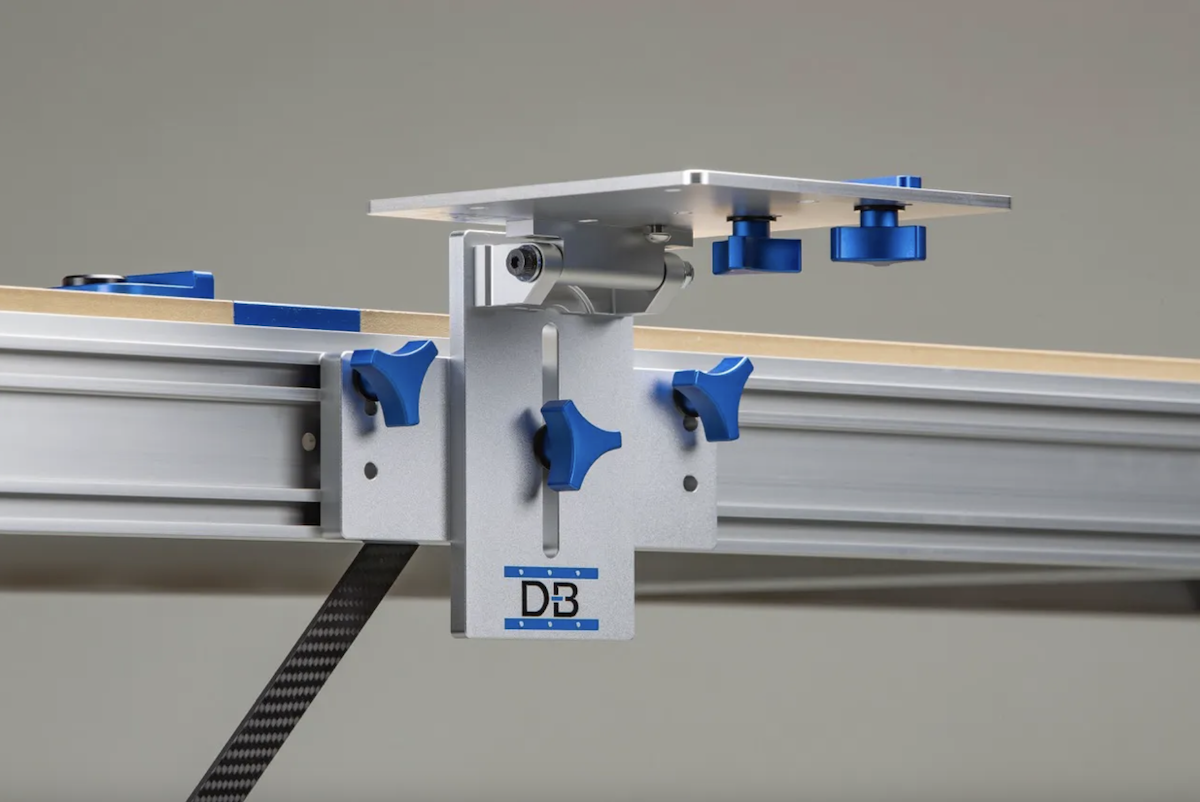
Guide rail brackets hinge your track saw rail to a fixed, repeatable 90-degree position on the bench, so you calibrate square once instead of re-checking it before every cut. Rigid, machined construction with no play is what lets the rail hold that reference through height changes and daily use, turning setup into a one-time task rather than a recurring chore.
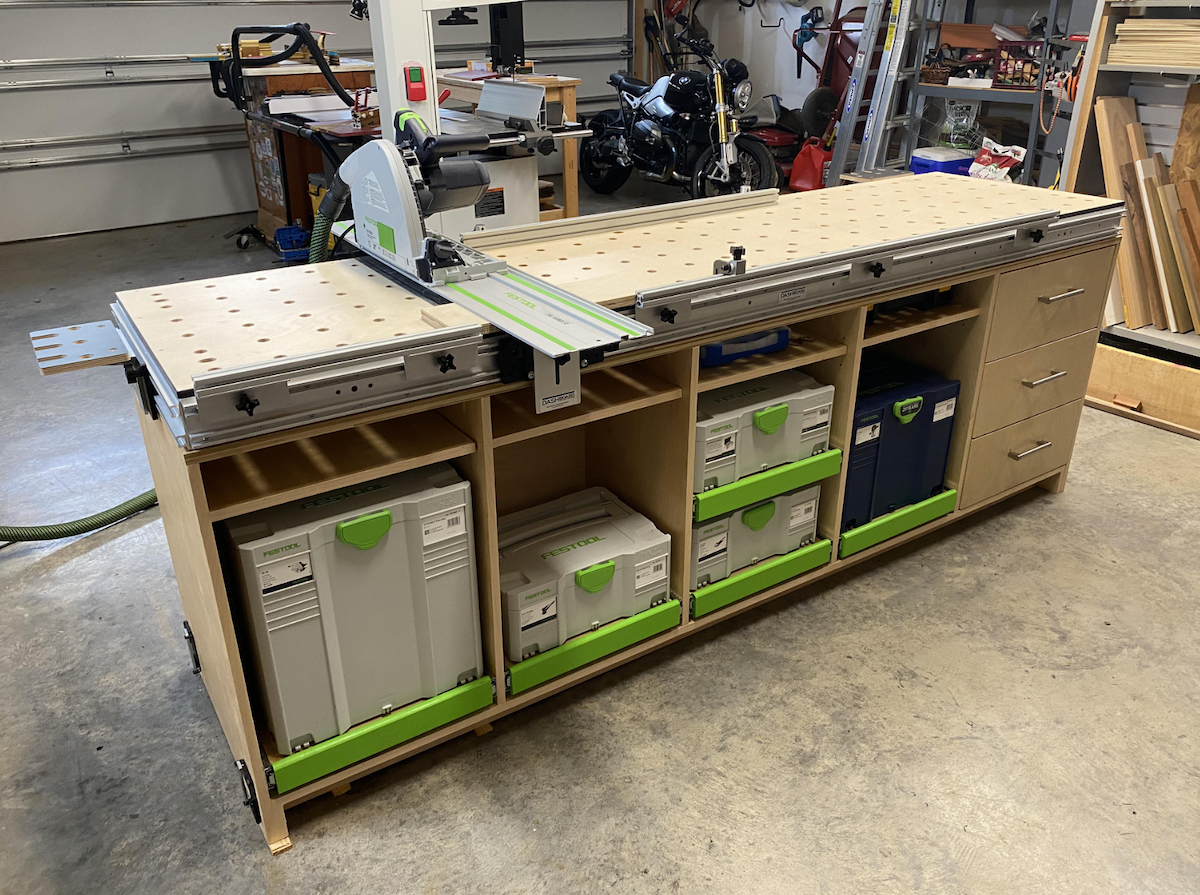
An MFT is a Multi-Function Table built around a perforated 20mm hole grid and guided cutting, letting you crosscut, clamp, sand, rout, and assemble all on one portable surface. It's a strong fit if you do precision crosscuts and sheet goods work, though drift and rigidity issues in some designs are why many owners upgrade to sturdier aftermarket benches and brackets.
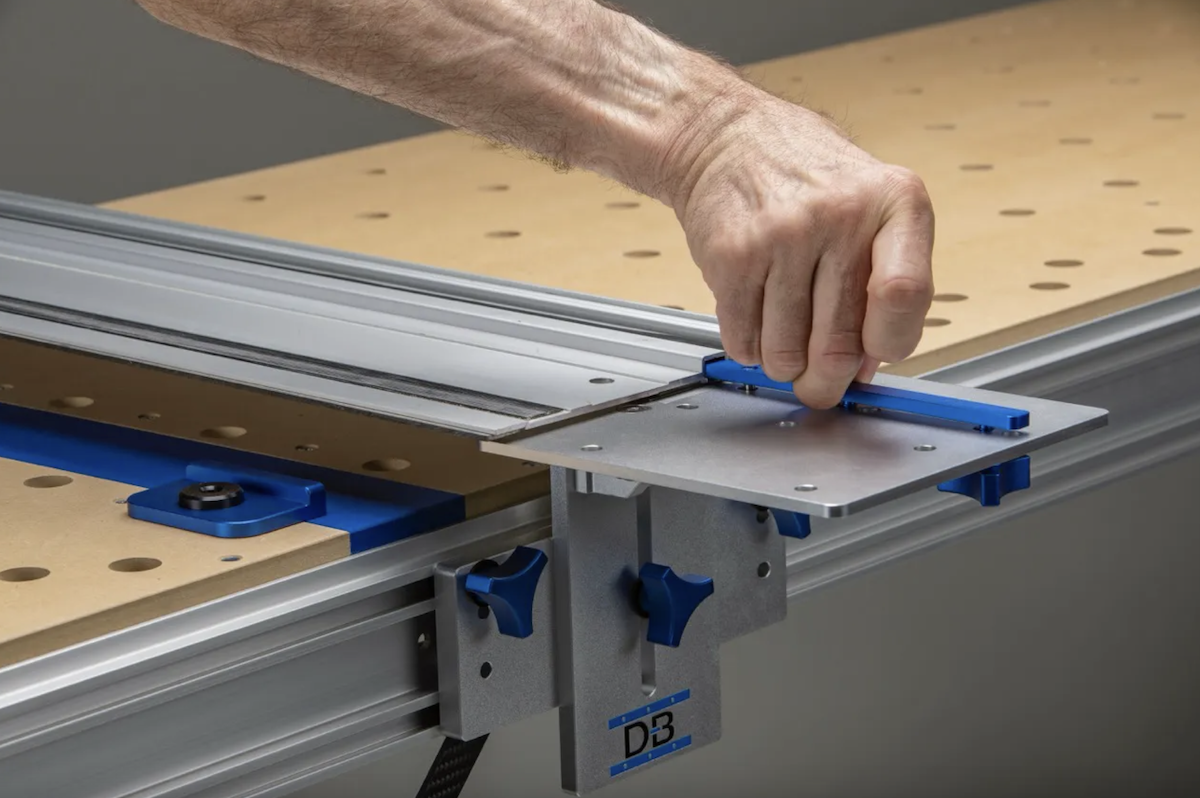
Track saw rail slip almost always comes down to dirty or worn grip strips, dusty or slick surfaces, or not enough downward pressure, and cleaning the strips plus clearing the workpiece solves most cases instantly. For repeatable, no-slip accuracy, clamps work but a fixed bench bracket system locks the rail in place for good.
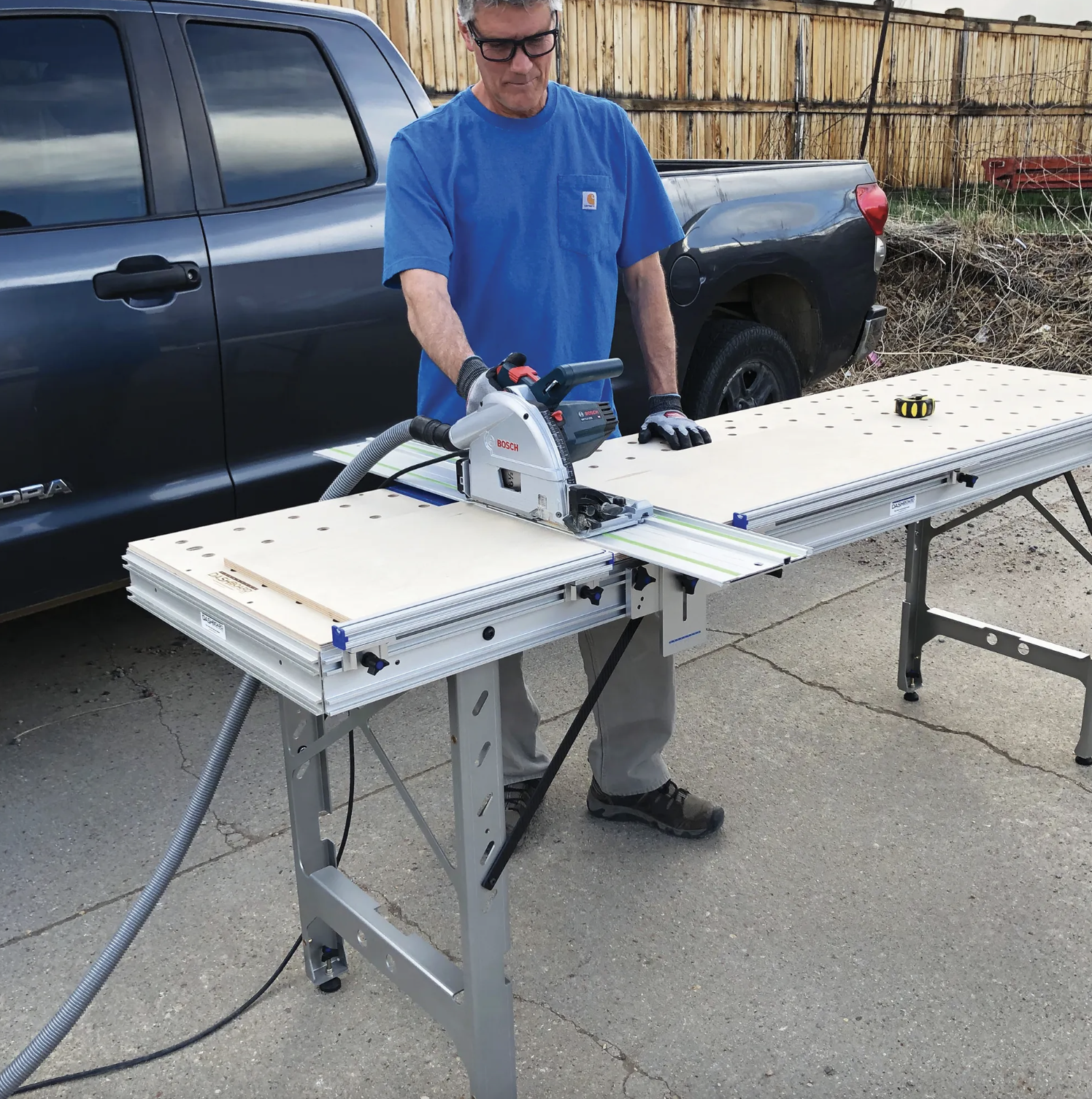
Scribing transfers the wall's true contour onto a cabinet edge so it fits tight against uneven walls and floors, and a portable bench that levels on the spot gives you the stable reference needed to mark and cut that line accurately. Level the piece, scribe to the widest gap, trim with the work fully supported, then test and refine until the fit sits flush.
Solid workholding is the whole game with edge banding, and a rigid portable bench with the right clamping accessories lets you present a panel flat or vertical for clean, even application. Lock the panel down, apply the banding steadily, then trim flush once the bond sets for crisp, consistent edges every time.

Straight edge cutting tools like track saws, guide rails, and guide rail brackets give woodworkers a fixed reference so cuts stay true instead of drifting off line. A rigid bench, squared rail, and the right accessories (fences, flip stops, parallel guides) turn one accurate cut into consistent, repeatable results every time.
