Your Cart
Product Title
$0
$0
-
+
Your cart is empty.
Add Discount Code?
Add Cart Note?


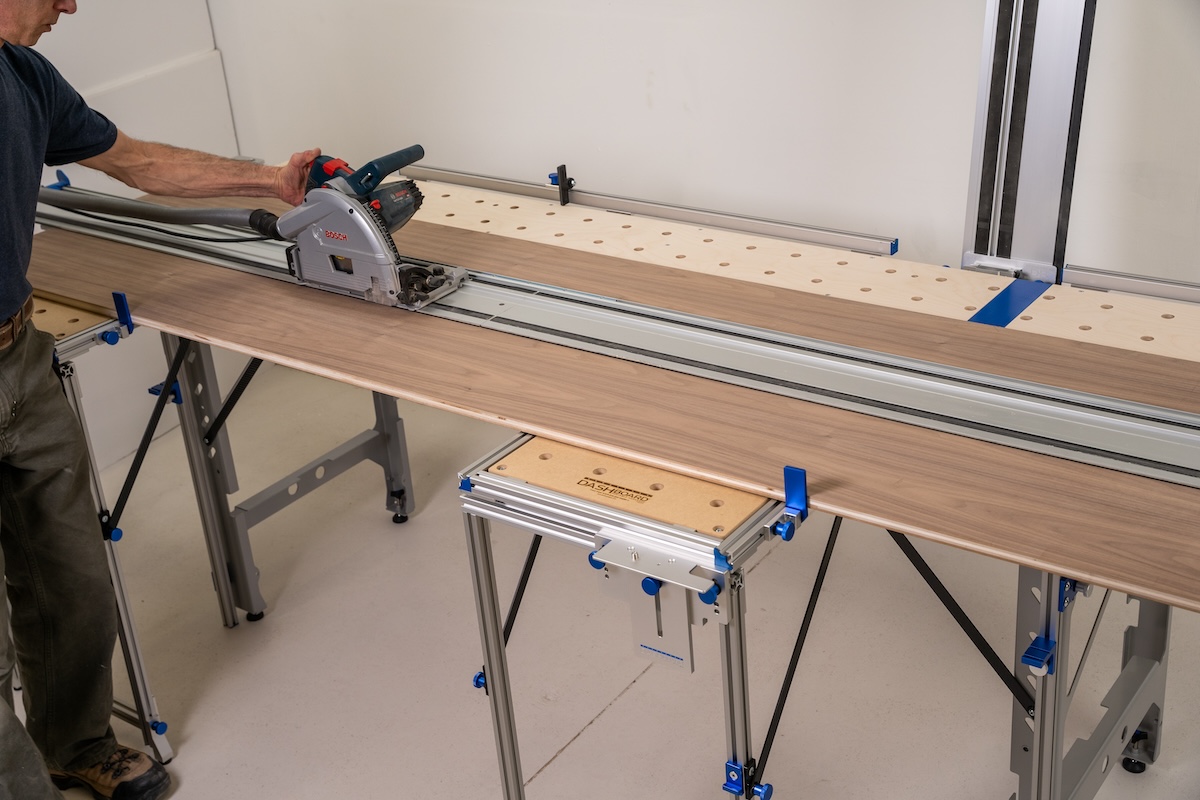
Watch a contractor unfold a portable workbench, lock the legs, and start cutting in just minutes. Now watch someone mount a 40-pound crosscut sled, check alignment, clear the outfeed space, and realize they need help moving a full sheet of plywood.
That daily friction explains why crosscut sleds are gathering dust while portable workbenches dominate job sites.
The numbers tell the story: A traditional crosscut sled weighs 30-50 pounds and eats up 6-12 square feet of wall space.
A portable workbench like the Dash-Board system weighs 62 pounds total, folds to 3.5 inches thick, and handles materials a table saw can't touch—full 4x8 sheets with crosscuts up to 48 inches.
Every crosscut sled needs dedicated storage. Mount it on the wall? That's prime real estate gone. Stack it in a corner? Now it's a dust collector. The average two-car garage workshop loses 15% of usable space to jig storage alone.
Portable workbenches solve this by becoming their own storage.
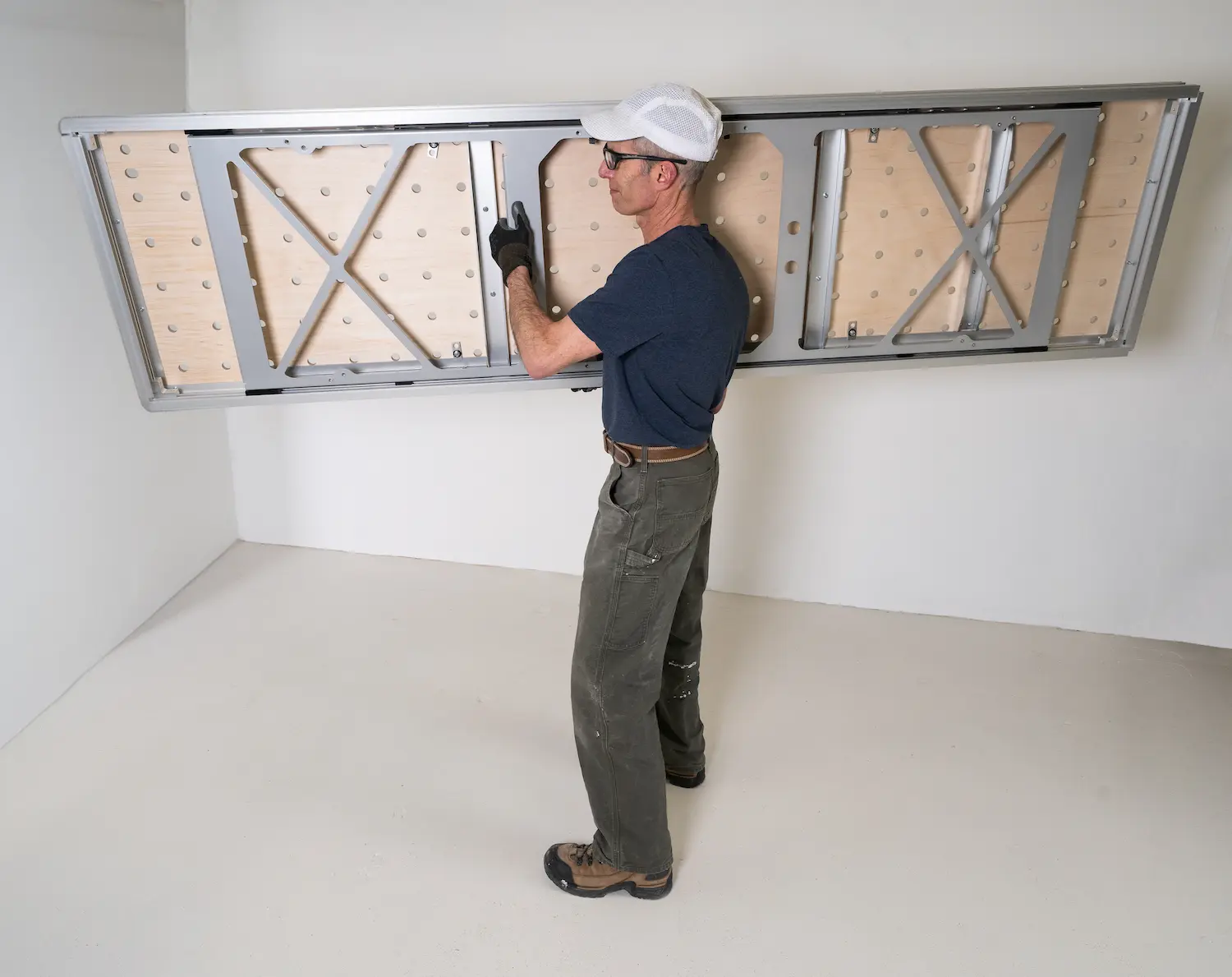
The Dash-Board Workbench folds to 92" x 24" x 3.5"—thin enough to slide behind a door or hang on a wall. When you need it, the adjustable legs deploy in seconds, creating a 35.5 inch high work surface that's more stable than most permanent benches.
Track saws changed everything. Pair one with a portable workbench, and you get:
Crosscut sled workflow (5-10 minutes):
Portable workbench workflow (1-2 minutes):
Fixed sleds concentrate weight at the table saw, creating tipping hazards with large panels. Portable workbenches distribute weight across four points, with adjustable legs compensating for uneven floors (+1 inch adjustment range typical).
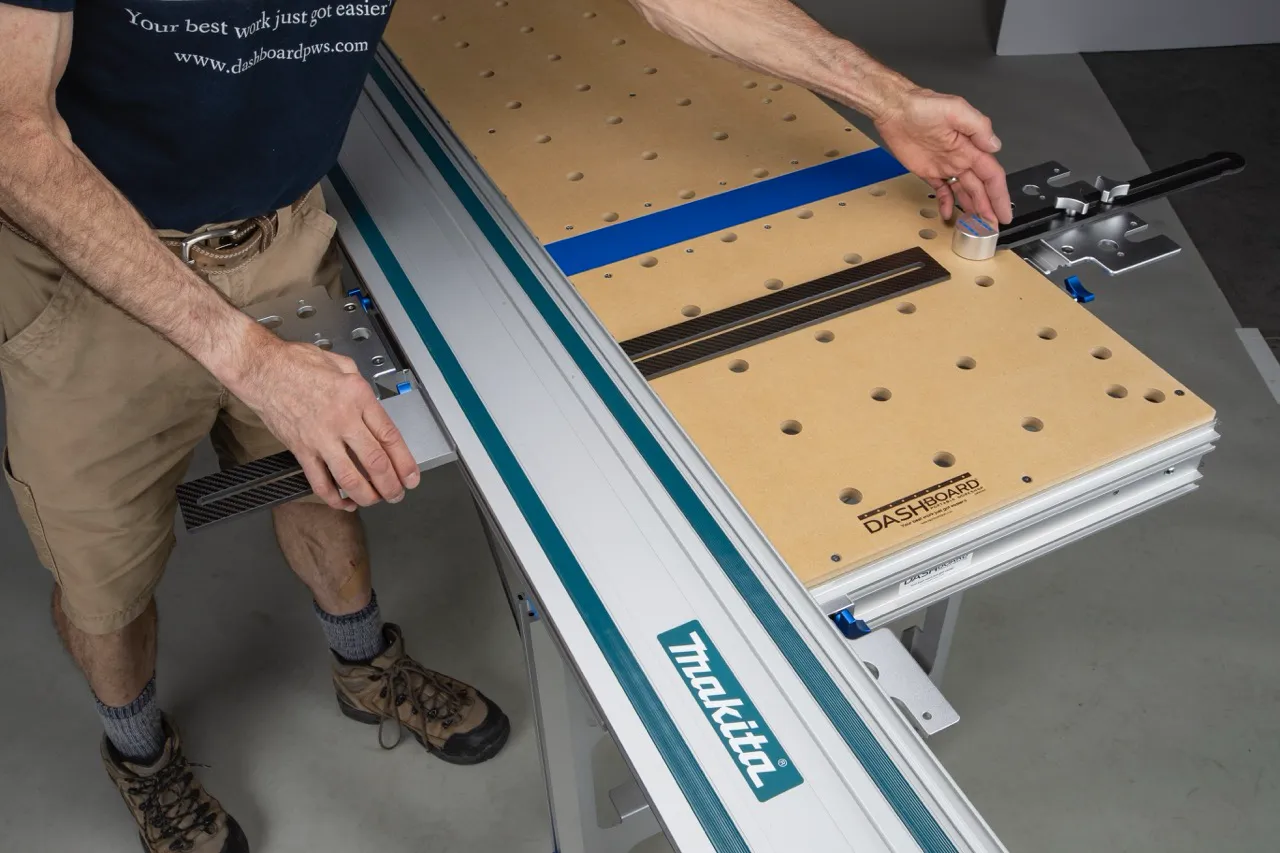
Modern portable benches use CNC-machined tops with 20mm hole patterns accurate to ±0.1mm. The Dash-Board's replaceable cut strip means you never lose accuracy to blade kerf wear—flip it for a fresh edge, replace it when both sides wear.
Crosscut sleds require more elaborate structures to adequately support material across their entire length/width, and may require two operators. Portable workbenches support the entire panel, reducing flex/tilt and improving cut quality, making a single operator’s job simpler. Add accessories like Track Stars and you extend support ~12 inches beyond the bench edge.
Contractor reality: You're cutting drawer boxes from ¾" plywood. With a crosscut sled, you need:
With a portable bench and track saw:
Traditional approach: Set up stop blocks on the sled, hope they don't shift, measure constantly.
Portable bench approach: Use integrated fence systems with flip stops. The Rip Gauge accessory sets dimensions including blade kerf—measure once, cut identically every time.
Crosscut sleds aren't dead. They excel at:
But for sheet goods, varying locations, and modern workflows, portable systems win.
For 90% of crosscutting tasks, yes. Sheet goods and anything requiring mobility work better on portable systems. Keep your sled for specialized small parts work.
What about accuracy compared to a well-tuned sled?
Modern portable benches achieve ±0.5mm accuracy over 8 feet when properly set up. The Dash-Board system's machined holes ensure repeatable setups.
Load ratings vary from 100-400 pounds. The Dash-Board supports 400 pounds static load. For comparison, a full sheet of ¾" plywood weighs about 60 pounds.
While circular saws work with guide rails, track saws offer superior dust collection, splinter-free cuts, and safety features. The investment ($400-700) pays off in material savings and cut quality.
Both systems handle small pieces effectively. It can be argued that using a track saw is actually safer for small parts because the blade retracts into the saw when a cut is finished and there’s no concern about pulling cut pieces back past the blade, as would be typical with a table saw.
Quality aluminum-frame benches show minimal wear after 5+ years of contractor use. Replaceable components (cut strips, bench tops) extend lifespan indefinitely. Compare to MDF sleds that warp and wear within 2-3 years.
The shift from fixed jigs to portable systems reflects modern woodworking reality: smaller shops, mobile work, and versatile tools that justify their space. While crosscut sleds served admirably for decades, portable workbenches now offer a more practical solution for most woodworkers' daily needs.
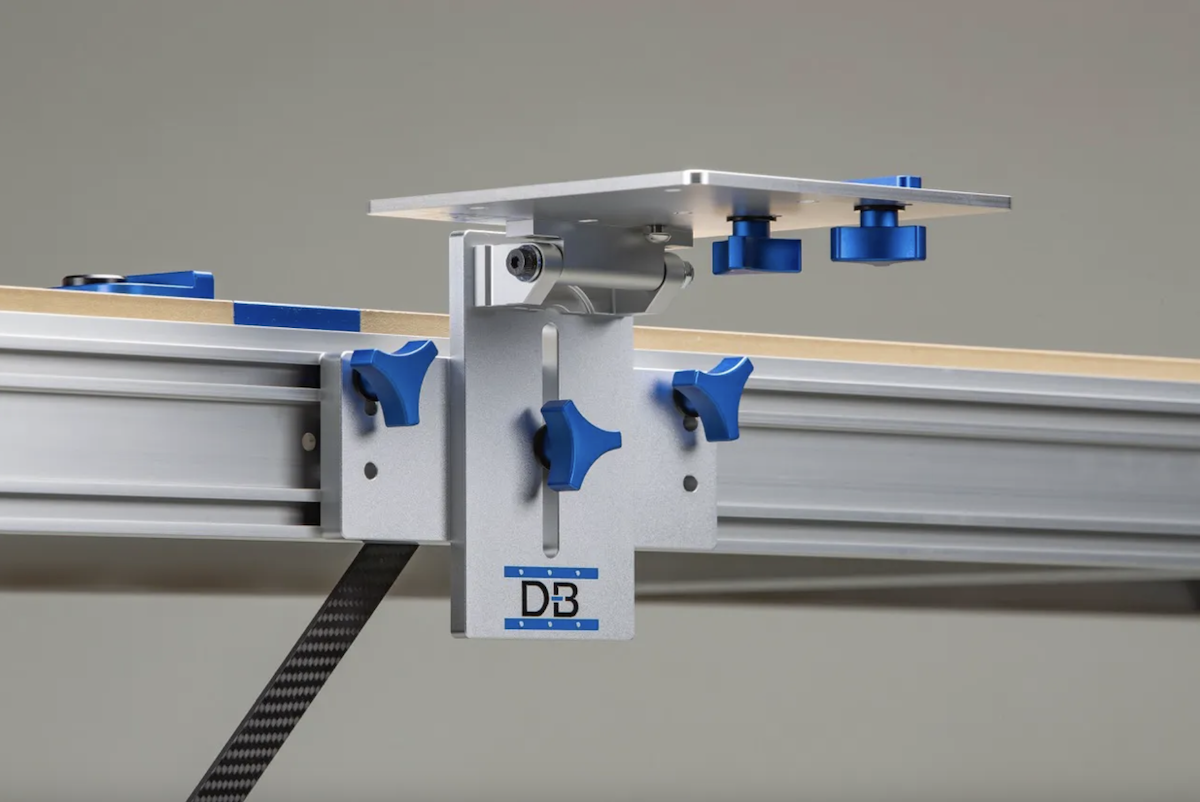
Guide rail brackets hinge your track saw rail to a fixed, repeatable 90-degree position on the bench, so you calibrate square once instead of re-checking it before every cut. Rigid, machined construction with no play is what lets the rail hold that reference through height changes and daily use, turning setup into a one-time task rather than a recurring chore.
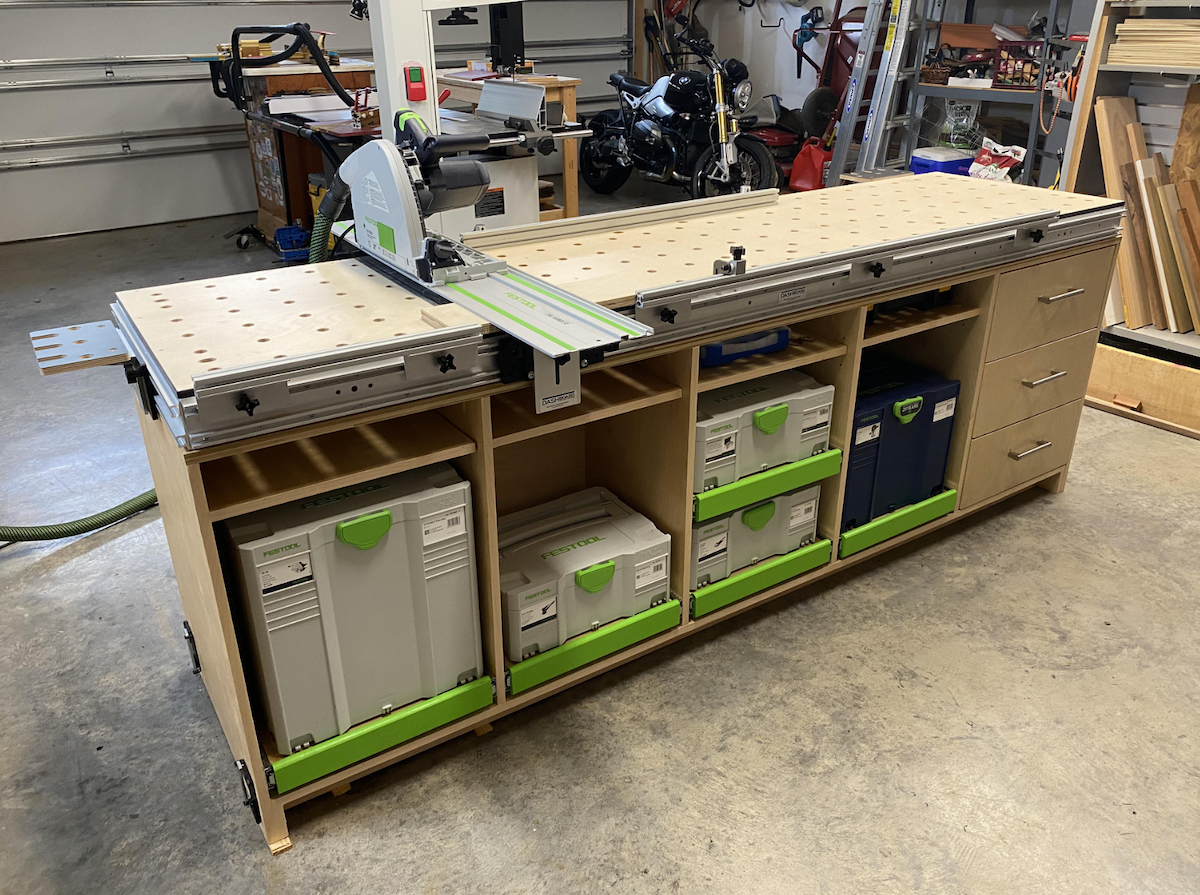
An MFT is a Multi-Function Table built around a perforated 20mm hole grid and guided cutting, letting you crosscut, clamp, sand, rout, and assemble all on one portable surface. It's a strong fit if you do precision crosscuts and sheet goods work, though drift and rigidity issues in some designs are why many owners upgrade to sturdier aftermarket benches and brackets.
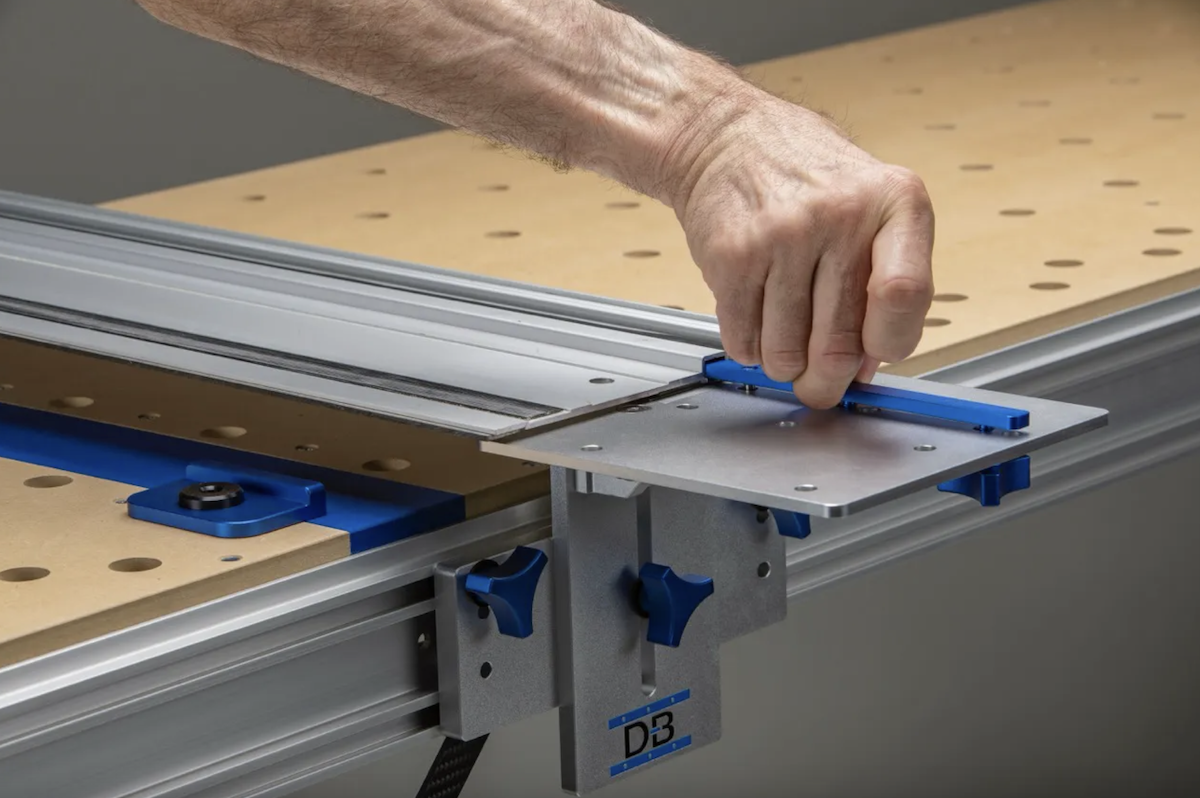
Track saw rail slip almost always comes down to dirty or worn grip strips, dusty or slick surfaces, or not enough downward pressure, and cleaning the strips plus clearing the workpiece solves most cases instantly. For repeatable, no-slip accuracy, clamps work but a fixed bench bracket system locks the rail in place for good.
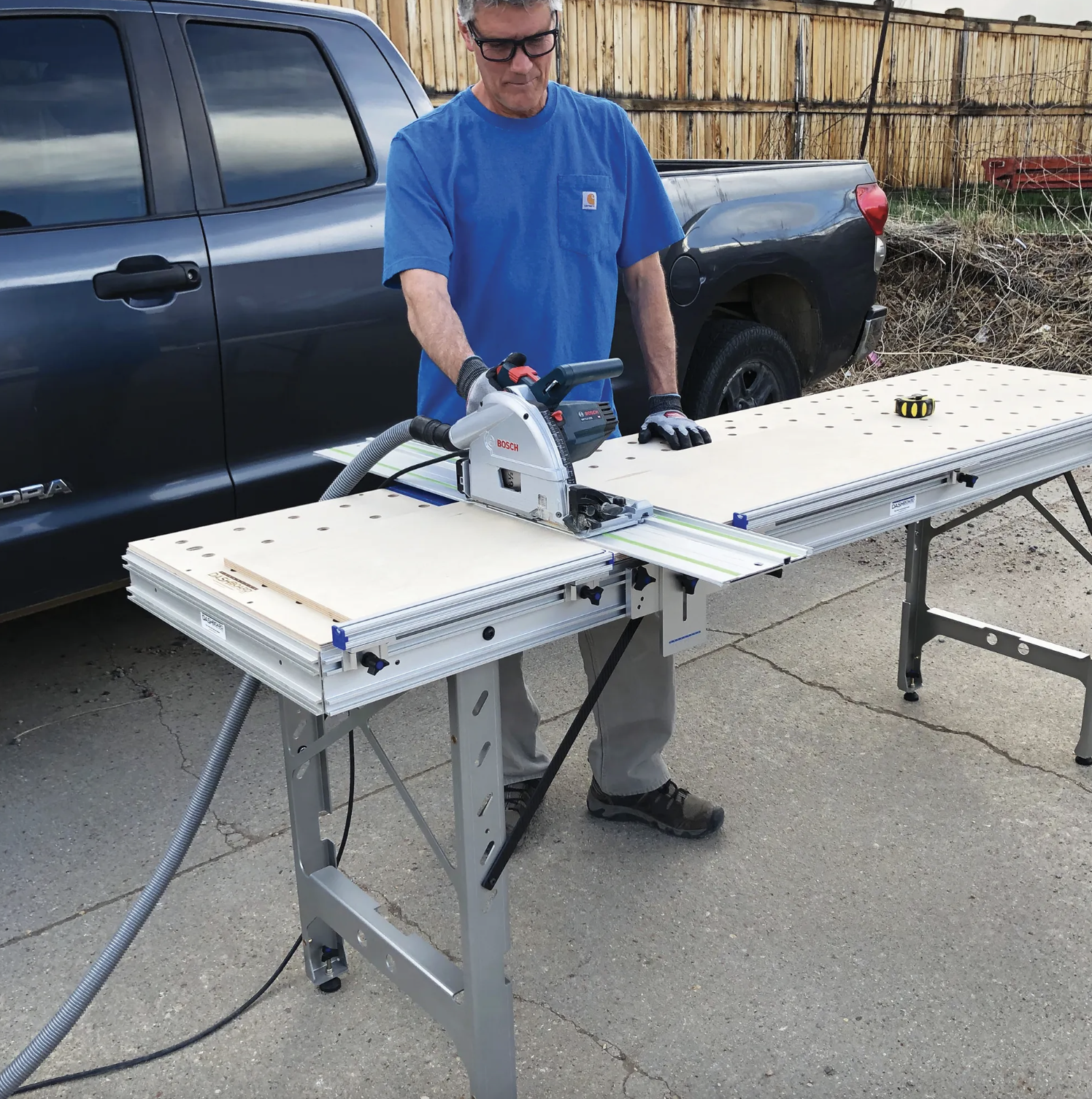
Scribing transfers the wall's true contour onto a cabinet edge so it fits tight against uneven walls and floors, and a portable bench that levels on the spot gives you the stable reference needed to mark and cut that line accurately. Level the piece, scribe to the widest gap, trim with the work fully supported, then test and refine until the fit sits flush.
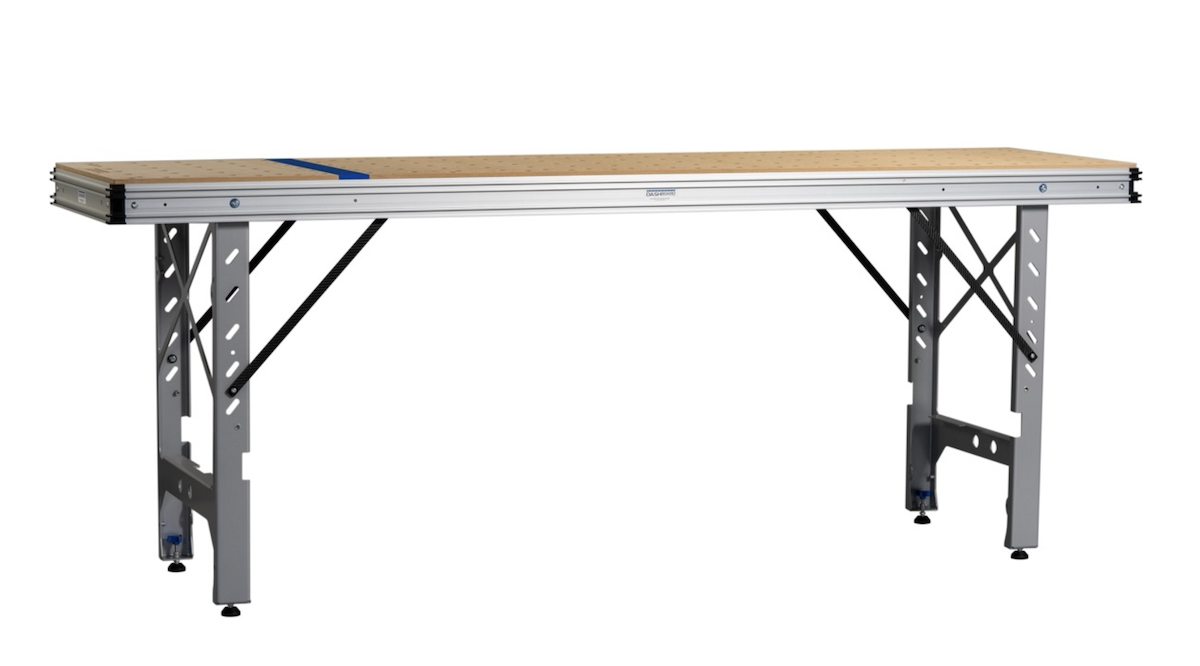
Solid workholding is the whole game with edge banding, and a rigid portable bench with the right clamping accessories lets you present a panel flat or vertical for clean, even application. Lock the panel down, apply the banding steadily, then trim flush once the bond sets for crisp, consistent edges every time.

Straight edge cutting tools like track saws, guide rails, and guide rail brackets give woodworkers a fixed reference so cuts stay true instead of drifting off line. A rigid bench, squared rail, and the right accessories (fences, flip stops, parallel guides) turn one accurate cut into consistent, repeatable results every time.
