Your Cart
Product Title
$0
$0
-
+
Your cart is empty.
Add Discount Code?
Add Cart Note?


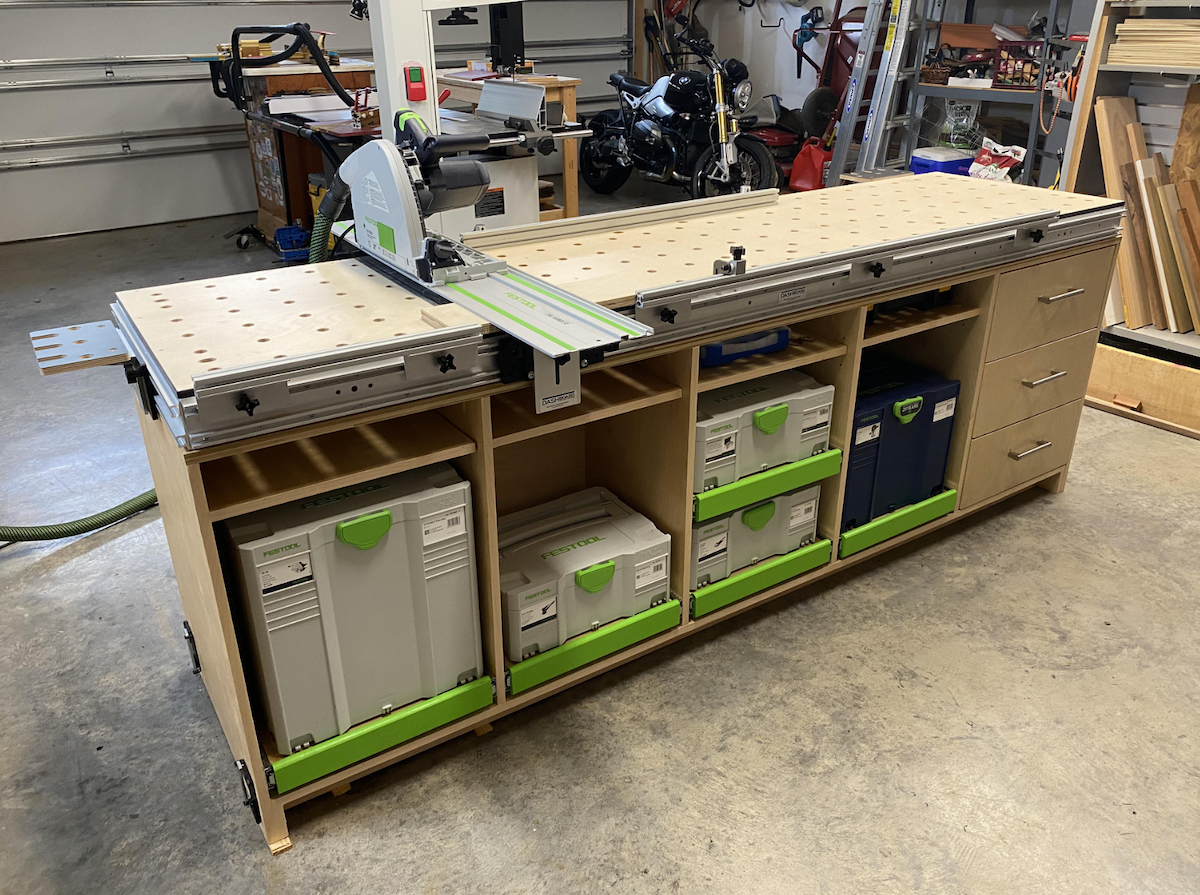
If you have spent any time watching woodworking videos or browsing tool forums, you have run into the MFT. People treat it as a near-mandatory purchase, talk about "MFT-style" setups, and build whole workflows around it. But a lot of woodworkers never stop to ask what the thing actually does, or whether it solves a problem they have.
An MFT is a specific kind of workbench with a specific job, and it is genuinely great at some tasks and unnecessary for others. Here is what an MFT table is, how it works, where it shines, and how to decide if one belongs in your shop.
MFT stands for Multi-Function Table. The name describes exactly what it is meant to be: a single work surface that handles several jobs that would otherwise need separate stations. Cutting, clamping, sanding, routing, and assembly all happen on the same bench.
The format was popularized by the German toolmaker Festool, whose MFT line became the reference point for the whole category. Today people use "MFT" loosely to mean any bench built on the same idea, including shop-built tables and benches from other makers that use the same hole pattern and accessory approach.
The heart of an MFT is its top. It is a perforated surface drilled with a grid of 20mm holes, spaced on a regular pattern. On the Festool version, those holes sit on a 96mm-on-center grid. Around the perimeter, integrated side rails or T-slots give you more attachment points.
That hole grid is what makes the table multifunctional. You drop in bench dogs to create a square reference, fit clamps to hold a workpiece down or on edge, and set stops for repeatable cuts. Paired with a track saw and a guide rail, often mounted on a pivoting bracket, the MFT becomes a crosscut station that produces square, repeatable cuts without measuring every time. Some MFTs use folding legs that give two working heights and pack down for transport.
In short, the perforated top plus guided cutting is the whole idea. The holes turn the surface into a flexible jig, and the rail turns it into a saw station.
MFTs earn their reputation in a handful of tasks:
No tool is perfect, and the MFT has well-known trade-offs that are worth understanding before you buy.
The first is cost. A complete MFT setup with the table, a track saw, and the accessories to make it sing represents a real investment, and the premium brands are not cheap.
The second is accuracy holding over time. The standard guide rail bracket and hinge systems on some MFTs can drift out of square, which means re-checking and re-squaring before critical cuts. For anyone doing precision work all day, that repeated calibration is a genuine annoyance, and it is the single most common complaint about the original design. It’s also a waste of time.
The third is rigidity. Some MFT tops and frames can feel flimsy under heavy lateral force, flexing or shifting while you work. A surface that moves while you work creates frustration and undercuts the precision the table is supposed to deliver.
These are exactly the gaps that aftermarket makers set out to close. Companies like Dash-Board build benches and guide rail brackets specifically to address the flex and the constant re-squaring, offering more rigid surfaces and bracket sets that hold a fixed, repeatable 90-degree reference. The Dash-Board Guide Rail Bracket Set is even a direct replacement for the Festool MFT3 brackets, which is why many MFT owners upgrade rather than replace the whole table.
Here is a straightforward way to decide:
If you do precision crosscutting, work with sheet goods, value portability, or want shop-grade accuracy without a stationary saw, an MFT-style bench is a strong fit. If your work is mostly rough carpentry, or you already have a capable table saw setup and the space to use it, you can likely skip it without missing much.
The clearest candidates are cabinet makers, finish carpenters, furniture makers, and serious hobbyists who need accurate, repeatable cuts and often work in limited space. Track saw owners in particular get the most out of an MFT, because the table is designed around guided cutting.
An MFT is a Multi-Function Table built around a perforated top and guided cutting, and it is very good at the specific jobs of square crosscutting, clamping, sanding, routing, and assembly in a portable package. Whether you need one comes down to the work you do, the tools you already own, and how much you value precision and portability.
If you decide an MFT-style setup fits your work, the smartest move is to look past the entry-level pain points that frustrate longtime owners. Prioritize a rigid surface and a bracket system that stays square, since those two things determine whether the table actually delivers the accuracy it promises. Match the bench to your real workflow, invest in the accessories that matter for your cuts, and the MFT format will reward you for years.
MFT stands for Multi-Function Table. It is a workbench with a perforated top, usually a grid of 20mm holes, and integrated side rails that let you clamp, cut, sand, rout, and assemble on one surface. The format was popularized by Festool and is now a broad category of similar benches and accessories.
An MFT table is used for square crosscutting with a track saw and guide rail, clamping and holding workpieces, sanding, routing, and assembling cabinets and frames. The hole grid provides flexible configurations for stops and dogs, and the guided cutting makes repeatable, accurate cuts without measuring every piece.
It depends on your work. For precision crosscutting, sheet goods, built-ins, and small or mobile shops, an MFT-style setup is well worth it. If you already own a tuned table saw with plenty of space, or you do mostly rough carpentry, you can do great work without one. Factor in that you are buying a system, not just a table.
The hinge and bracket systems on some MFTs can develop play overthe course of a project. This lets the rail drift from a true 90 degrees and forces you to re-check and re-square before accurate cuts. This is the most common complaint about the original design, and it is why many owners switch to sturdier aftermarket brackets such as those from Dash-Board, which are thoughtfully designed and made of robust, precision-machined parts that maintain their settings.
Yes. Many woodworkers build their own MFT-style top using a guide system to drill the 20mm hole grid, then add a guide rail bracket set and fence. A shop-built top on a frame made from T-slot extrusion, paired with quality aftermarket brackets and accessories, can match or exceed an entry-level commercial table, often for less money.
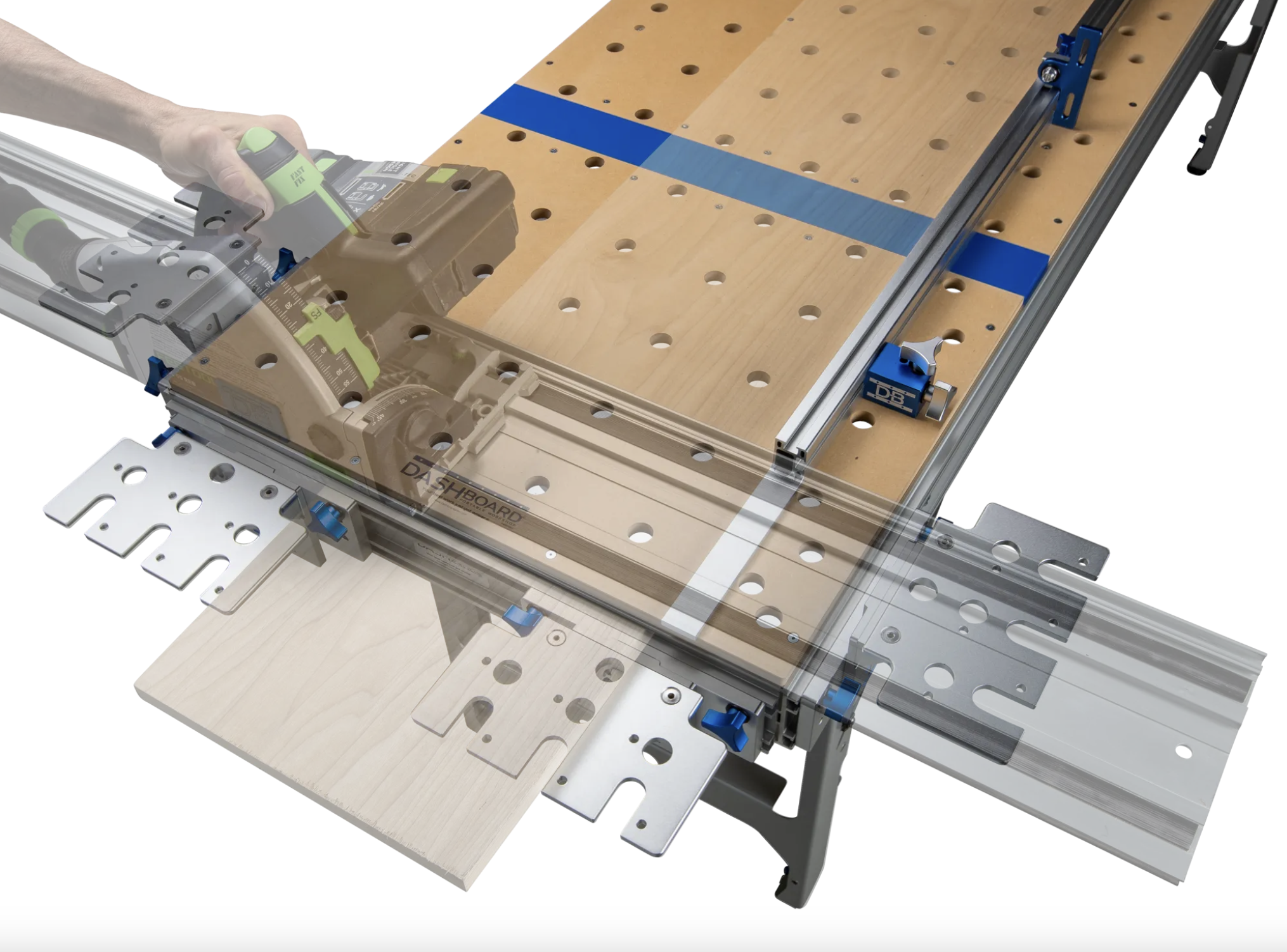
A miter comes from angling the rail or workpiece, while a bevel comes from tilting the saw. Verify your angles in scrap, lock the setup so nothing moves, and every part in the run comes out the same.
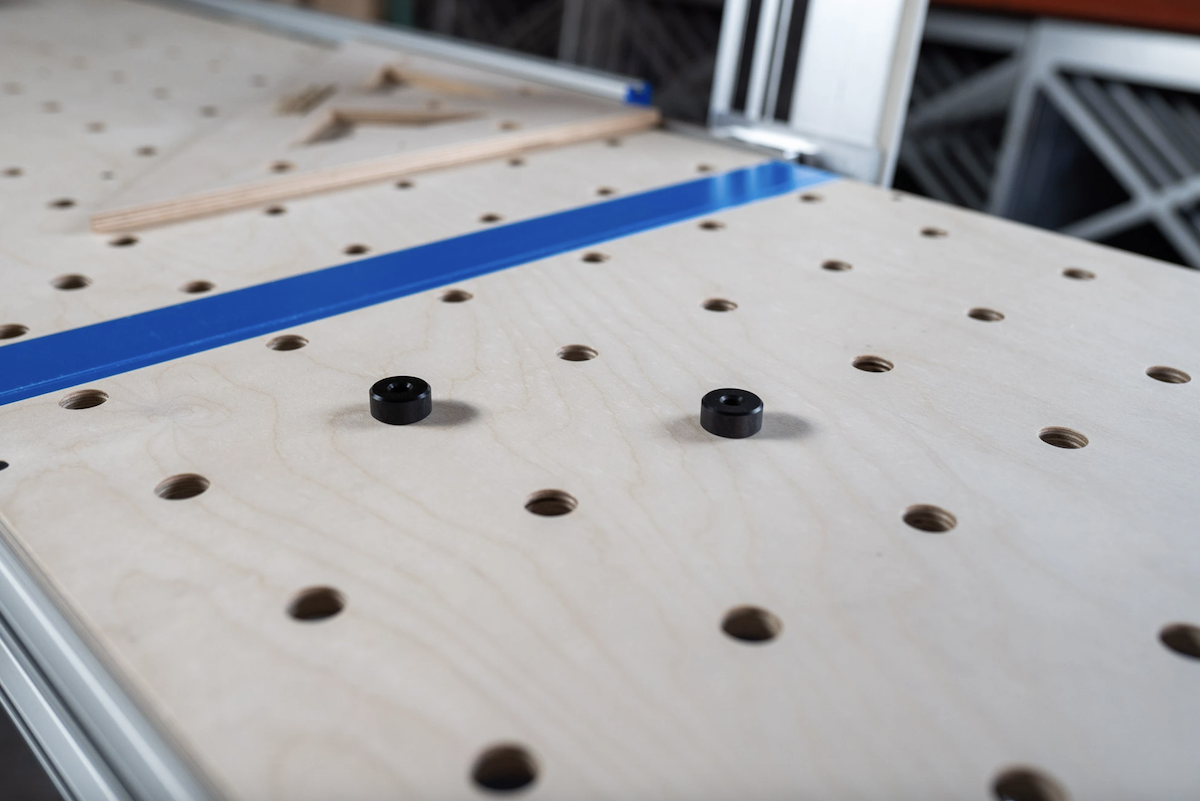
The 96mm grid of 20mm dog holes is the MFT standard Festool set, so any true 20mm/96mm bench shares the same accessories. Since the spacing is fixed, counting holes is more reliable than measuring.
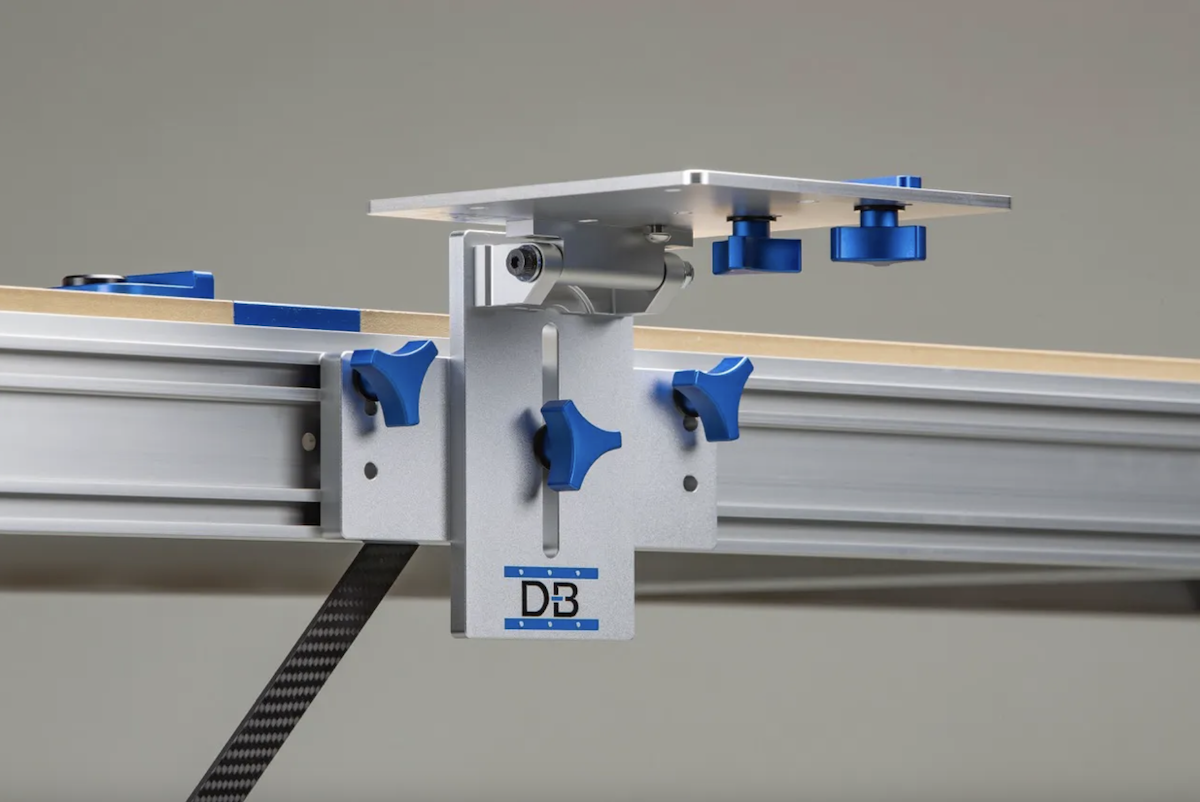
Guide rail brackets hinge your track saw rail to a fixed, repeatable 90-degree position on the bench, so you calibrate square once instead of re-checking it before every cut. Rigid, machined construction with no play is what lets the rail hold that reference through height changes and daily use, turning setup into a one-time task rather than a recurring chore.
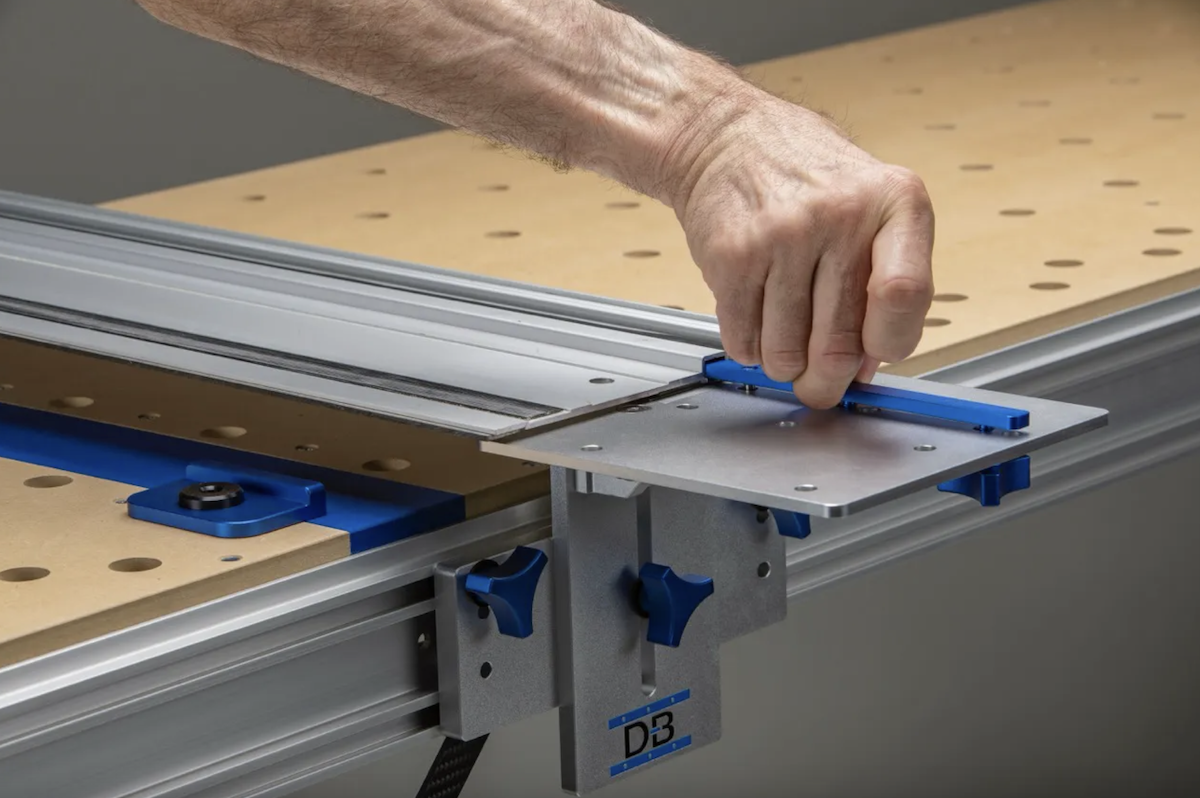
Track saw rail slip almost always comes down to dirty or worn grip strips, dusty or slick surfaces, or not enough downward pressure, and cleaning the strips plus clearing the workpiece solves most cases instantly. For repeatable, no-slip accuracy, clamps work but a fixed bench bracket system locks the rail in place for good.
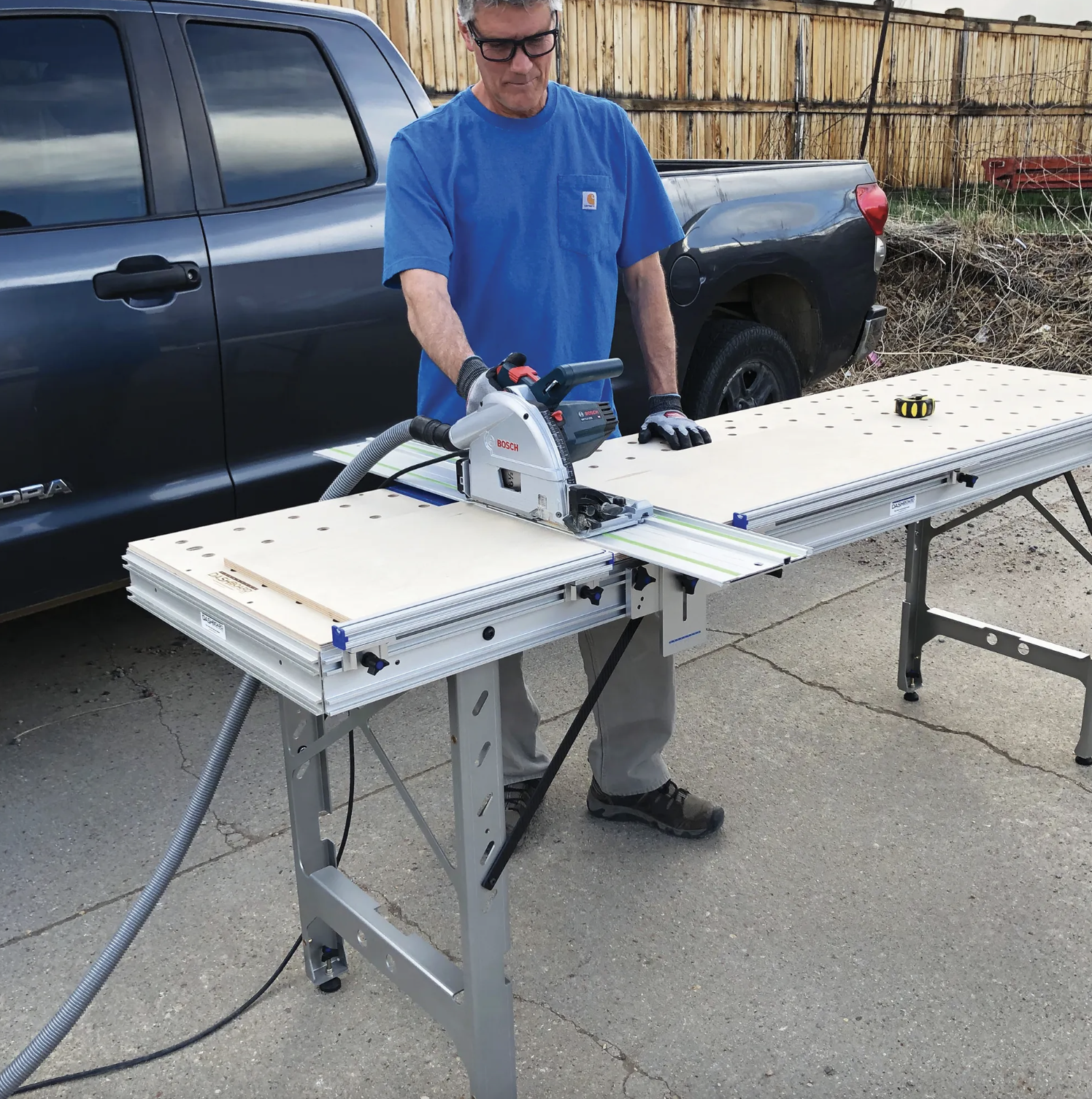
Scribing transfers the wall's true contour onto a cabinet edge so it fits tight against uneven walls and floors, and a portable bench that levels on the spot gives you the stable reference needed to mark and cut that line accurately. Level the piece, scribe to the widest gap, trim with the work fully supported, then test and refine until the fit sits flush.
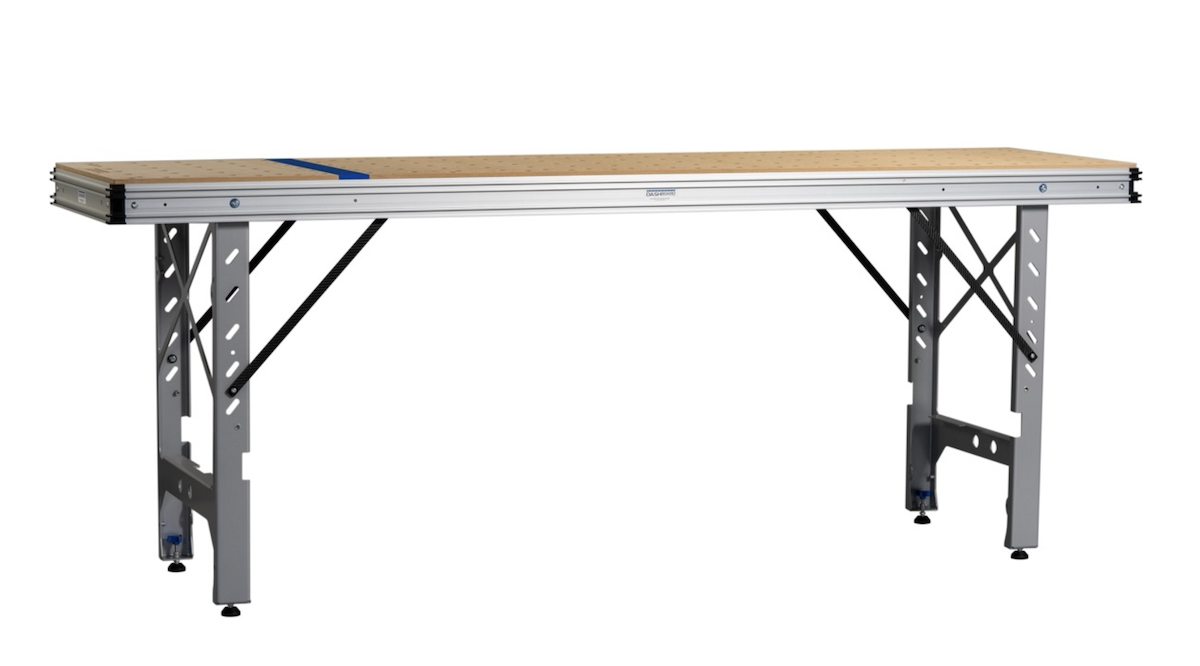
Solid workholding is the whole game with edge banding, and a rigid portable bench with the right clamping accessories lets you present a panel flat or vertical for clean, even application. Lock the panel down, apply the banding steadily, then trim flush once the bond sets for crisp, consistent edges every time.
