Your Cart
Product Title
$0
$0
-
+
Your cart is empty.
Add Discount Code?
Add Cart Note?


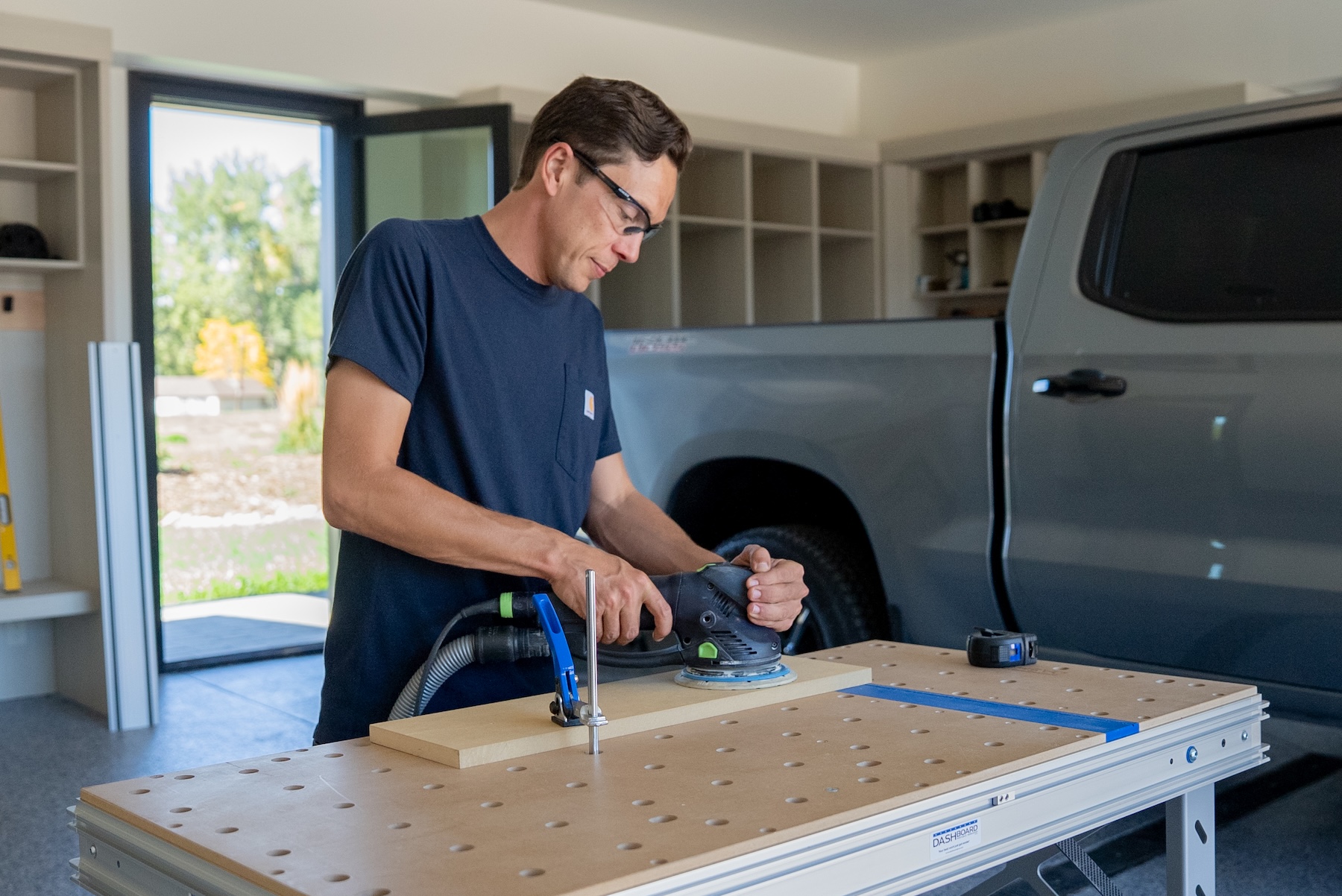
Quick summary: In its Texas Woodworking Festival recap, FORG3D described attendees testing the Dash-Board Portable Workshop’s stability firsthand. They pushed against the bench, and it stayed put. That simple interaction gets at something every woodworker understands: a workbench should give you a solid foundation for the work ahead. forg3d.store
You can learn a lot about a workbench by looking at its construction. You learn something different when you put your hands on it.
At the Texas Woodworking Festival in Austin, attendees had that opportunity with the Dash-Board Portable Workshop. According to FORG3D’s event recap, visitors repeatedly approached the bench and pushed against it, trying the same demonstration they had seen Rob perform in his videos.
FORG3D summed up the result in three words:
“It didn’t move.”
That observation caught our attention because stability is central to what we build. It also explains why getting a bench in front of woodworkers matters. Some qualities are easier to feel than to photograph. forg3d.store
A stable workbench gives you a dependable surface for positioning, securing, and working on material. When a bench shifts as you apply pressure, you have another variable to manage alongside your tools and workpiece.
Think about sanding an edge or working a hand plane across a board. Your effort should go into the material. If the bench rocks with each stroke, you end up adjusting your stance or interrupting the work to steady the setup.
The same principle applies when preparing a cut. You take time to position the material, establish a reference, and secure everything. A rigid foundation supports that process.
Stability does not replace proper clamping, accurate setup, or good technique. It gives those things a better starting point.
The Dash-Board’s construction brings together a proprietary anodized aluminum frame, one-piece aluminum legs, and carbon fiber leg braces. These components form the structure beneath the work surface.
The bench also provides independent leg leveling and pivoting feet to accommodate uneven surfaces. That matters when your workspace changes from a shop floor to a jobsite.
Portability remains part of the design. The Dash-Board folds to 3.5 inches thick for storage and transport, with tool-free setup in about a minute. The goal is straightforward: a solid workspace you can bring where the work needs to happen. www.dashboardpws.com
Our product and setup videos provide a closer look at the Dash-Board system and how its components work together.
FORG3D also described using the Dash-Board to demonstrate its products throughout the weekend, with workholding equipment and racks arranged across the top and sides.
That context matters. Visitors could see the bench as part of a working setup and consider how it might fit their own process. forg3d.store
When you choose a workbench, that is worth thinking through. Where will you secure your material? What needs to stay within reach? How will your setup change between cutting, sanding, and assembly?
Our own workbench accessories address different parts of that process, including guiding cuts, positioning material, and supporting doors and panels. The right setup starts with the work you actually do.
A bench earns its space through the work it helps you do.
Start with the tasks you expect to perform most often. A bench for site carpentry may need to move frequently. A bench in a compact shop may need to fold away between projects. Both need a stable working setup.
Before evaluating a bench, make sure it is correctly assembled, leveled, and secured according to its instructions. Then consider how it feels under normal working pressure, how you will hold material, and whether its size suits your projects.
Look at the whole process, including setup and storage. A bench needs to work for you throughout the day, from unloading to the final cleanup.
For more information as you plan your setup, our Dash-Board FAQs cover common product questions.
FORG3D reported that attendees pushed against the Dash-Board and that it stayed put. The observation appeared in its Texas Woodworking Festival recap. forg3d.store
No. The recap describes FORG3D’s experience at the event. It does not present a controlled test or measured comparison with other benches.
The bench uses an anodized aluminum extrusion frame, one-piece aluminum legs, and carbon fiber leg braces. These are documented features of the current Dash-Board Workbench. www.dashboardpws.com
Yes. Independent leg leveling and pivoting feet help accommodate uneven or angled surfaces. The bench should be properly leveled and its hardware secured before use. www.dashboardpws.com
No. Bench stability and workpiece security serve different purposes. Use appropriate workholding for the task so your material remains secure while you work.
We appreciate FORG3D sharing its experience and giving readers a closer look at the Dash-Board in use. You can read the original account in FORG3D’s Texas Woodworking Festival recap.
If you’re planning a mobile or compact workshop, explore the Dash-Board Workbench for construction details, specifications, and setup information.
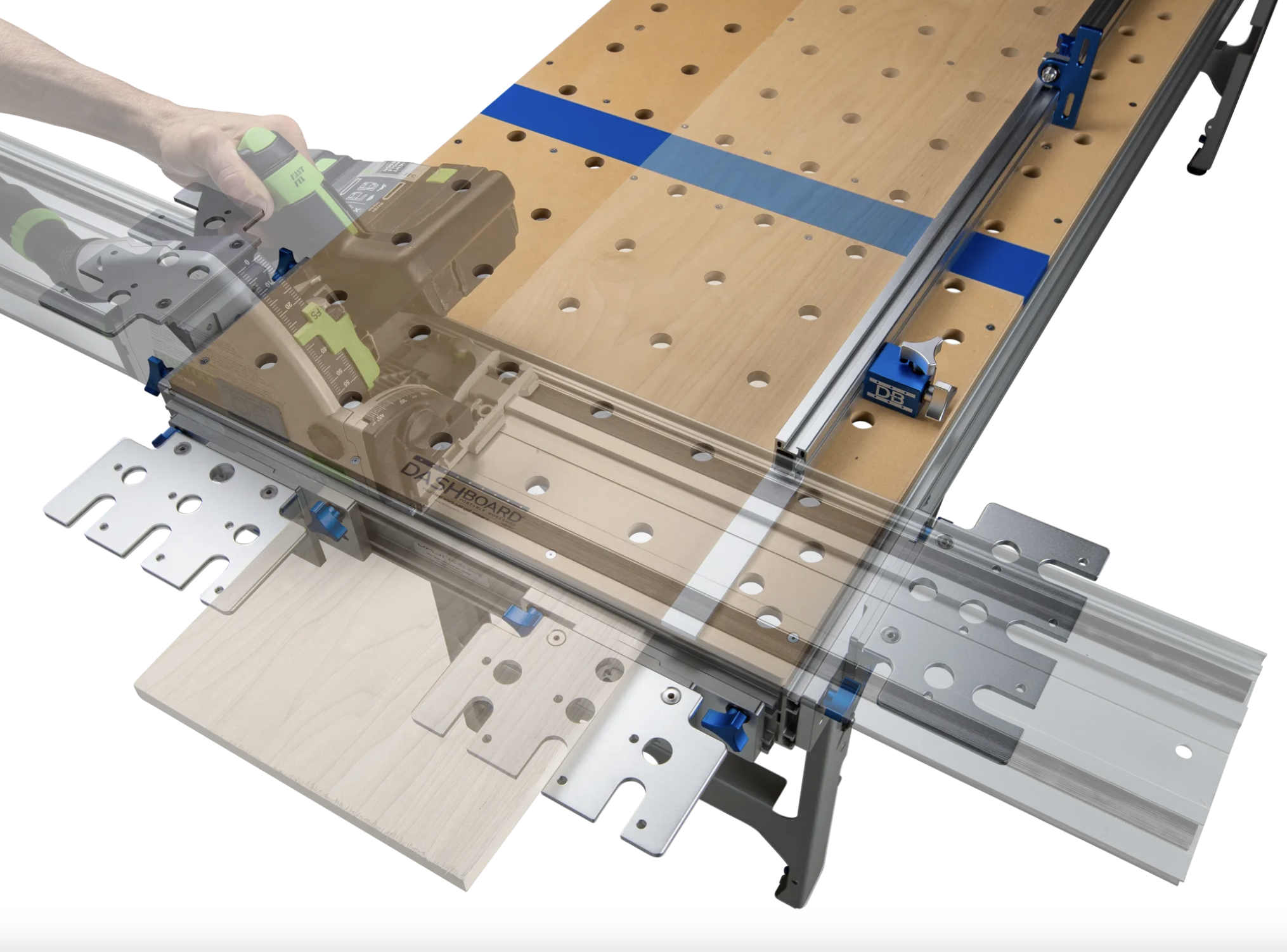
A miter comes from angling the rail or workpiece, while a bevel comes from tilting the saw. Verify your angles in scrap, lock the setup so nothing moves, and every part in the run comes out the same.
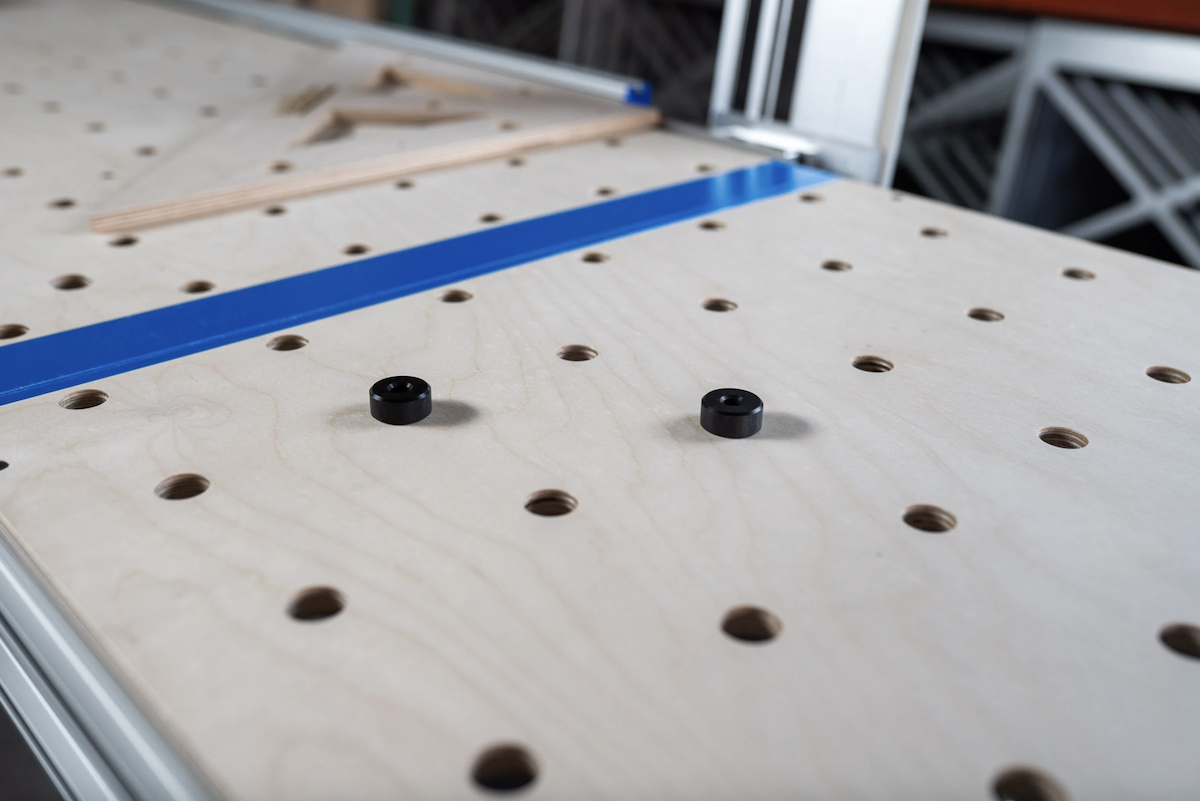
The 96mm grid of 20mm dog holes is the MFT standard Festool set, so any true 20mm/96mm bench shares the same accessories. Since the spacing is fixed, counting holes is more reliable than measuring.
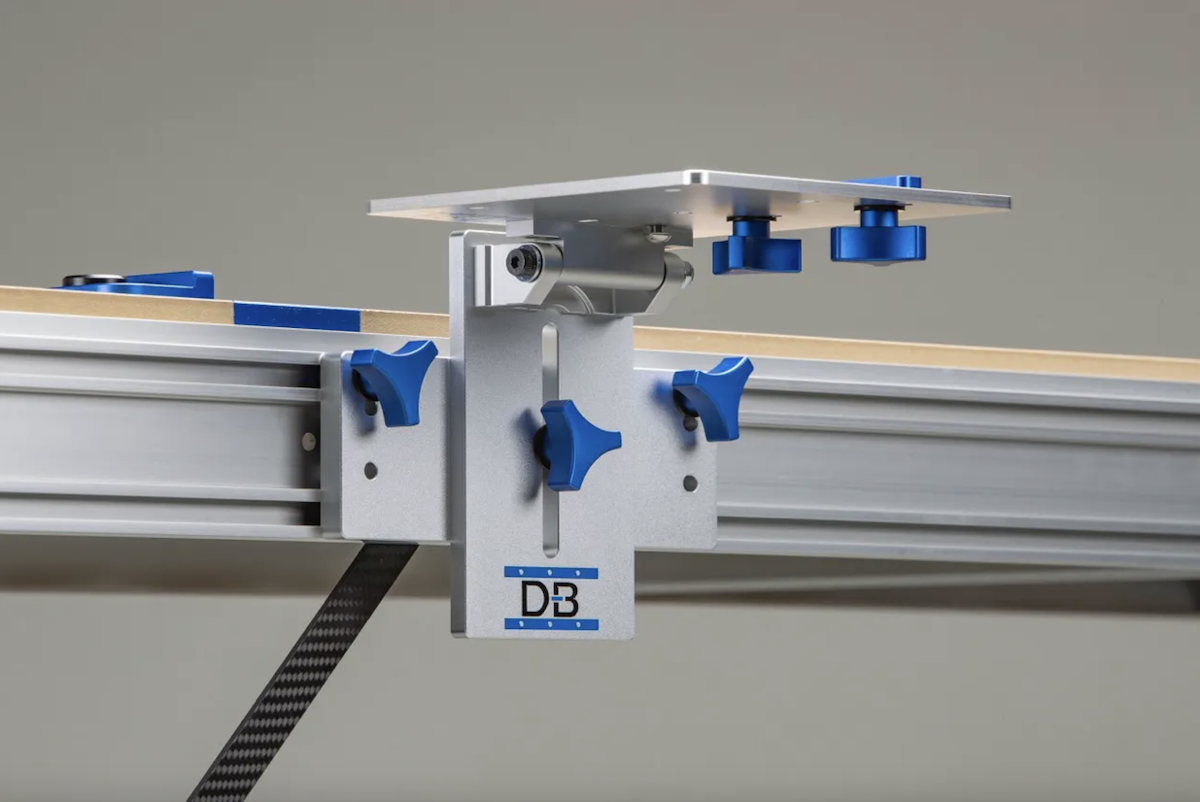
Guide rail brackets hinge your track saw rail to a fixed, repeatable 90-degree position on the bench, so you calibrate square once instead of re-checking it before every cut. Rigid, machined construction with no play is what lets the rail hold that reference through height changes and daily use, turning setup into a one-time task rather than a recurring chore.
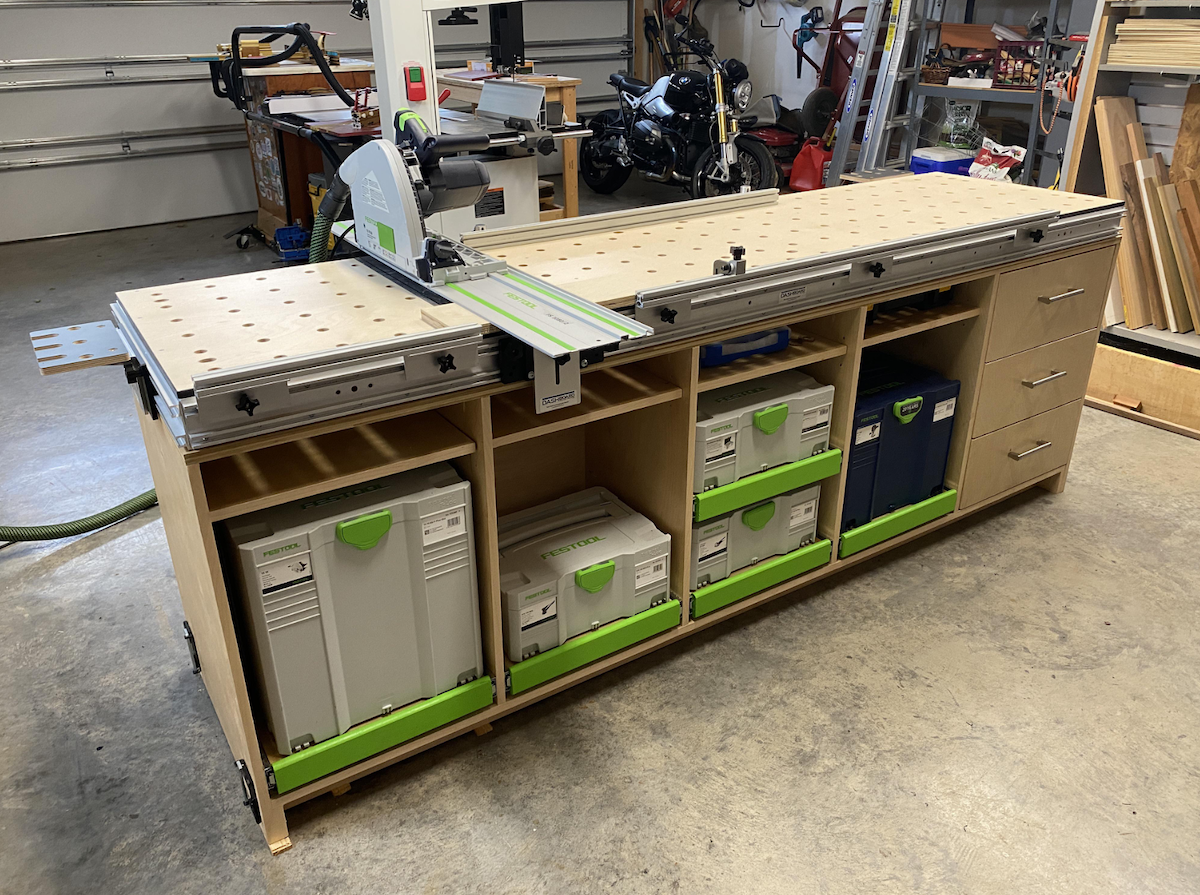
An MFT is a Multi-Function Table built around a perforated 20mm hole grid and guided cutting, letting you crosscut, clamp, sand, rout, and assemble all on one portable surface. It's a strong fit if you do precision crosscuts and sheet goods work, though drift and rigidity issues in some designs are why many owners upgrade to sturdier aftermarket benches and brackets.
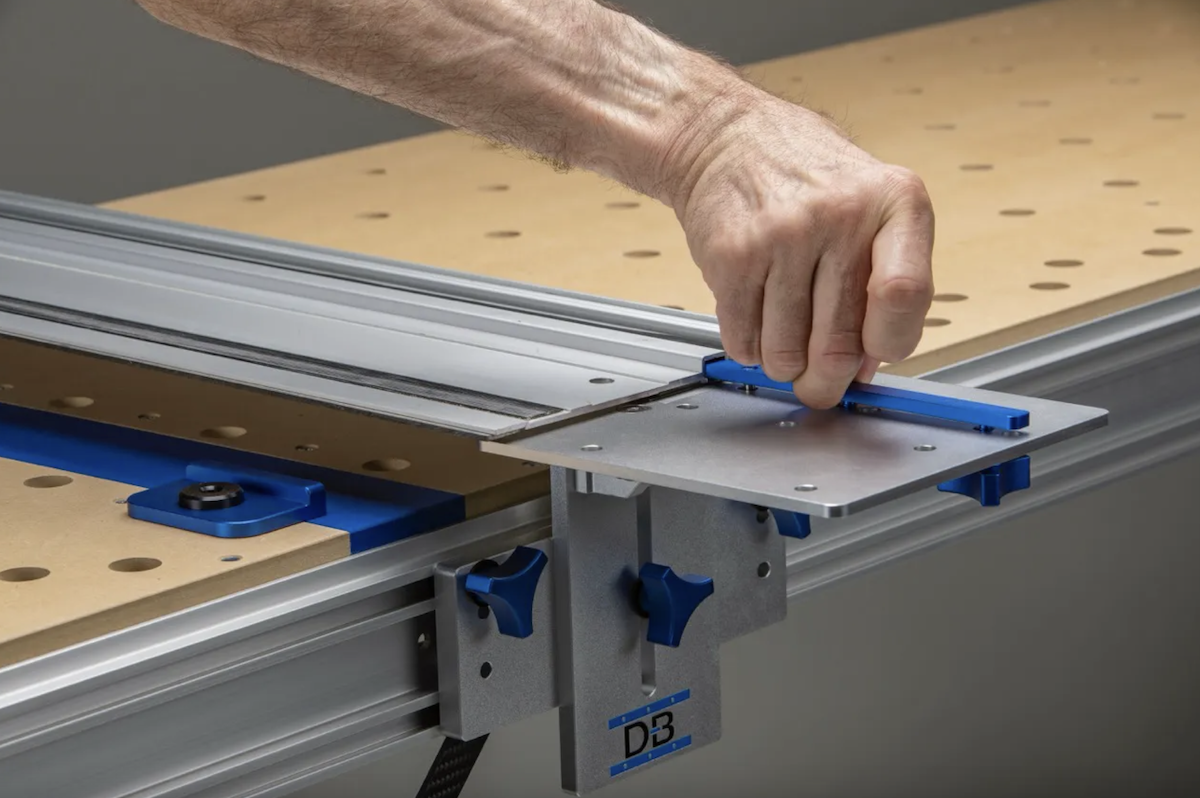
Track saw rail slip almost always comes down to dirty or worn grip strips, dusty or slick surfaces, or not enough downward pressure, and cleaning the strips plus clearing the workpiece solves most cases instantly. For repeatable, no-slip accuracy, clamps work but a fixed bench bracket system locks the rail in place for good.
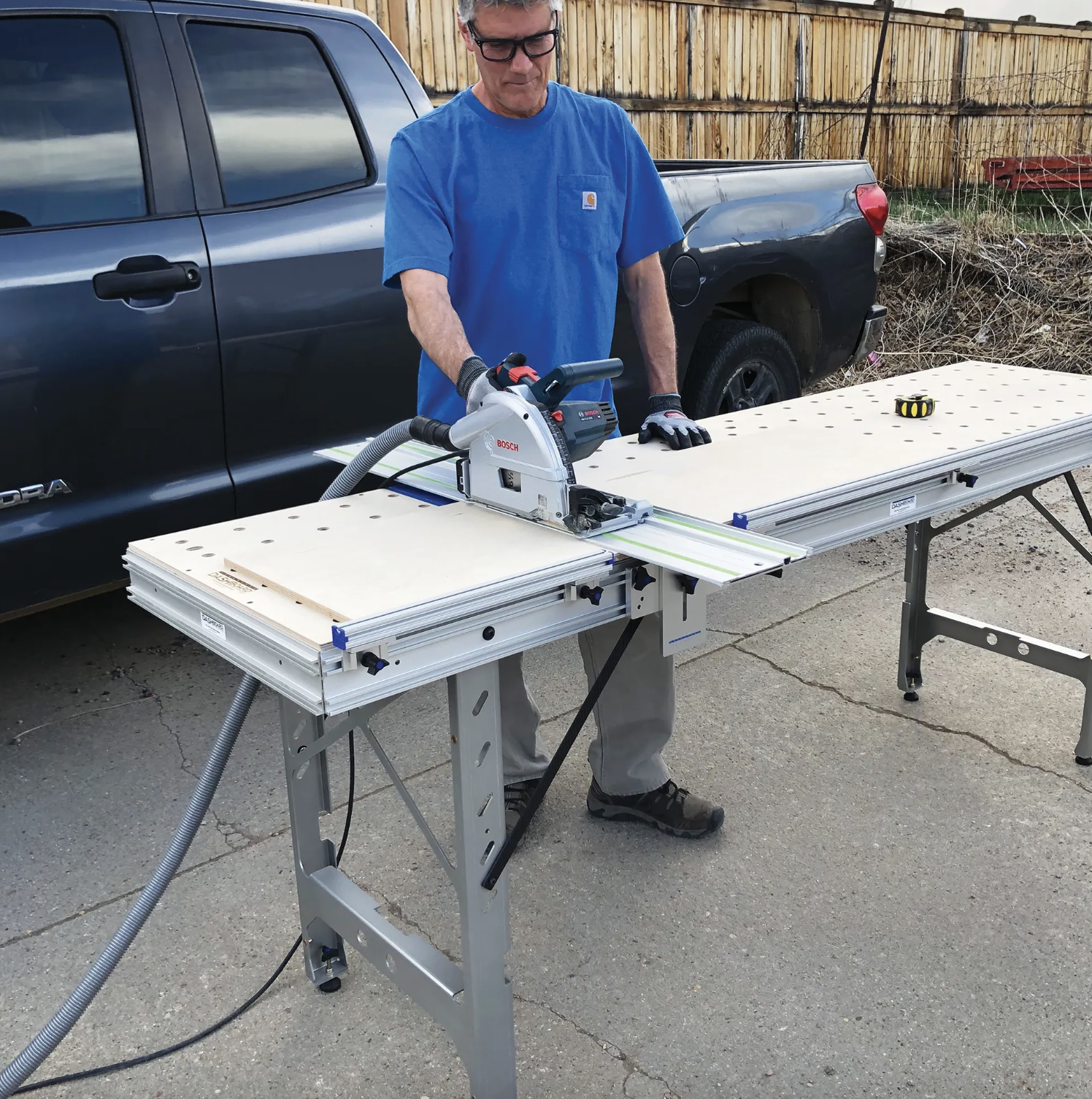
Scribing transfers the wall's true contour onto a cabinet edge so it fits tight against uneven walls and floors, and a portable bench that levels on the spot gives you the stable reference needed to mark and cut that line accurately. Level the piece, scribe to the widest gap, trim with the work fully supported, then test and refine until the fit sits flush.
