Your Cart
Product Title
$0
$0
-
+
Your cart is empty.
Add Discount Code?
Add Cart Note?


Processing full sheets of plywood or MDF on job sites has always been a nightmare. You're dealing with 70-80 pound sheets that flex, no stable cutting surface, and accuracy requirements within 1/16".
Traditional sawhorses with a door on top? You're lucky to get within 1/4" consistently.
The shift to portable workbenches designed for sheet goods is driven by three factors: setup time (5 minutes vs 20), cutting accuracy (0.004" vs 0.25"), and worker safety (stable platform vs wobbly setup).
A portable workbench needs specific dimensions to handle 48" x 96" sheets effectively:
Minimum length: 92 inches provides full support without overhang Width: 24-25 inches prevents tipping during crosscuts Height: 35-36 inches reduces back strain during extended work
The Dash-Board workbench hits these specs at 92.56" x 24.41" x 35.5", weighing 62 pounds. Compare this to makeshift setups that rarely exceed 72" and you understand why dedicated systems work better.
Full sheets of 3/4" plywood weigh 70 pounds. Add your track saw (15 pounds) and you need 100+ pound capacity with zero flex.
Key stability features:
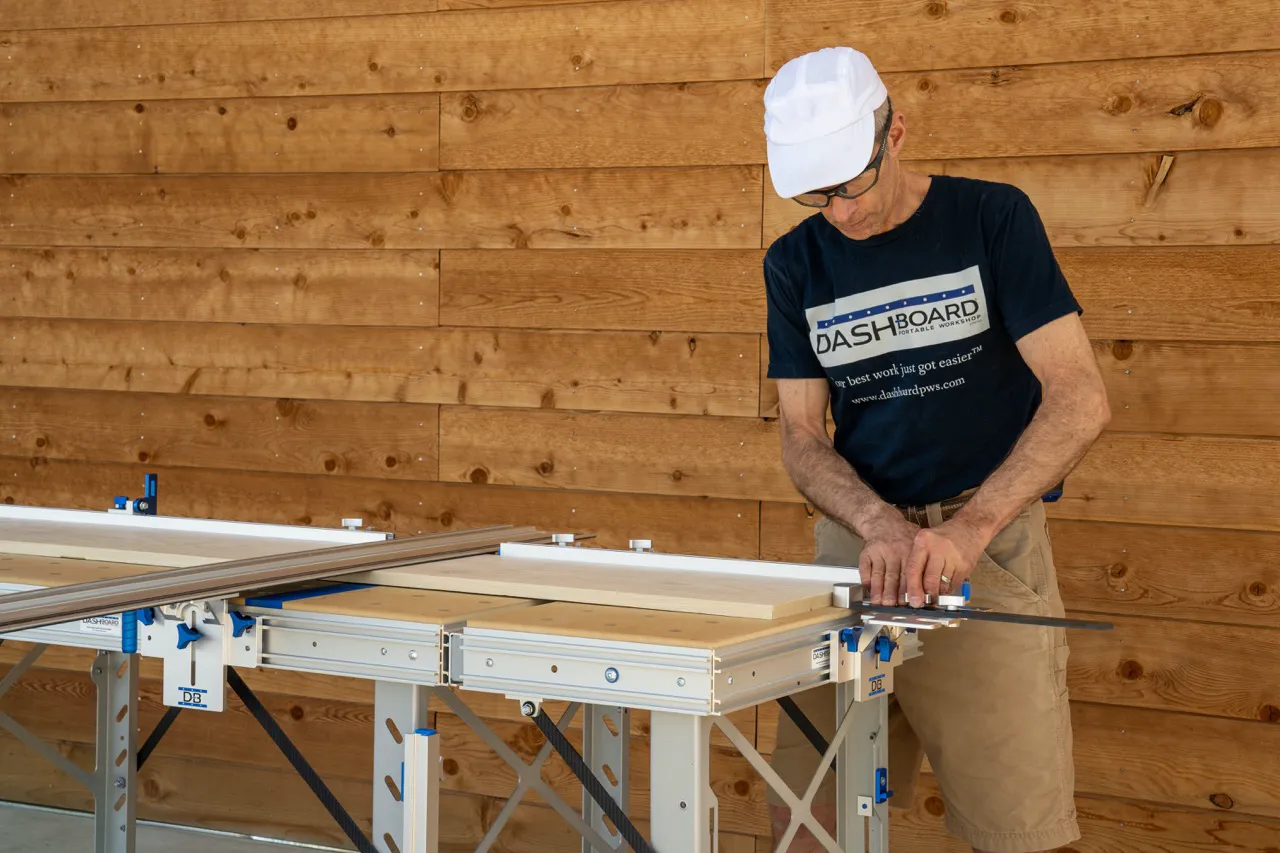
Processing full sheets requires support beyond the main work surface. Outrigger systems solve this by adding 24" of support on either end.
Without outriggers: Sheet hangs 24" off the end, causing flex and binding With outriggers: Full support allows clean cuts without assistant help
The math is simple: 48" sheet + 24" outrigger support = 72" of stable cutting surface. This eliminates the need for a helper, saving $25-40/hour in labor costs.
Traditional guide rail setups require measuring and clamping for every cut. Modern bracket systems eliminate this:
Setup time: 30 seconds vs 3-5 minutes per cut Accuracy: Repeatable within 0.004" vs 0.125" variation Batch cutting: Set once, cut 20 identical pieces
The Dash-Board Guide Rail Bracket Set ($349) exemplifies this approach with tool-free installation and integrated alignment dogs.
Full sheet rips require specific configurations:
This means you can rip a full sheet lengthwise (96") with the proper accessory configuration.
Crosscutting 48" requires different considerations than ripping:
Standard fence: 33.6" crosscut capacity With extensions: 48"+ crosscut capacity Critical factor: Material support on both sides of cut
The Track Star system addresses this by providing adjustable support at any point along the bench, preventing sheet sag during cuts.
Traditional workbenches get chewed up by saw blades. The 2-piece top with replaceable cut strip solves this:
Traditional: Replace entire top after 200-300 cuts ($150-300) 2-piece system: Flip cut strip after 500 cuts, replace after 1000 ($40)
This represents $360 annual savings for contractors processing 20 sheets weekly.

Based on contractor feedback processing 10 sheets:
Traditional sawhorse setup:
Portable workbench system:
That's 55 minutes saved per 10-sheet job, or $45-75 in labor costs.
Full sheet processing requires careful space planning:
Minimum clear area: 12' x 8' (allows sheet rotation) Ideal area: 14' x 10' (comfortable movement) Vertical clearance: 8' (for sheet flipping)
The modular design allows breakdown in 3 minutes for transport between cutting area and installation point.
Essential accessories for full sheet work:
At 20 sheets per week, full accessory ROI occurs in 5-6 months.
Contractor feedback indicates:
The grid system takes adjustment but enables precision impossible with traditional methods.
Professional contractors (20+ sheets/week):
Serious hobbyists (5-10 sheets/week):
Occasional users (<5 sheets/week):
Week 1: Learn basic setup, practice straight cuts Week 2: Master grid system, add first accessories Month 1: Integrate into standard workflow Month 2: Explore advanced techniques (angles, tapers) Month 3: Full productivity with all accessories
Yes, with dual bench setups you can handle 5x10 sheets. Connect benches end-to-end for 16' capacity.
Guide rail brackets ($349), Track Stars($299/pair), F1 Fence ($129) and F2 Fence ($189), Spiral Dogs ($49), The Wingman ($59), and one outrigger ($550) enable basic full sheet processing.
For precision work, no. For rough framing cuts, consider simpler solutions.
3x faster setup, 10x more accurate, eliminates foam waste ($50/month savings).
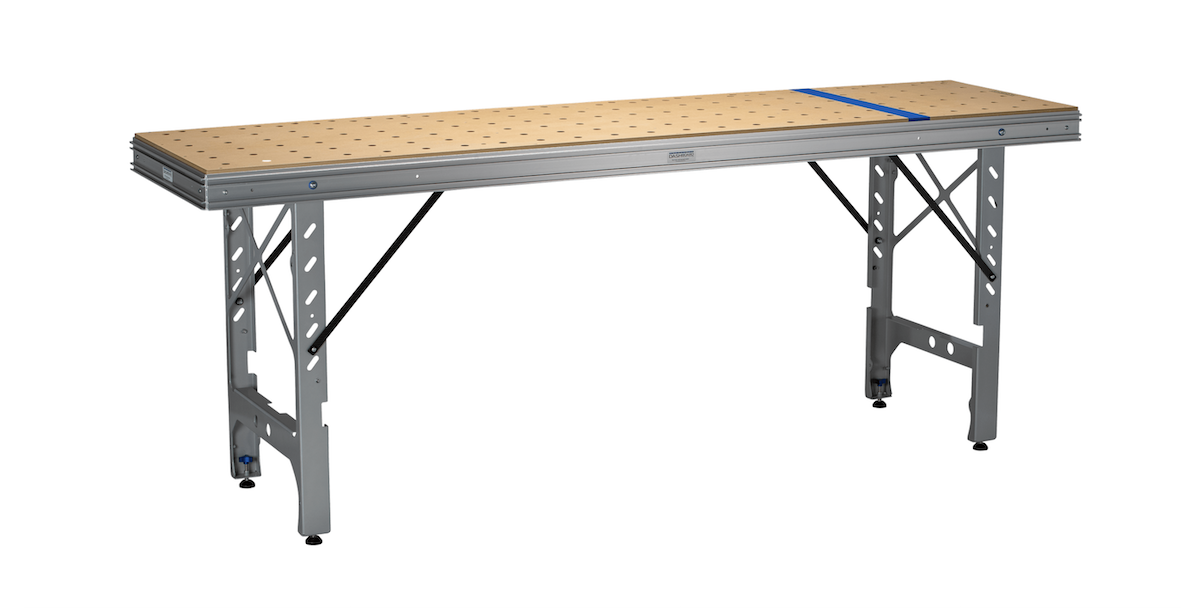
A stock MFT’s weak points (rail brackets that drift, a flexing fence, a small surface, and fussy ripping) can all be fixed without replacing the table. Start with whichever problem costs you the most time, since each upgrade installs separately with no drilling.
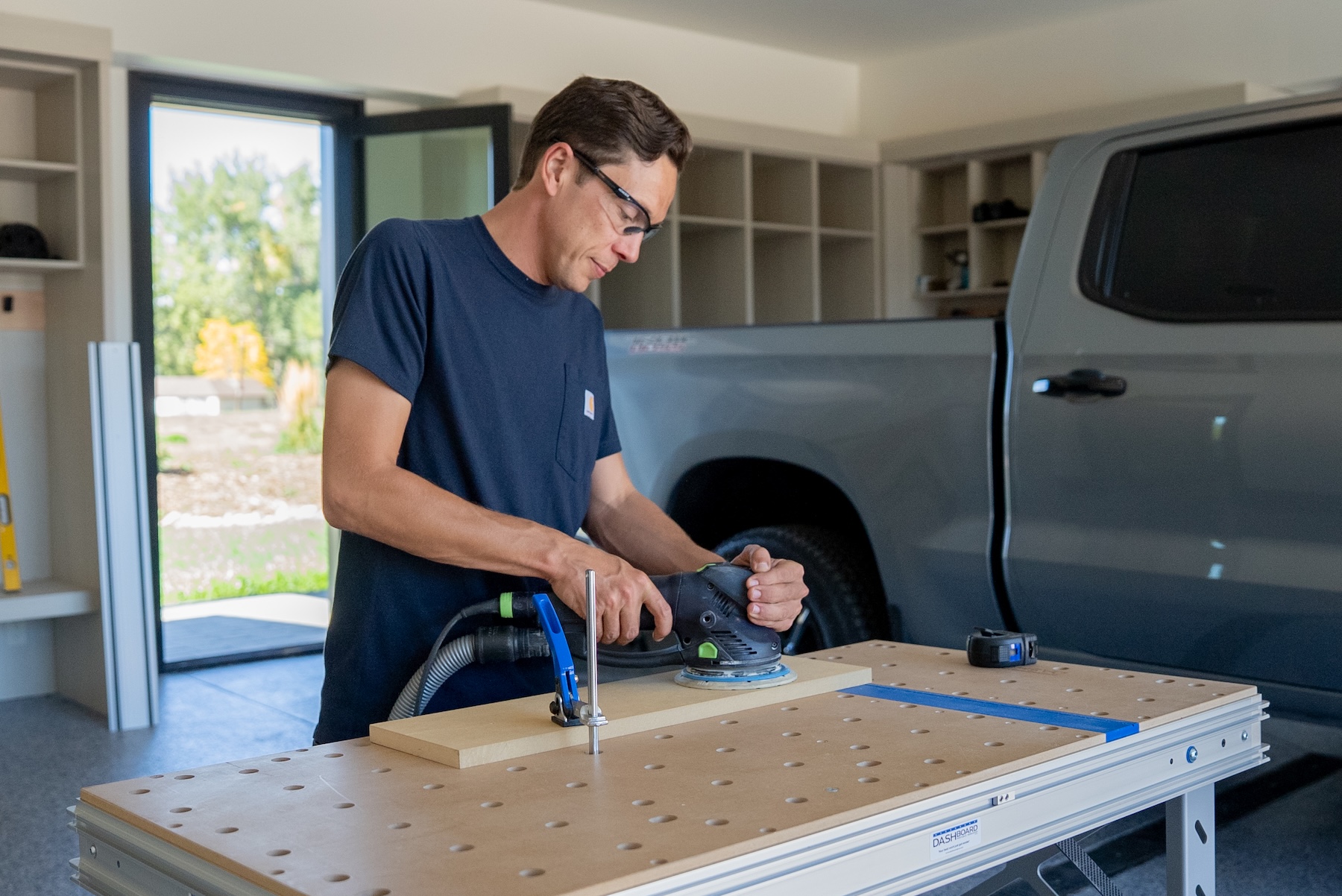
See what FORG3D noticed when Texas Woodworking Festival attendees pushed on the Dash-Board Portable Workshop, and why stability matters in everyday work.
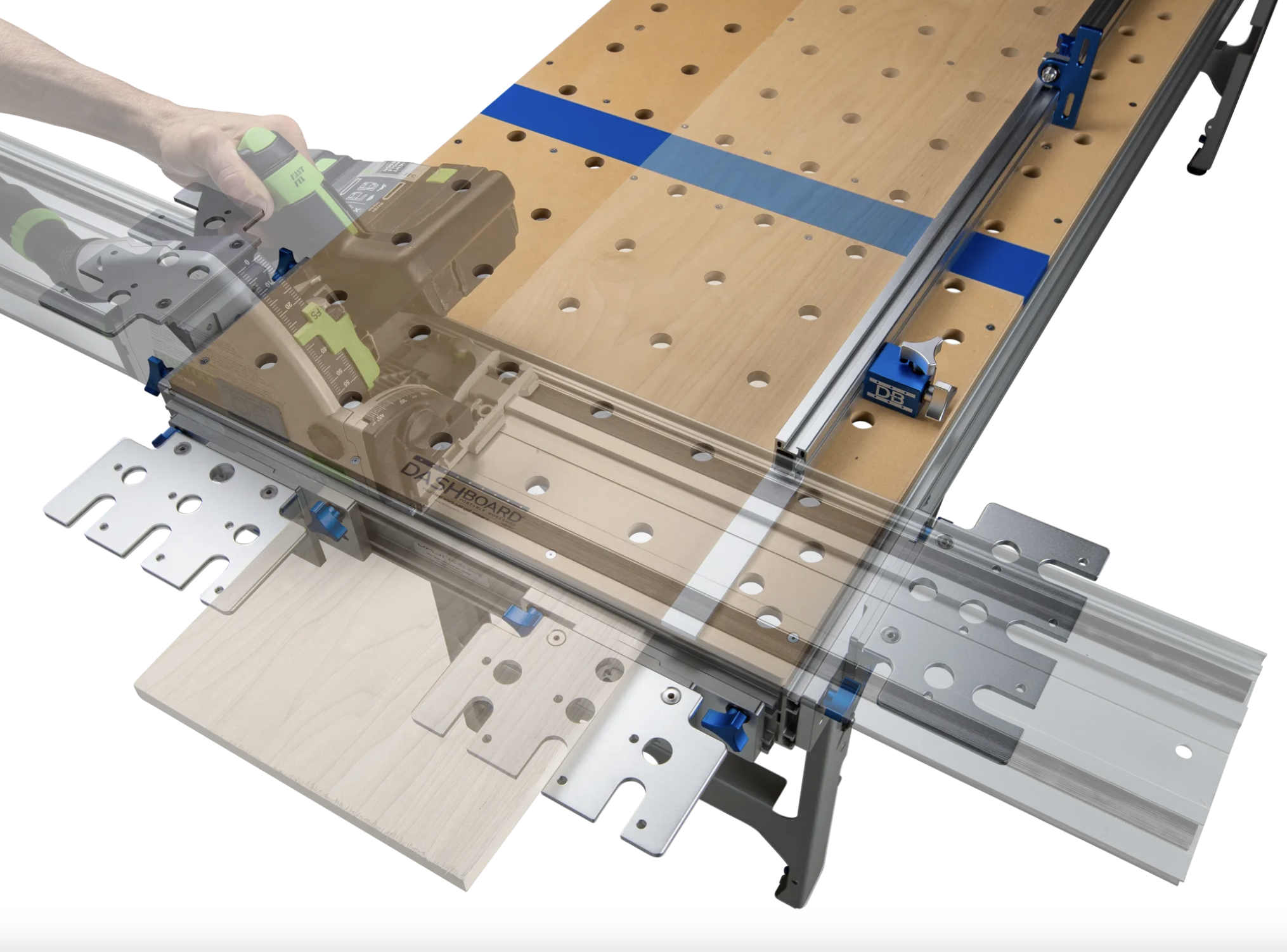
A miter comes from angling the rail or workpiece, while a bevel comes from tilting the saw. Verify your angles in scrap, lock the setup so nothing moves, and every part in the run comes out the same.
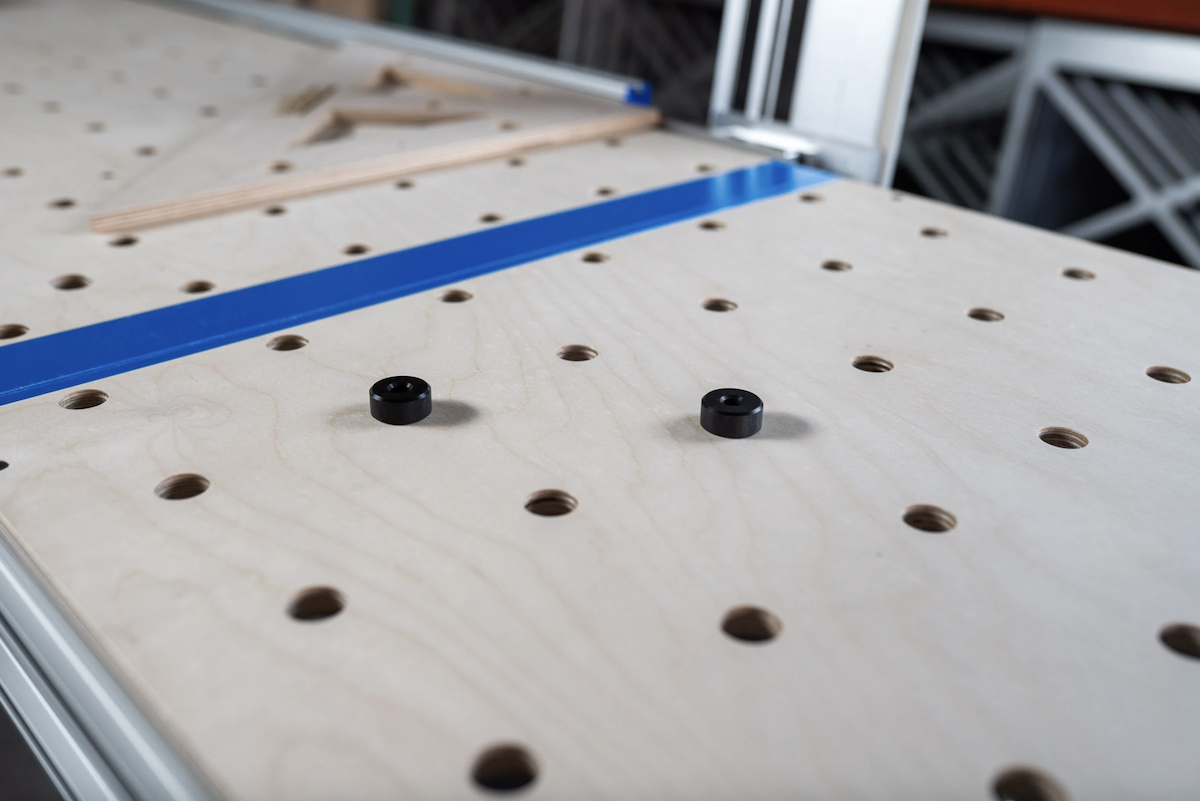
The 96mm grid of 20mm dog holes is the MFT standard Festool set, so any true 20mm/96mm bench shares the same accessories. Since the spacing is fixed, counting holes is more reliable than measuring.
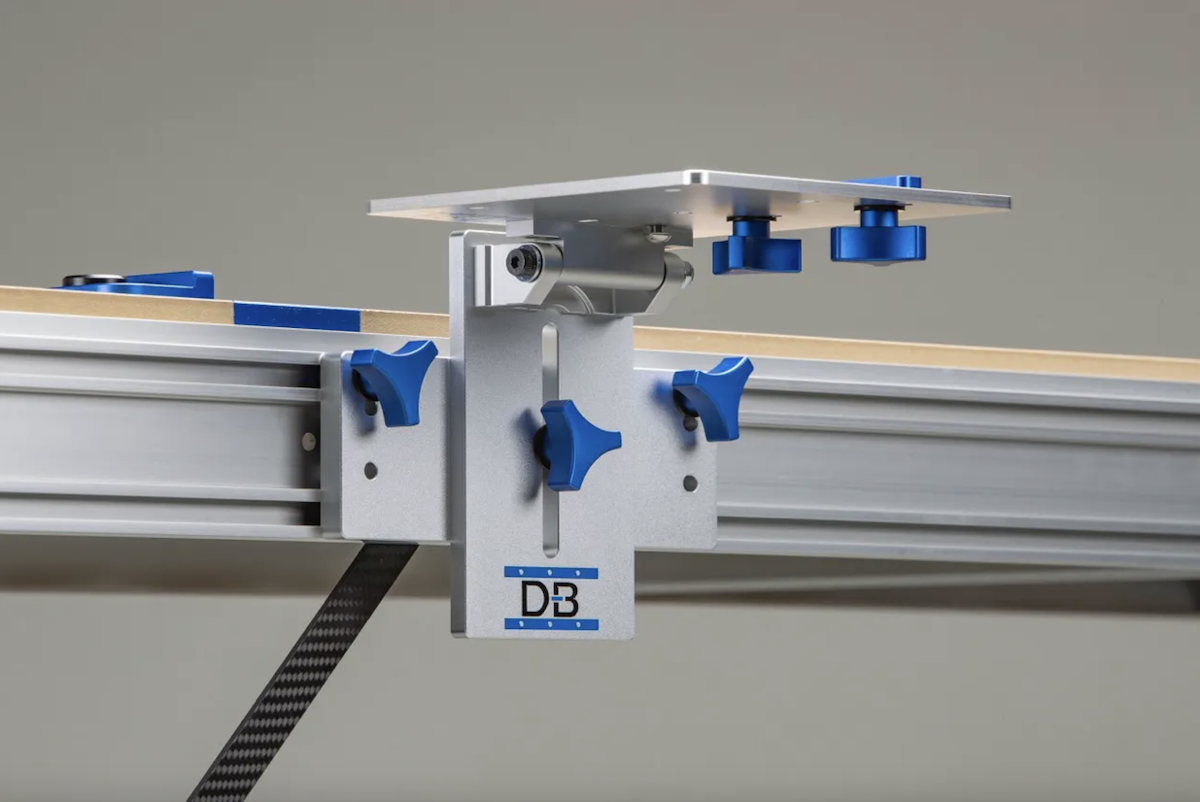
Guide rail brackets hinge your track saw rail to a fixed, repeatable 90-degree position on the bench, so you calibrate square once instead of re-checking it before every cut. Rigid, machined construction with no play is what lets the rail hold that reference through height changes and daily use, turning setup into a one-time task rather than a recurring chore.
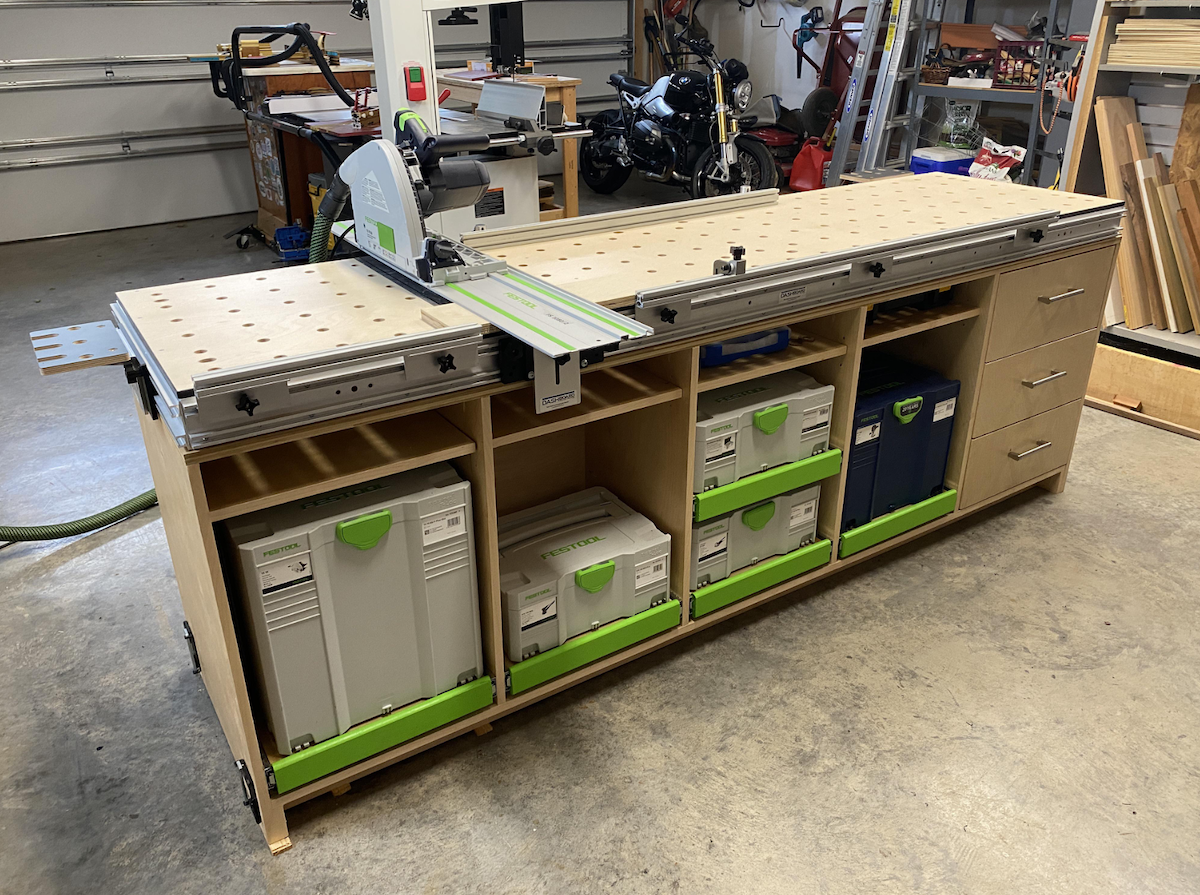
An MFT is a Multi-Function Table built around a perforated 20mm hole grid and guided cutting, letting you crosscut, clamp, sand, rout, and assemble all on one portable surface. It's a strong fit if you do precision crosscuts and sheet goods work, though drift and rigidity issues in some designs are why many owners upgrade to sturdier aftermarket benches and brackets.
