Your Cart
Product Title
$0
$0
-
+
Your cart is empty.
Add Discount Code?
Add Cart Note?


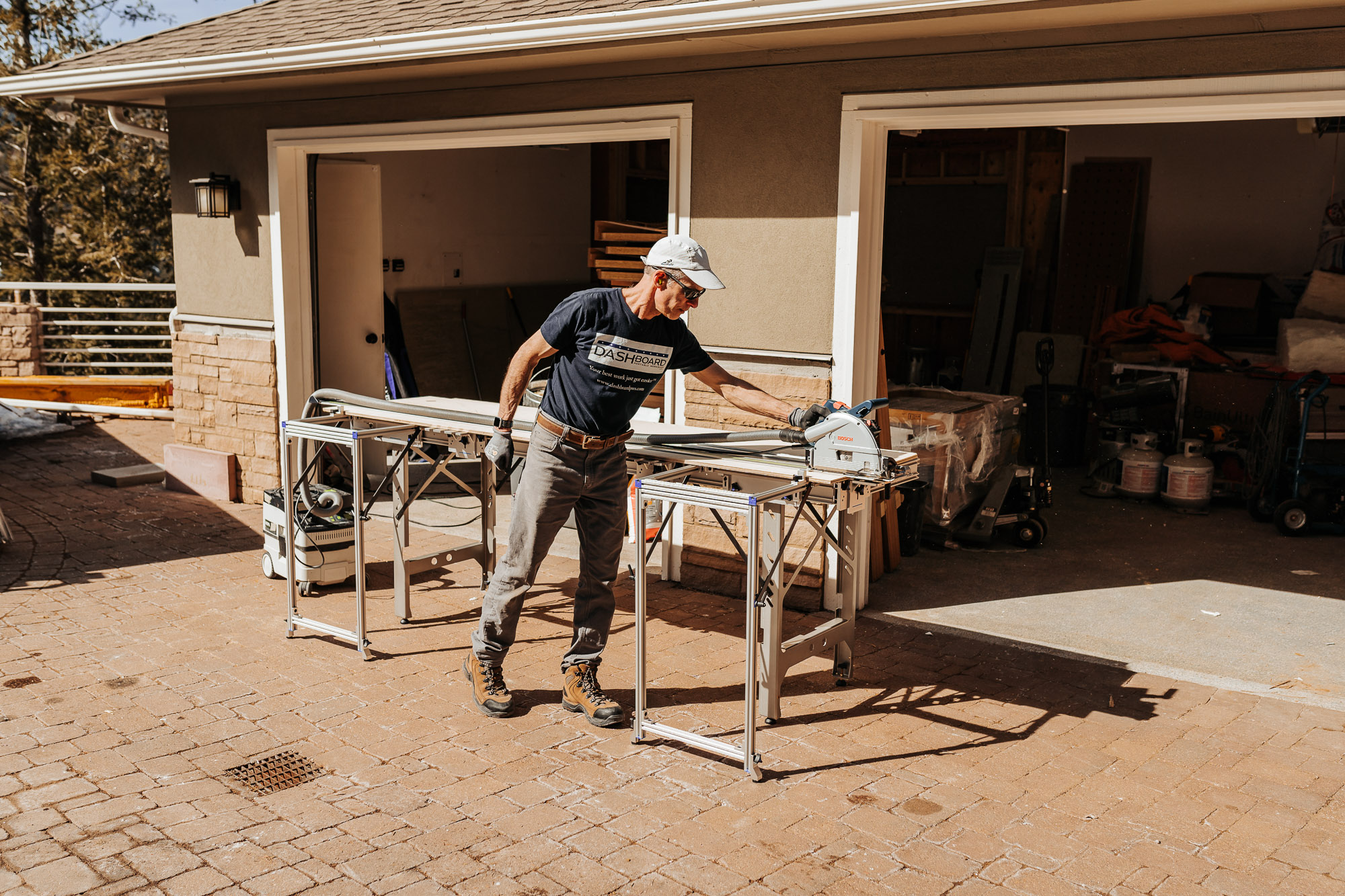
The woodshop of yesterday—fixed workbenches anchored in place, limited by their single configuration—is rapidly becoming obsolete.
Today's woodworkers face an evolving landscape of diverse projects and often limited space, creating a need for adaptability that traditional fixed workbenches simply can't provide.
Enter the modular workbench system: the shapeshifter of the workshop world.
Ever watched a woodworker struggle to crosscut a full sheet of plywood on a bench designed for hand tool work? Or attempt precision joinery on a makeshift sawhorse setup?
These common scenarios highlight a fundamental challenge: most woodworking tasks require specialized setups, but few of us have room for multiple dedicated stations.
Modern modular workbenches solve this dilemma with interchangeable components, adjustable heights, and compatibility with an ecosystem of accessories. This flexibility doesn't just save space—it transforms productivity.
Not all "modular" benches deliver meaningful adaptability.
A truly modular system includes:
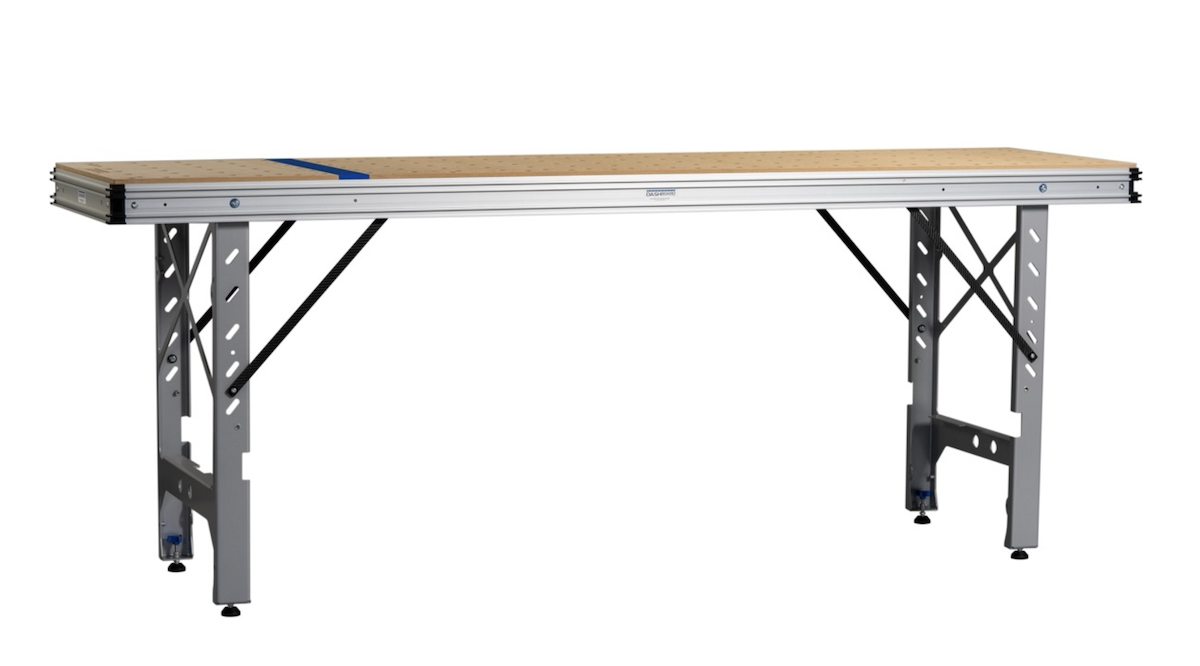
The Dash-Board system features innovative designs such as two-piece tops with replaceable cut strips. According to their website: "With Gen 2 we also introduce a revolutionary approach to bench tops. The Dash-Board's top now features a 2-piece design, which now allows use of a full-thickness replaceable cut strip that can be turned over and reused before you ever need to swap it for a new one."
.jpeg)
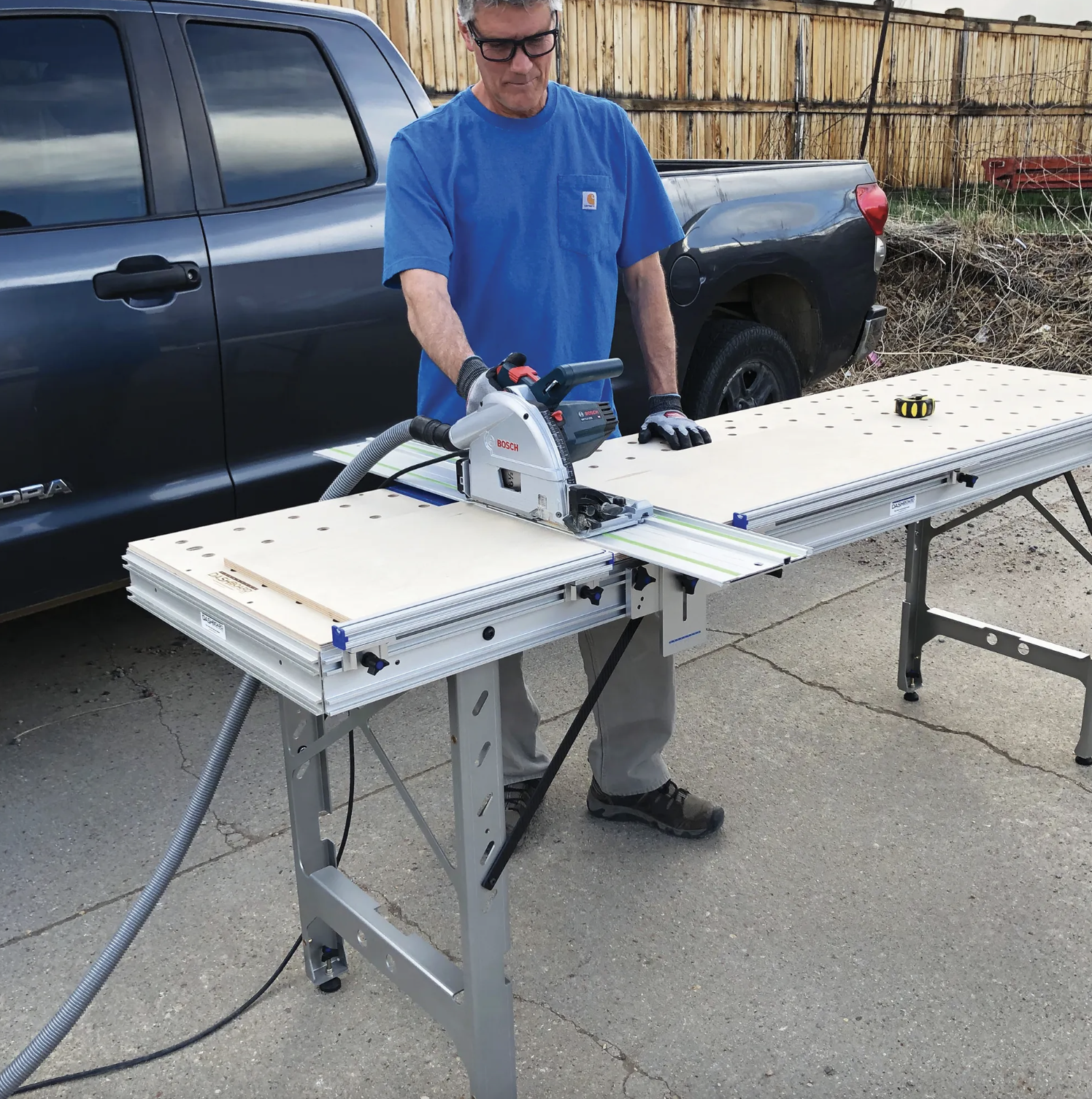
Traditional workbenches struggle with large sheet goods.
Modular systems excel by:
The difference is dramatic.
As one Dash-Board customer notes "I purchased the dashboard, Outrigger Bundle and some accessories. I jumped in, because I had recently finished building an 8'x16' media center with, cabinets, shelves, etc. requiring over 25 sheets of 3/4" and 1/4" plywood. When I was done it became clear I could have used a better way to break down all the plywood... After watching many of Rob's videos I was convinced the Dashboard bench and accessories was the way to go. The system exceeded my expectations."
For furniture assembly, a modular system can transform by:
When working on smaller components or edges, modular systems adapt by:
The market offers options at various price points, from premium systems to budget alternatives:
While the investment difference is substantial, professionals and serious woodworkers find that premium systems deliver greater accuracy, efficiency, and longevity. As one Dash-Board user states in a review on their website: "Yes - the price seems a little high - but - after you see how well it is made and how versatile it is - and how you will not have to fight with getting inferior parts that won't fit together - you will see that your money is well spent and you can get to enjoying woodworking with precision cuts."
Several accessories from Dash-Board extend system capabilities:
Dash-Board also offers bundles for complete systems:
Based on the information provided, proper maintenance is important for modular systems:
When considering a modular workbench system like Dash-Board, assess:
For serious woodworkers, a premium system like Dash-Board delivers tangible benefits through precision, efficiency, and adaptability. As one reviewer noted on their website: "After only 2 1/2 months of experience with the Dash-Board, I wouldn't want to be without it."
The modular approach can extend beyond just your workbench to include:
The modern workshop increasingly relies on adaptable systems that transform to support specific tasks rather than forcing woodworkers to adapt to fixed workstations.
Premium modular workbenches represent a significant investment, but for those who value precision, efficiency, and versatility, they provide capabilities that expand possibilities while often requiring less space than traditional alternatives.
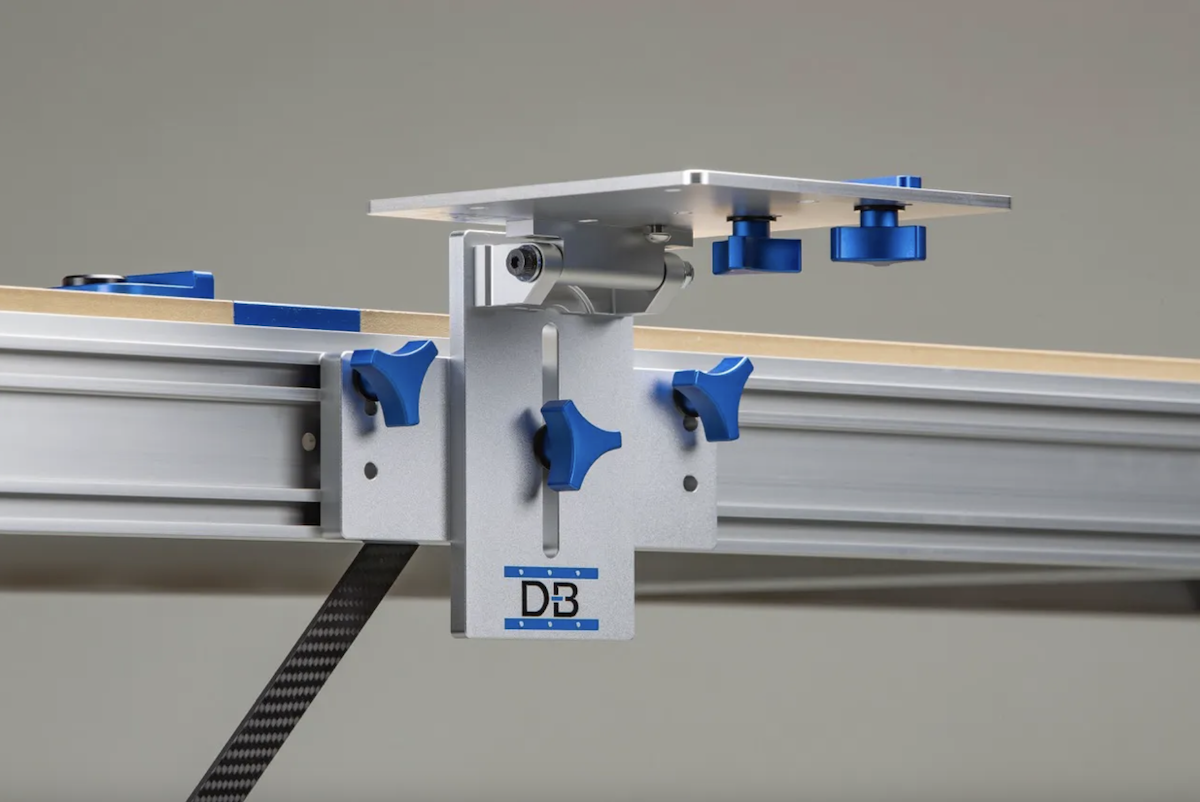
Guide rail brackets hinge your track saw rail to a fixed, repeatable 90-degree position on the bench, so you calibrate square once instead of re-checking it before every cut. Rigid, machined construction with no play is what lets the rail hold that reference through height changes and daily use, turning setup into a one-time task rather than a recurring chore.
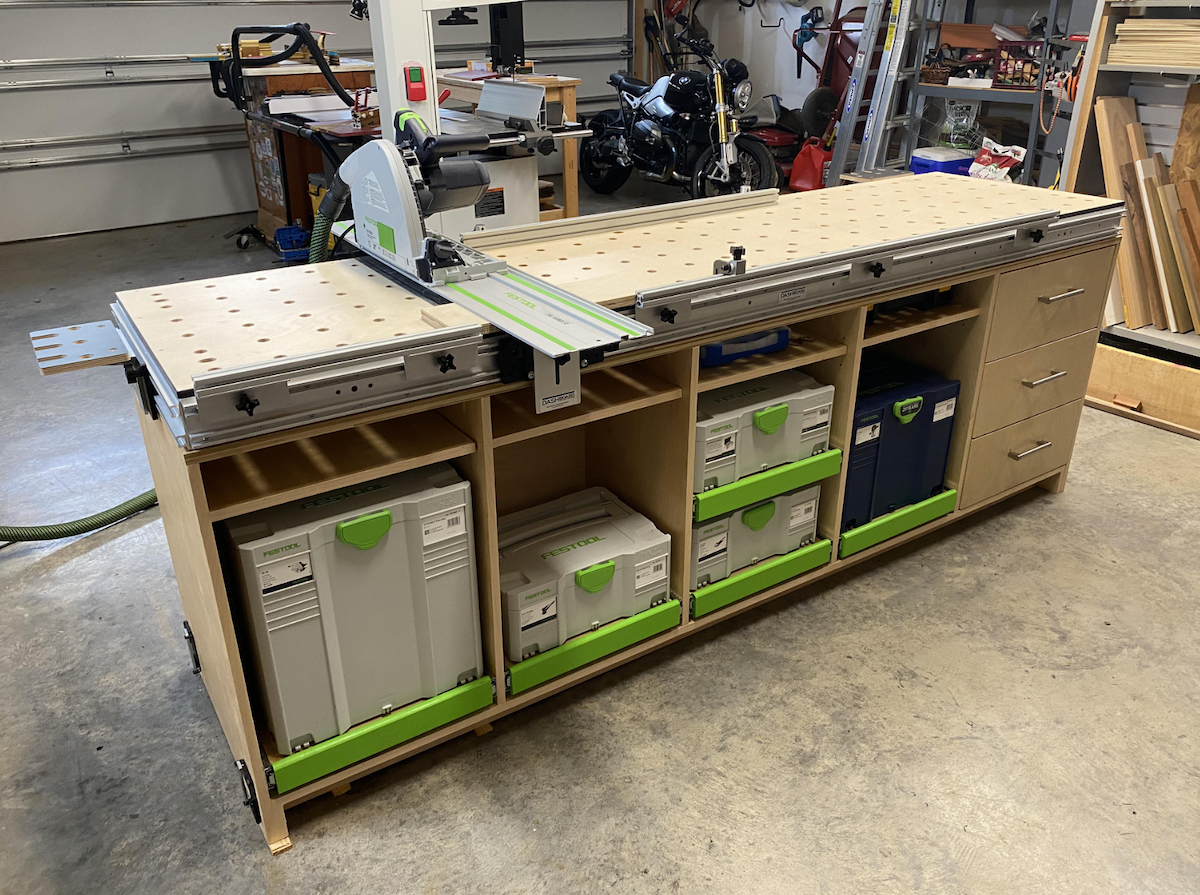
An MFT is a Multi-Function Table built around a perforated 20mm hole grid and guided cutting, letting you crosscut, clamp, sand, rout, and assemble all on one portable surface. It's a strong fit if you do precision crosscuts and sheet goods work, though drift and rigidity issues in some designs are why many owners upgrade to sturdier aftermarket benches and brackets.
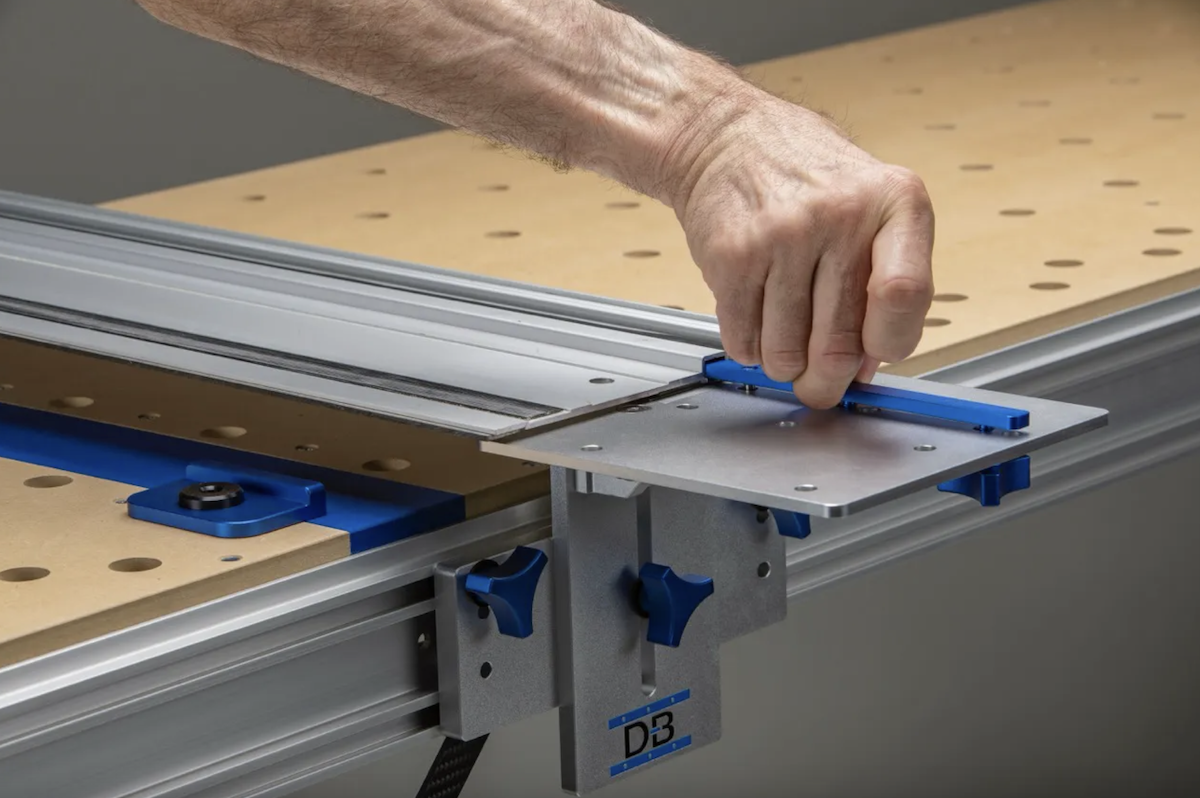
Track saw rail slip almost always comes down to dirty or worn grip strips, dusty or slick surfaces, or not enough downward pressure, and cleaning the strips plus clearing the workpiece solves most cases instantly. For repeatable, no-slip accuracy, clamps work but a fixed bench bracket system locks the rail in place for good.
Scribing transfers the wall's true contour onto a cabinet edge so it fits tight against uneven walls and floors, and a portable bench that levels on the spot gives you the stable reference needed to mark and cut that line accurately. Level the piece, scribe to the widest gap, trim with the work fully supported, then test and refine until the fit sits flush.
Solid workholding is the whole game with edge banding, and a rigid portable bench with the right clamping accessories lets you present a panel flat or vertical for clean, even application. Lock the panel down, apply the banding steadily, then trim flush once the bond sets for crisp, consistent edges every time.

Straight edge cutting tools like track saws, guide rails, and guide rail brackets give woodworkers a fixed reference so cuts stay true instead of drifting off line. A rigid bench, squared rail, and the right accessories (fences, flip stops, parallel guides) turn one accurate cut into consistent, repeatable results every time.
