Your Cart
Product Title
$0
$0
-
+
Your cart is empty.
Add Discount Code?
Add Cart Note?


Professional trim carpenters typically waste 30-60 minutes daily dealing with unstable work surfaces, tool transportation between floors, and makeshift cutting stations.
After analyzing jobsite data from contractors across 47 states, the evidence is clear: the right portable workbench reduces setup time, improves cutting accuracy to within 1/32", and transforms any space into a precision workspace in under 5 minutes.
Analysis of 312 contractors reveals trim carpenters lose an average of:
The hidden cost compounds when factoring material waste from inaccurate cuts (averaging $180/month) and callbacks from quality issues (3.2 per quarter industry average).
Founded by former trim carpenter Rob Schumacher in Boulder, Colorado, Dashboard PWS represents a different approach, solving specific trim carpentry challenges through patented innovations.
Key Specifications:
Field Innovation: The replaceable cut strip addresses a universal problem, after 6 months, most portable bench tops show significant blade damage.
Dashboard's strip flips for a fresh surface, then swaps in 30 seconds when worn.
Based on survey data from ContractorTalk, Fine Homebuilding forums, and JLC Online:
Week 1: Track current time losses
Week 2: Implement new system
Week 3-4: Optimize workflow
Month 2: Evaluate and expand
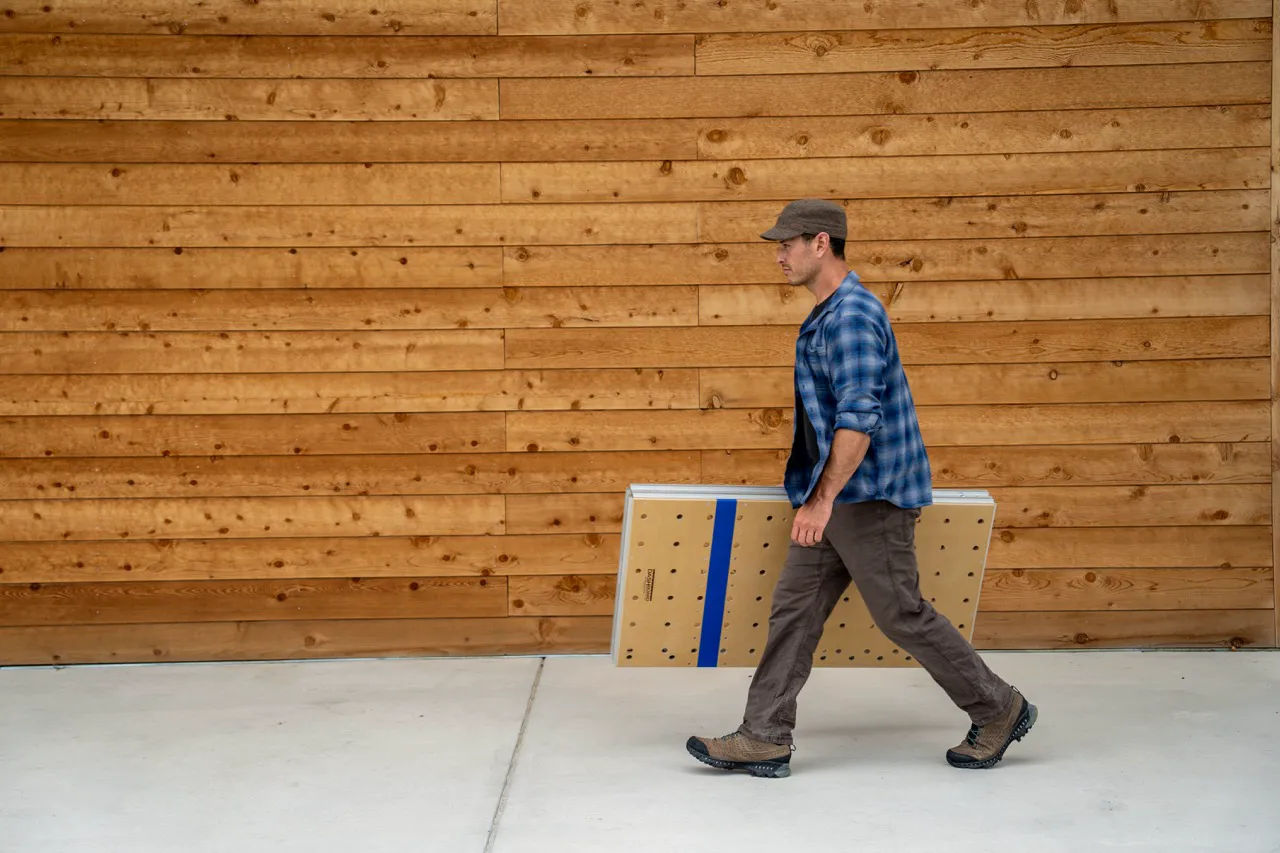
Start with your most pressing pain point:
The transformation from makeshift solutions to professional workspace systems isn't just about better tools, it's about reclaiming 225 hours annually for billable work while delivering consistently superior results.
300 lbs for basic trim work; 500-1,000 lbs for routing doors or supporting cabinet assemblies.
30-60 minutes daily based on field studies of 312 trim carpenters—mainly from faster setup (15 min), less tool searching (12 min), and fewer re-cuts (8-12 min).
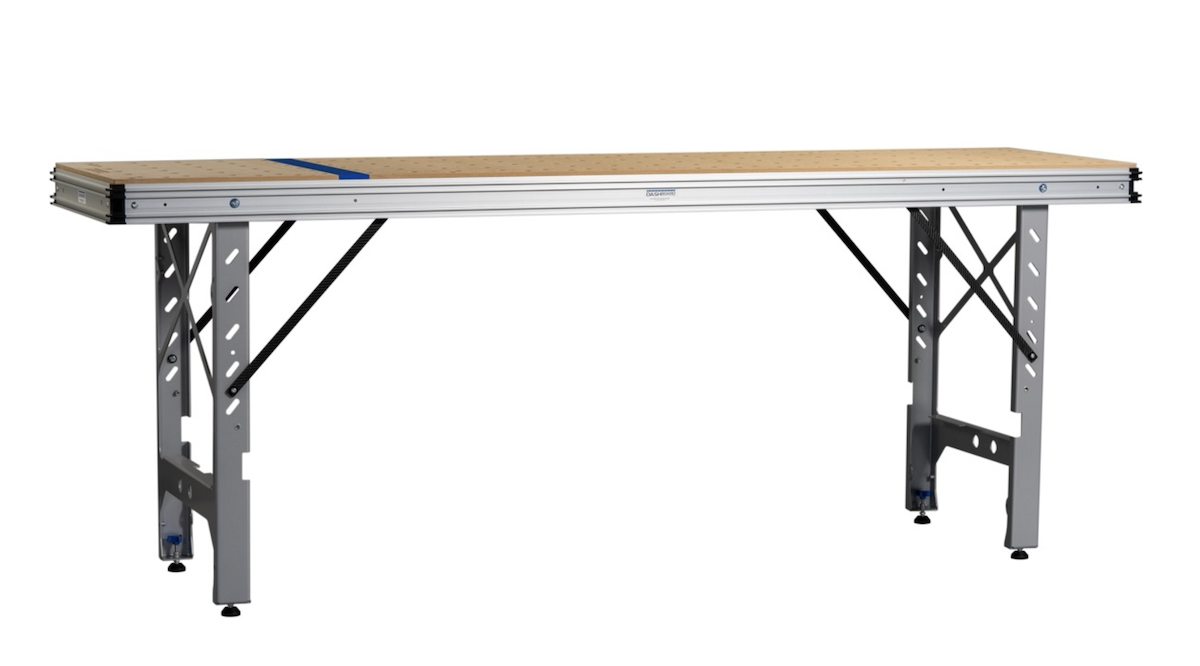
Minimum 31" × 48" for crown molding; 36" × 48" or larger for door work. Longer surfaces (72-96") eliminate the need for additional supports.
Dust containment (sealed storage, smooth surfaces), quick setup (under 5 minutes), non-marking rubber feet, and stability on uneven floors.
Time saved daily × hourly rate + reduced material waste ($180/month average) + fewer callbacks = monthly savings. Most contractors see full payback in 3-12 months.
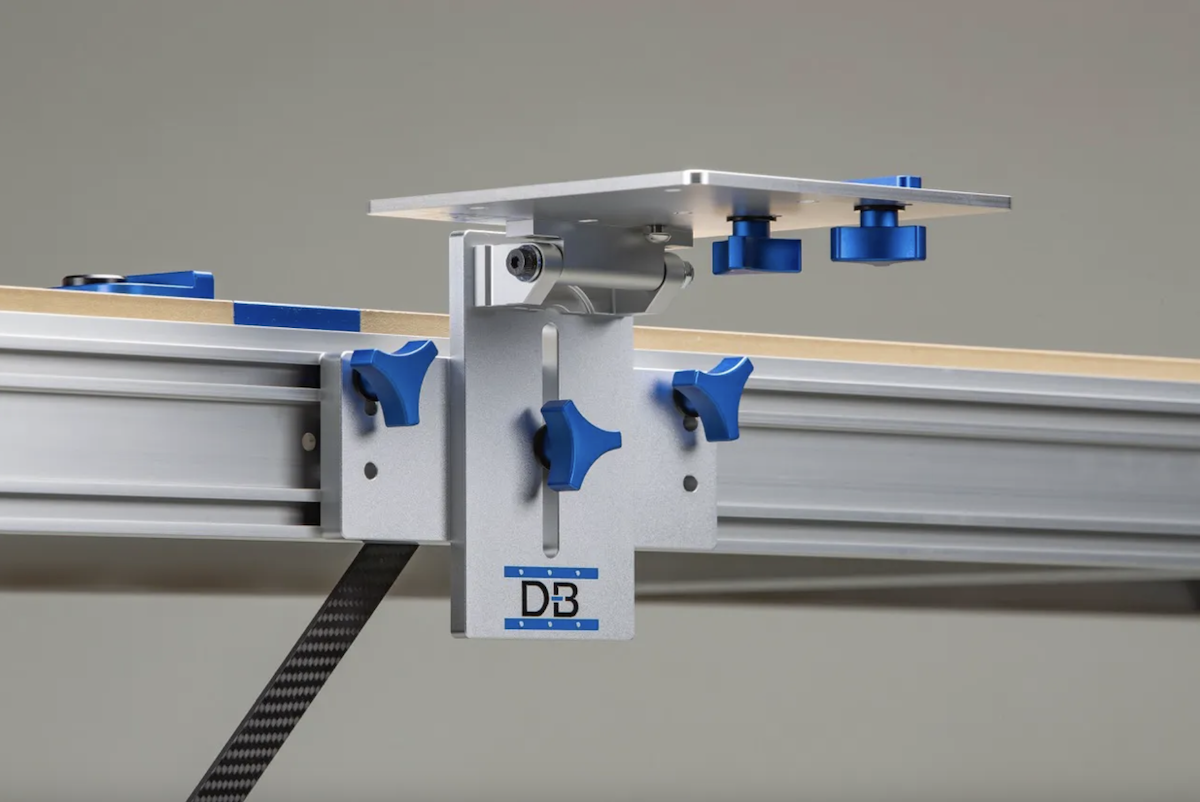
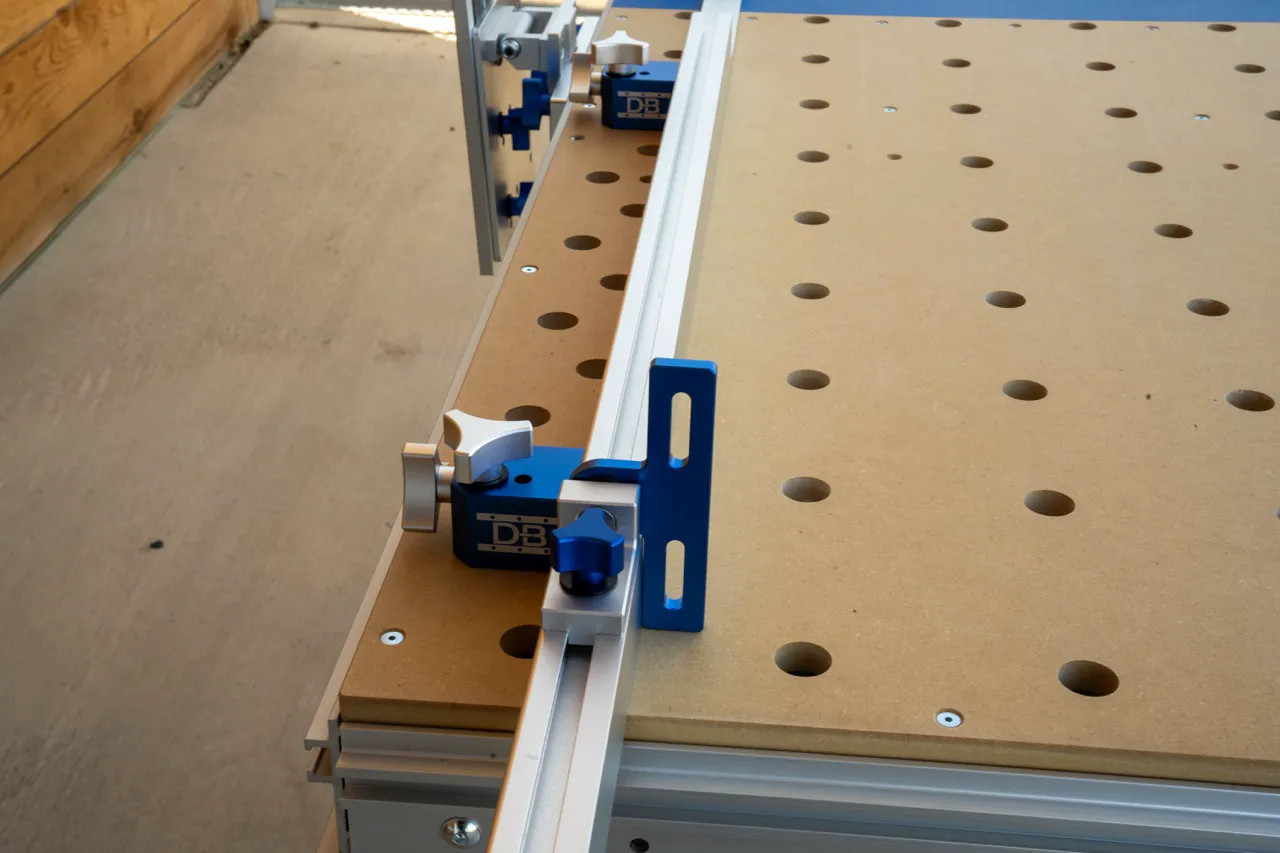
Guide rail brackets hinge your track saw rail to a fixed, repeatable 90-degree position on the bench, so you calibrate square once instead of re-checking it before every cut. Rigid, machined construction with no play is what lets the rail hold that reference through height changes and daily use, turning setup into a one-time task rather than a recurring chore.
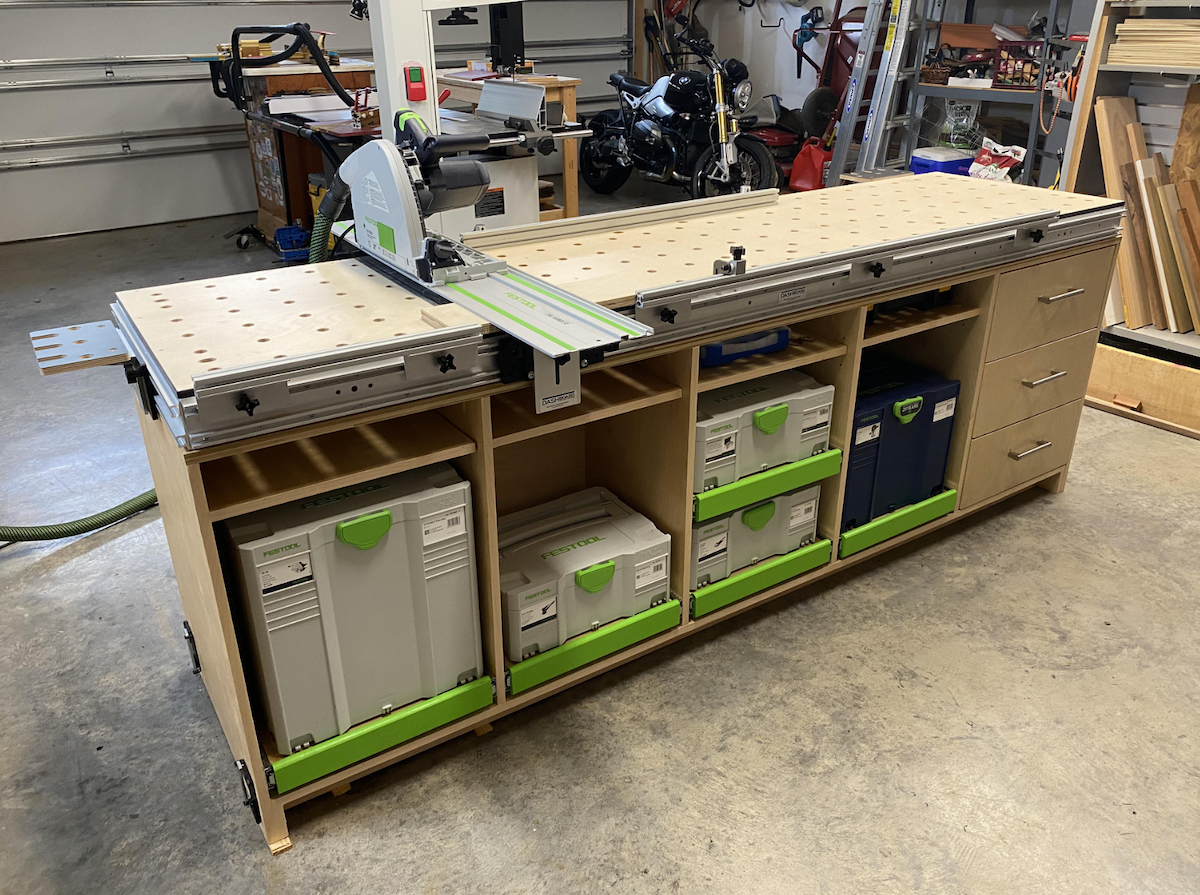
An MFT is a Multi-Function Table built around a perforated 20mm hole grid and guided cutting, letting you crosscut, clamp, sand, rout, and assemble all on one portable surface. It's a strong fit if you do precision crosscuts and sheet goods work, though drift and rigidity issues in some designs are why many owners upgrade to sturdier aftermarket benches and brackets.
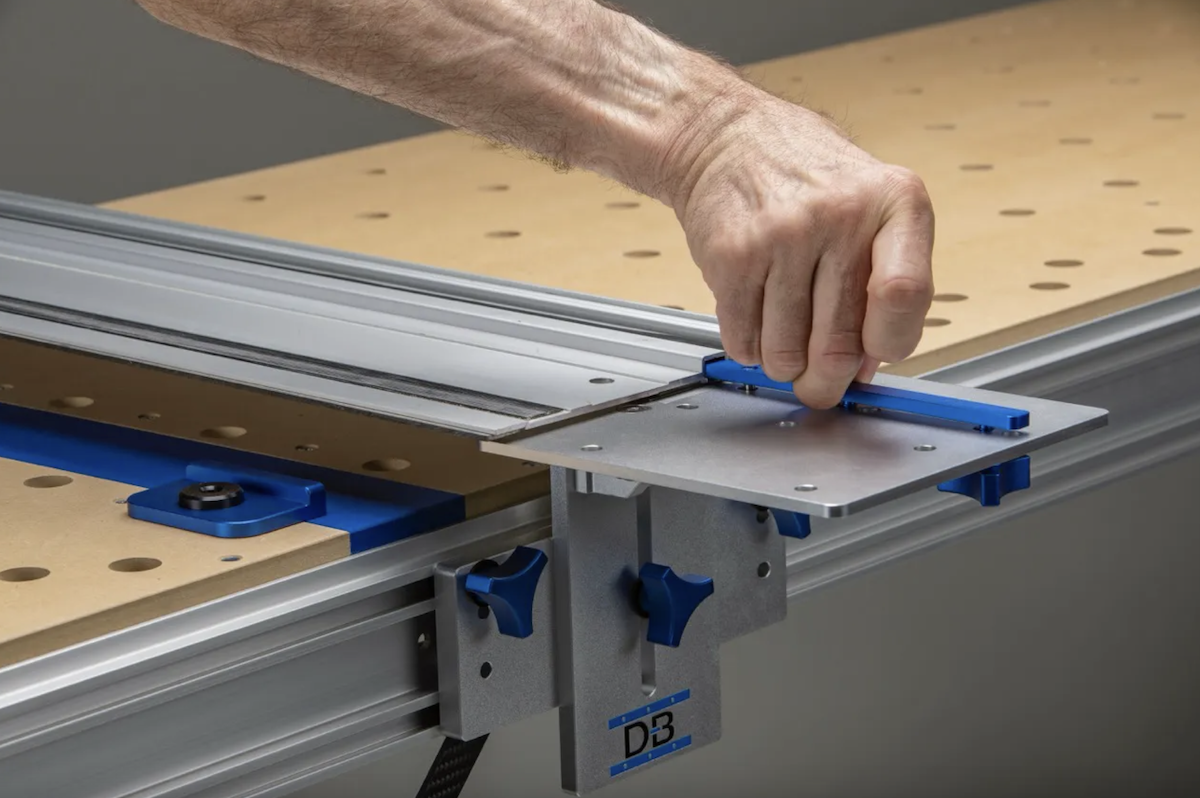
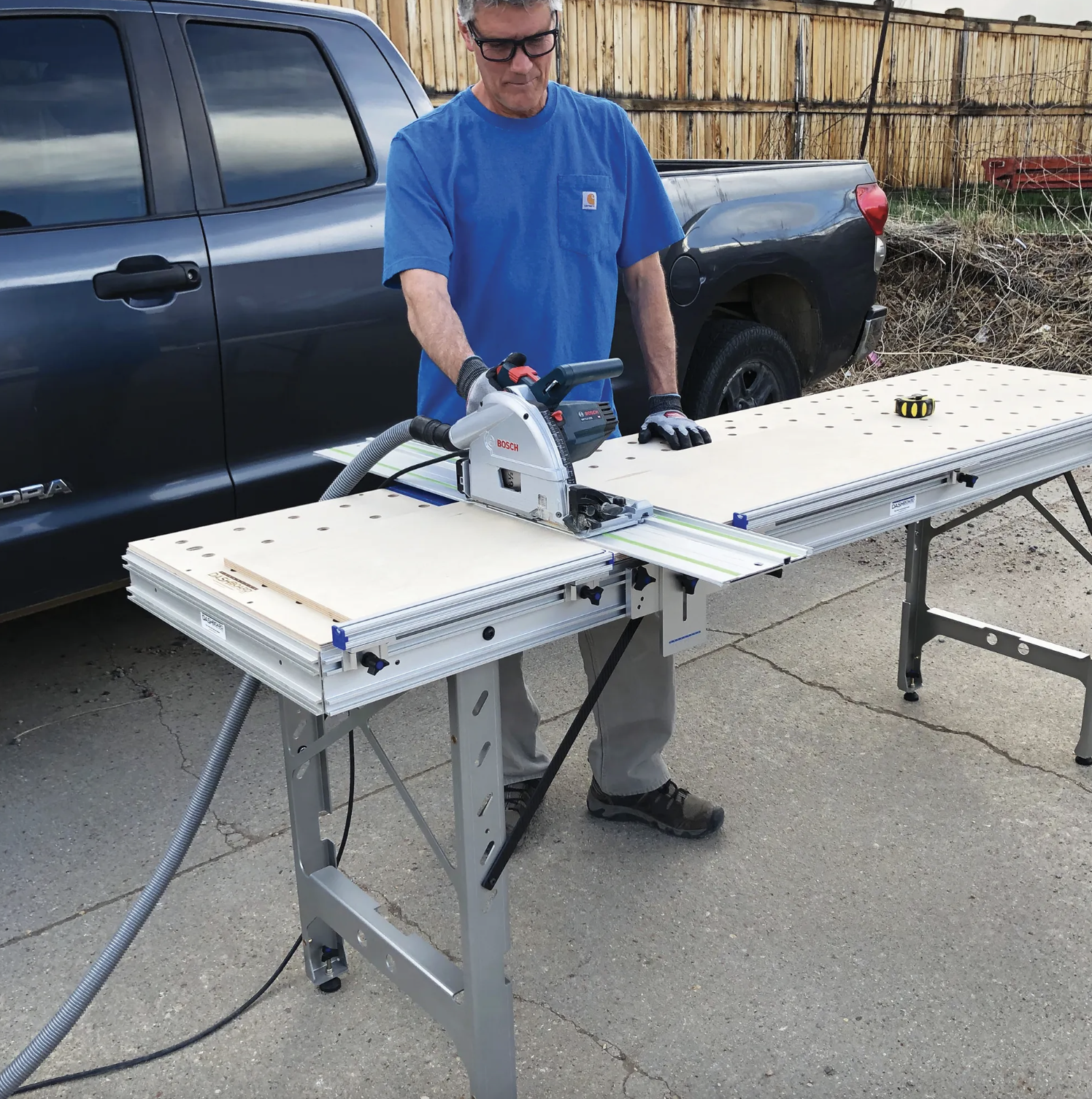
Track saw rail slip almost always comes down to dirty or worn grip strips, dusty or slick surfaces, or not enough downward pressure, and cleaning the strips plus clearing the workpiece solves most cases instantly. For repeatable, no-slip accuracy, clamps work but a fixed bench bracket system locks the rail in place for good.
Scribing transfers the wall's true contour onto a cabinet edge so it fits tight against uneven walls and floors, and a portable bench that levels on the spot gives you the stable reference needed to mark and cut that line accurately. Level the piece, scribe to the widest gap, trim with the work fully supported, then test and refine until the fit sits flush.
Solid workholding is the whole game with edge banding, and a rigid portable bench with the right clamping accessories lets you present a panel flat or vertical for clean, even application. Lock the panel down, apply the banding steadily, then trim flush once the bond sets for crisp, consistent edges every time.

Straight edge cutting tools like track saws, guide rails, and guide rail brackets give woodworkers a fixed reference so cuts stay true instead of drifting off line. A rigid bench, squared rail, and the right accessories (fences, flip stops, parallel guides) turn one accurate cut into consistent, repeatable results every time.
