Your Cart
Product Title
$0
$0
-
+
Your cart is empty.
Add Discount Code?
Add Cart Note?


Welcome to our comprehensive guide on two fundamental woodworking techniques: ripping and crosscutting. Whether you're a beginner or a seasoned woodworker, understanding the difference between these two methods is crucial for your projects. Let's dive into the world of woodworking cuts and explore how they can impact your work.
.webp)
A rip cut is made along the length of the wood, parallel to the grain. This type of cut is generally used to reduce a larger piece of wood to a smaller size. Tools like table saws and hand saws with rip-cut specific blades are ideal for this job. The key is to choose a blade with fewer teeth, designed for cutting along the grain.
Crosscutting, on the other hand, is done across the wood grain. It's the cut you'll make when you need to trim a piece of wood to a certain length. Tools commonly used for crosscuts include miter saws and crosscut hand saws. Blades for crosscutting have more teeth than rip cut blades, offering a smoother finish.
While both cuts are essential, they serve different purposes. Rip cuts are all about reducing the width of a piece, whereas crosscuts focus on length. The finish of a rip cut is typically rougher due to the cutting direction and blade type, while a crosscut offers a smoother edge. Choosing the right tool and blade for each is key to achieving desired results.
Selecting the appropriate saw and blade for ripping and crosscutting is vital. A table saw with a rip blade is ideal for rip cuts, while a miter saw or a crosscut hand saw is better suited for crosscuts. The difference in teeth configuration on the blades (fewer teeth for rip cuts, more teeth for crosscuts) is crucial for achieving clean and efficient cuts.
Precision and safety are paramount in woodworking. Always use sharp blades and maintain a firm grip on the wood. When ripping, feed the wood steadily into the saw. For crosscutting, ensure your measurements are accurate and the wood is securely clamped. Always wear safety gear, including eye and ear protection.
A common mistake in ripping is feeding the wood too fast or too slow, which can lead to uneven cuts or kickback. In crosscutting, inaccuracies in measurement and alignment are frequent issues. Avoid these mistakes by taking your time, double-checking measurements, and using reliable tools.
Ripping and crosscutting are fundamental skills in woodworking. Understanding their differences and applications can significantly impact the quality of your projects. With the right tools and techniques, you can master these essential cuts and elevate your woodworking skills.
The main difference lies in the finish and direction of the cut. A rip cut, made parallel to the wood grain, typically results in a rougher finish and is used for cutting wood to width. A crosscut, made across the wood grain, provides a smoother finish and is used for cutting wood to length.
While a regular hand saw can be used for both tasks, it's not ideal. Specific saws are designed for each type of cut - rip saws for rip cuts and crosscut saws for crosscuts. Using the right saw ensures efficiency and better quality cuts.
When choosing a blade, consider the number of teeth and the tooth configuration. Blades for rip cuts have fewer, larger teeth to remove more material along the grain, while crosscut blades have more, smaller teeth for a smoother cut across the grain.
While basic woodworking safety precautions, like wearing eye and ear protection, apply to both, there are specific considerations. For rip cuts, be wary of kickback. For crosscuts, ensure the wood is securely clamped and your hands are clear of the saw's path.
The basic principles of ripping and crosscutting apply, but different materials require different tools and blades. For example, cutting metal requires a blade specifically designed for metal, and techniques may vary slightly to accommodate the material's properties.
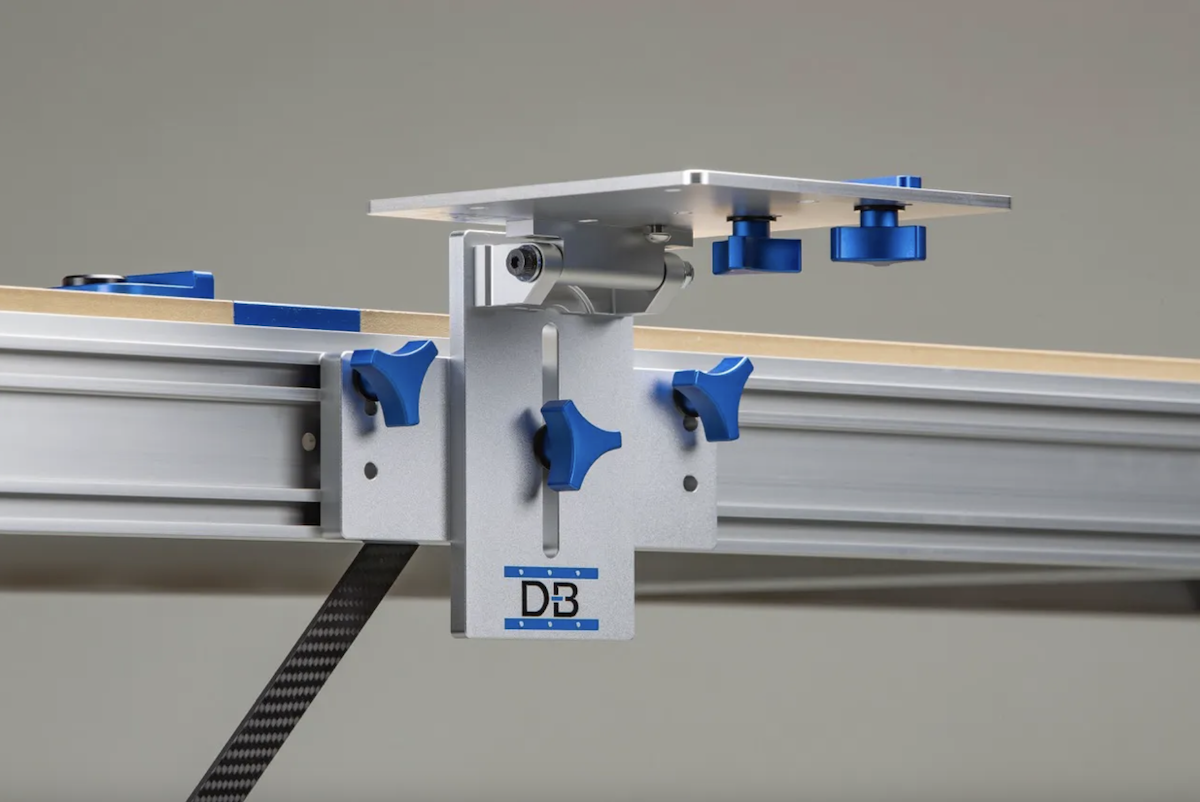
Guide rail brackets hinge your track saw rail to a fixed, repeatable 90-degree position on the bench, so you calibrate square once instead of re-checking it before every cut. Rigid, machined construction with no play is what lets the rail hold that reference through height changes and daily use, turning setup into a one-time task rather than a recurring chore.
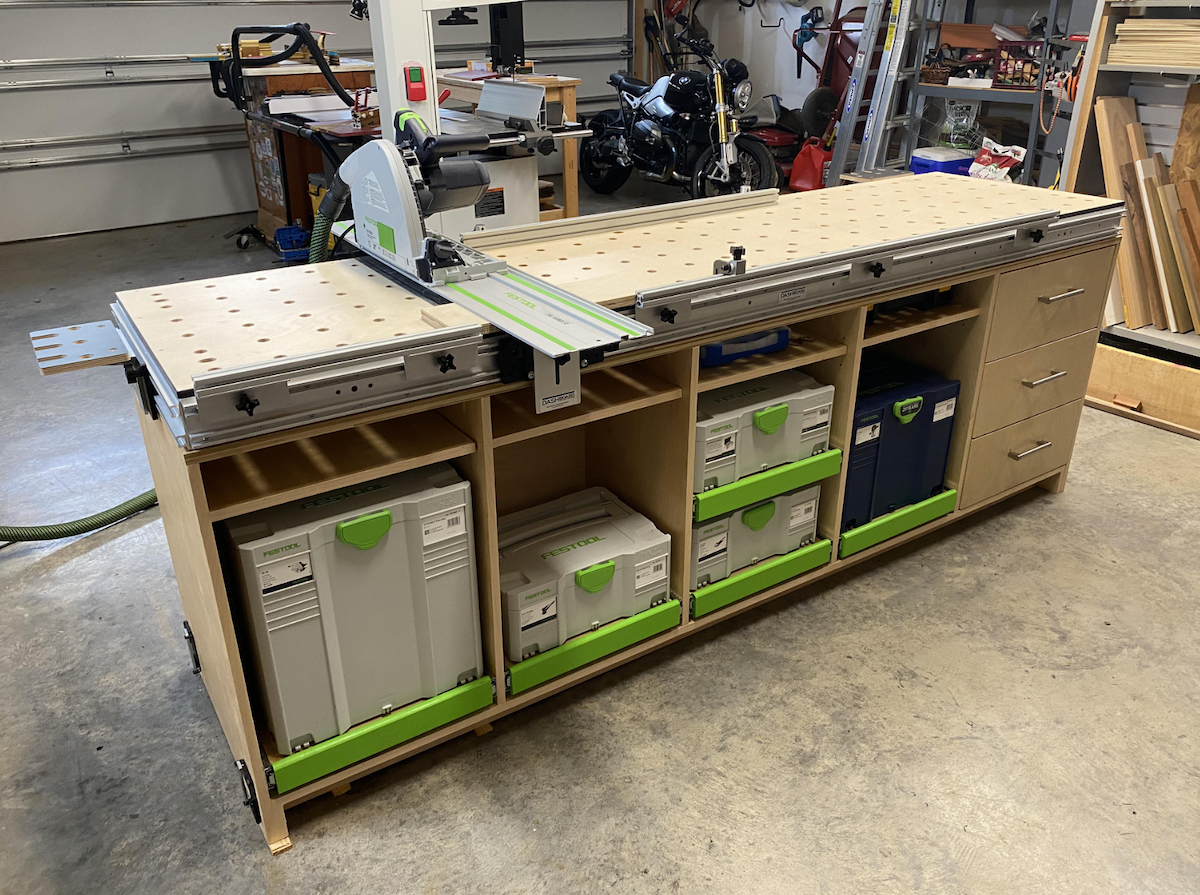
An MFT is a Multi-Function Table built around a perforated 20mm hole grid and guided cutting, letting you crosscut, clamp, sand, rout, and assemble all on one portable surface. It's a strong fit if you do precision crosscuts and sheet goods work, though drift and rigidity issues in some designs are why many owners upgrade to sturdier aftermarket benches and brackets.
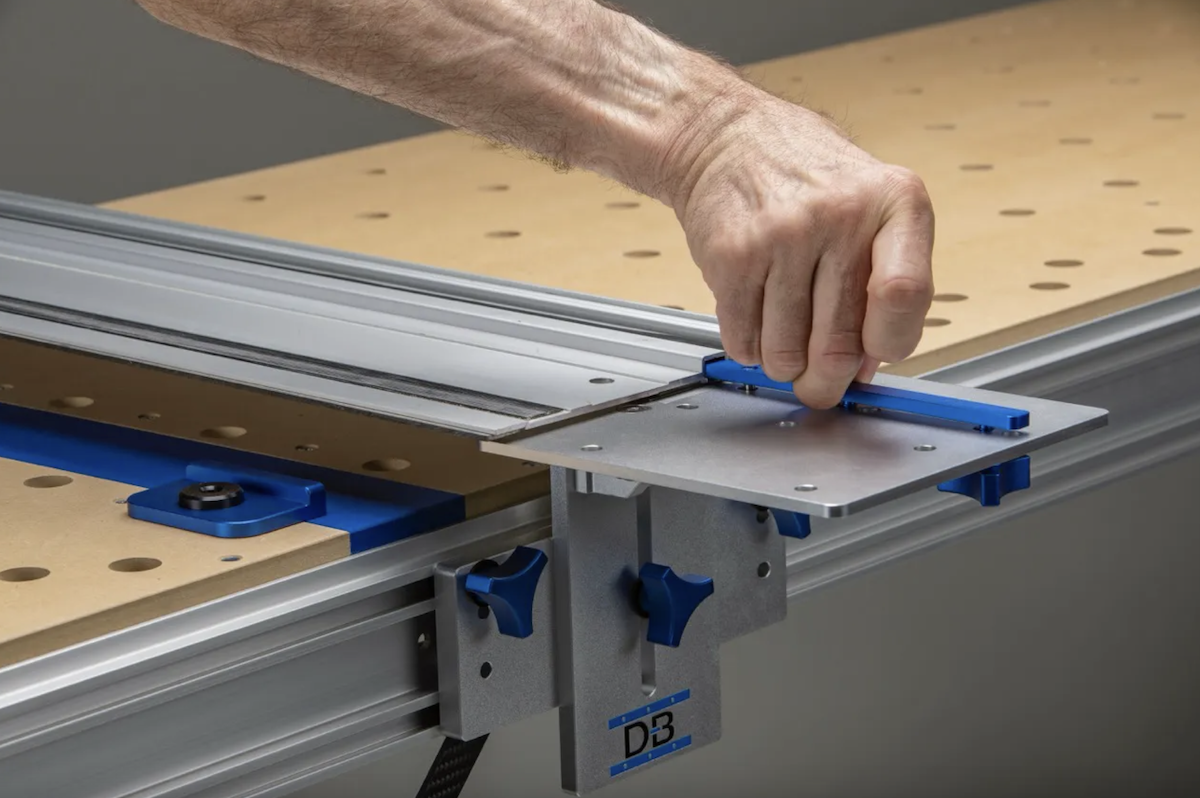
Track saw rail slip almost always comes down to dirty or worn grip strips, dusty or slick surfaces, or not enough downward pressure, and cleaning the strips plus clearing the workpiece solves most cases instantly. For repeatable, no-slip accuracy, clamps work but a fixed bench bracket system locks the rail in place for good.
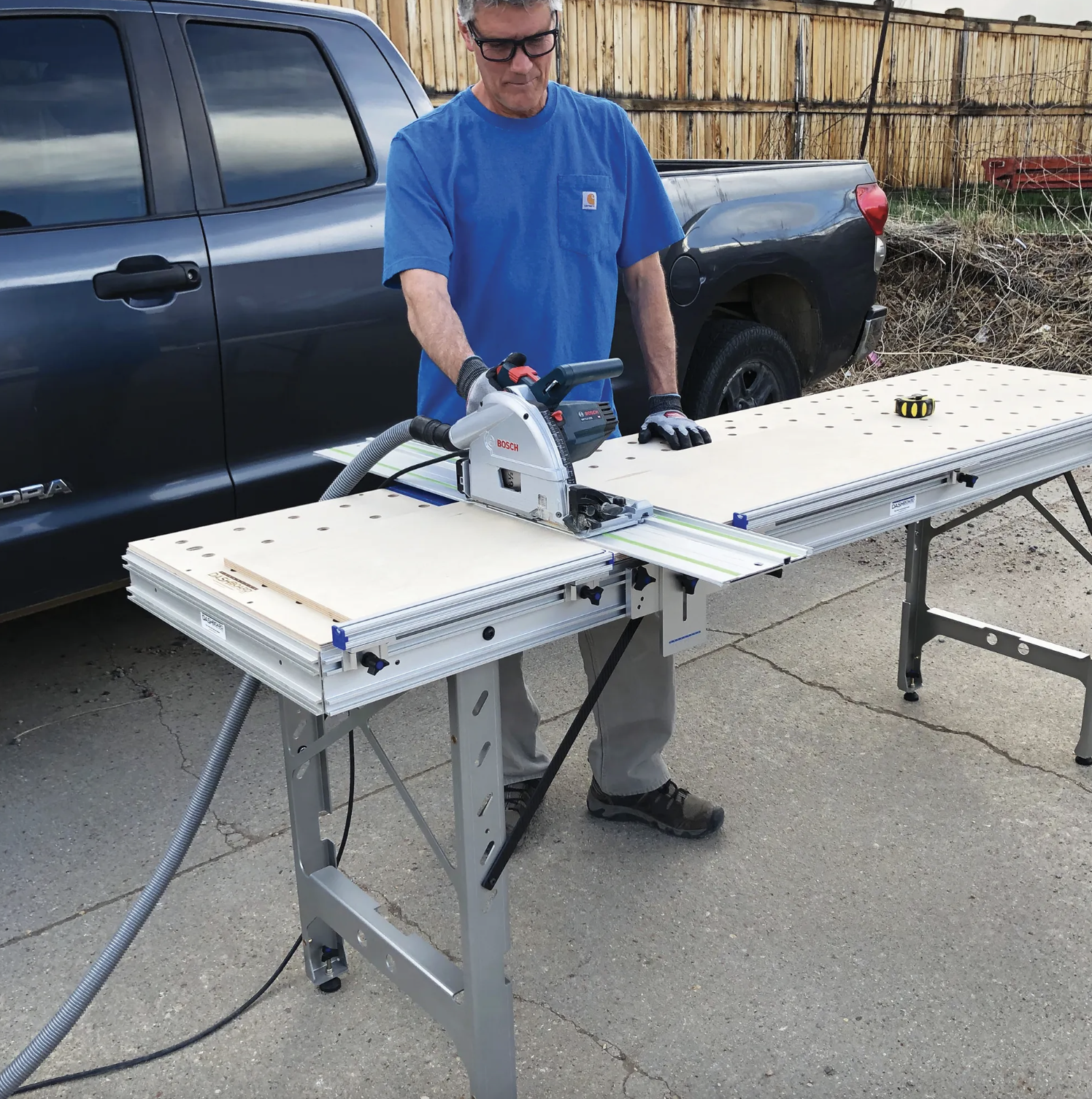
Scribing transfers the wall's true contour onto a cabinet edge so it fits tight against uneven walls and floors, and a portable bench that levels on the spot gives you the stable reference needed to mark and cut that line accurately. Level the piece, scribe to the widest gap, trim with the work fully supported, then test and refine until the fit sits flush.
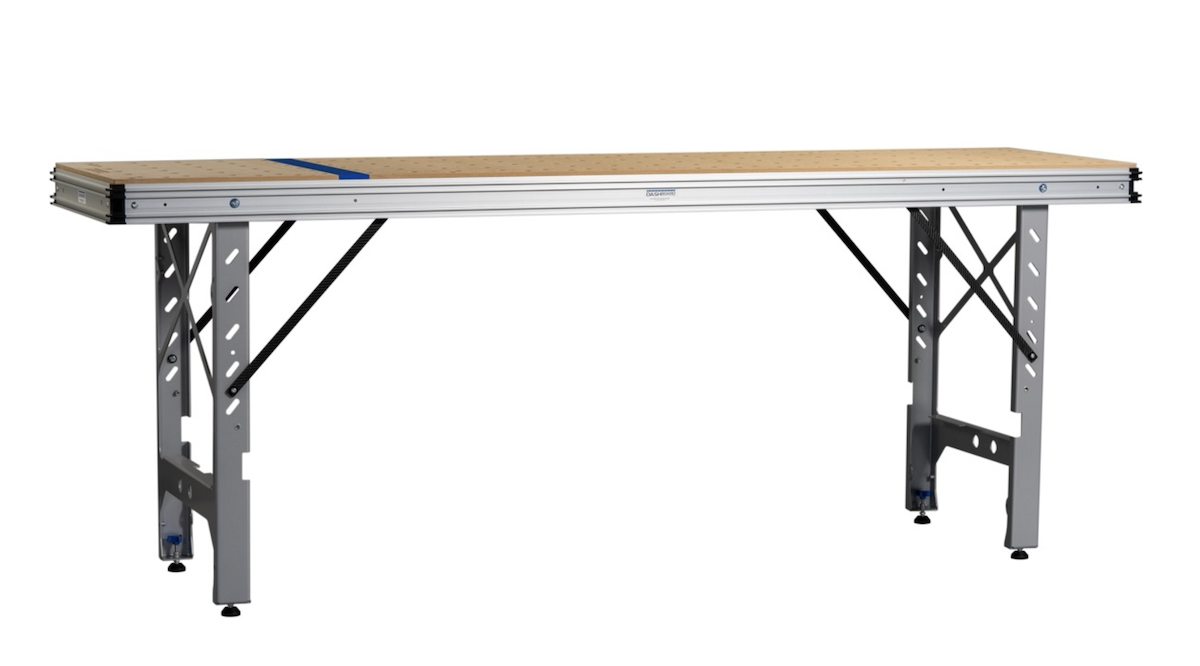
Solid workholding is the whole game with edge banding, and a rigid portable bench with the right clamping accessories lets you present a panel flat or vertical for clean, even application. Lock the panel down, apply the banding steadily, then trim flush once the bond sets for crisp, consistent edges every time.

Straight edge cutting tools like track saws, guide rails, and guide rail brackets give woodworkers a fixed reference so cuts stay true instead of drifting off line. A rigid bench, squared rail, and the right accessories (fences, flip stops, parallel guides) turn one accurate cut into consistent, repeatable results every time.
