Your Cart
Product Title
$0
$0
-
+
Your cart is empty.
Add Discount Code?
Add Cart Note?


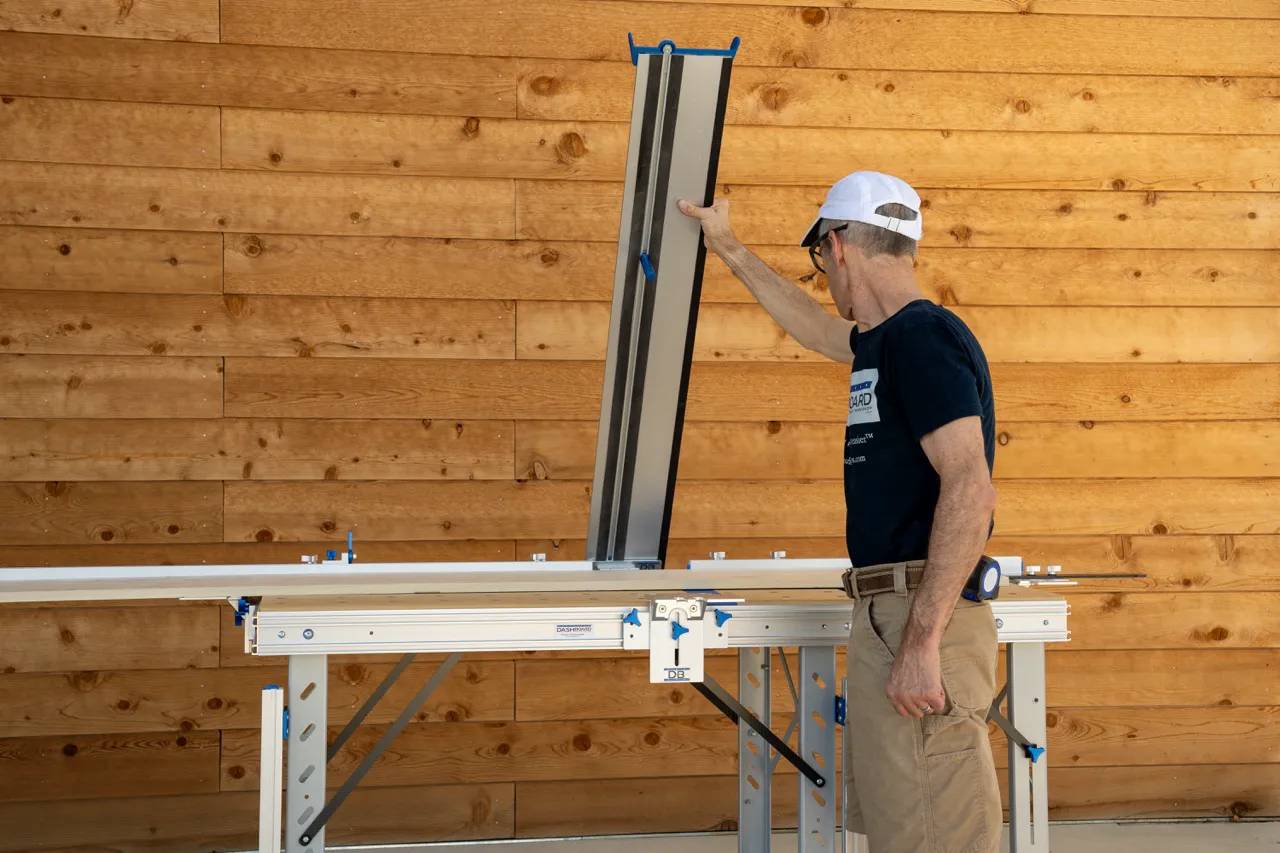
Most workbenches sit around 34-38 inches tall. But here's what nobody tells you: that "standard" height only works if you're between 5'8" and 6'0" doing general assembly work.
At Dash-Board Portable Workshop, we designed our benches at an optimal height for track saw work and sheet goods processing, the tasks portable workbenches actually get used for.
After 10 years of refinement by founder Rob Schumacher in Boulder, Colorado, we've found what actually works in real workshops.
Here's the truth: Bench height matters less than having a rigid, stable surface at a reasonable working height.
A perfectly-height bench that wobbles during cuts? Useless.
A bench that's 2 inches off your "ideal" but rock-solid and sets up in one minute? That's the one you'll actually use.
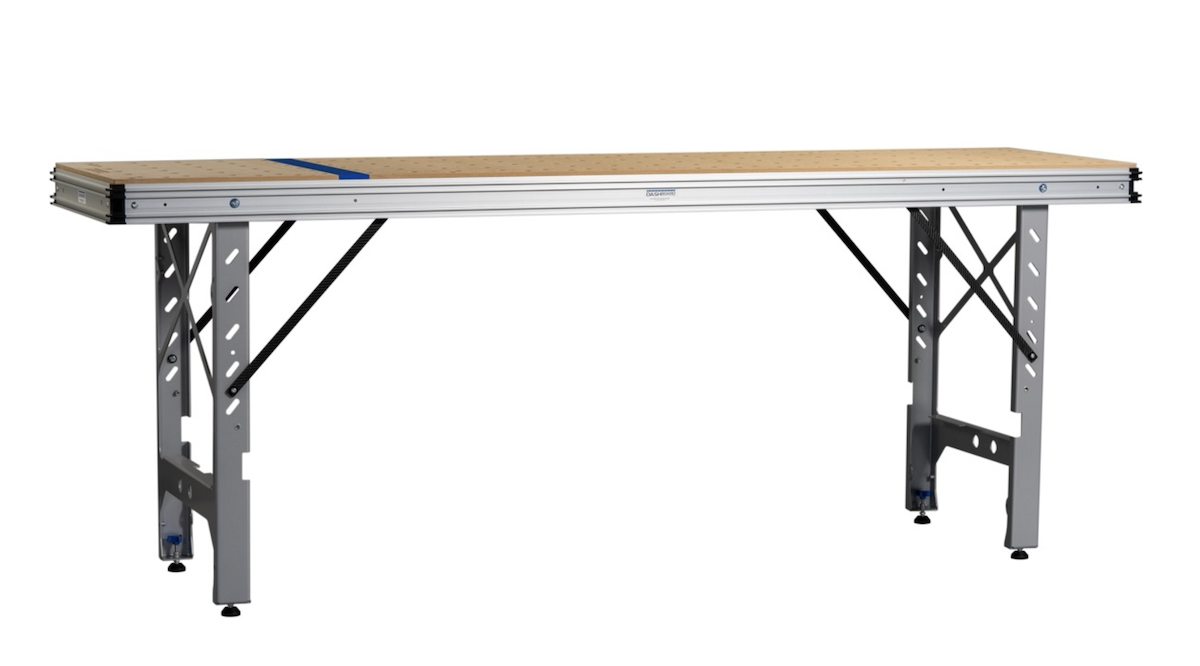
Our Dash-Board Workbench ($1,699) and ShortCut ($1,099) sit at a height optimized for track saw cutting and sheet goods processing—the primary use case for portable workbenches.
Why this height works:
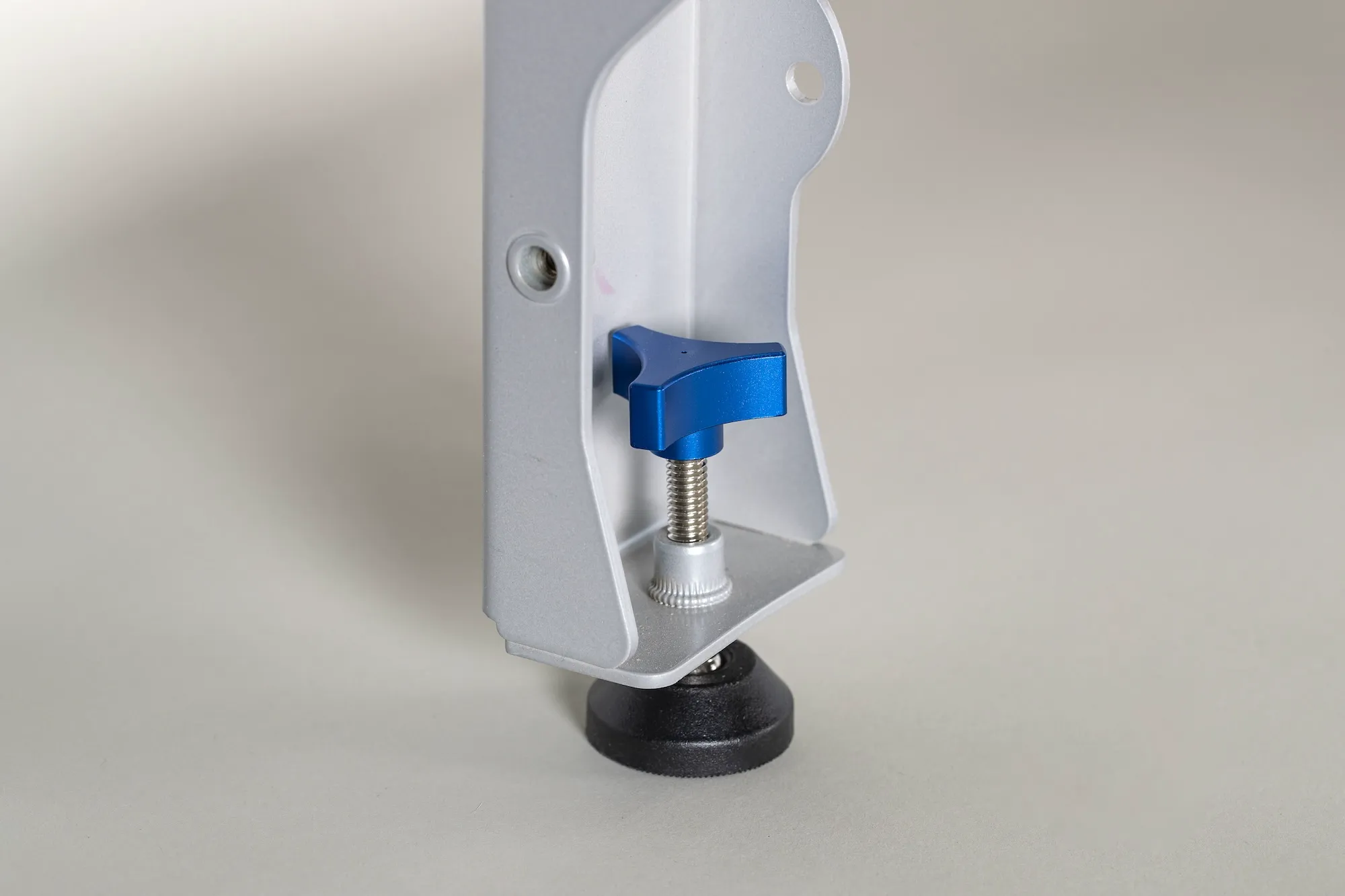
The legs do adjust slightly for terrain compensation (critical for job sites and sloped garage floors), but we're not pretending you'll raise and lower this thing for different tasks. You won't. Nobody does.
Reality check: If standard height doesn't work for you, an adjustable bench still won't solve it—you'll set it once and never touch it again.
What actually helps: Wear different shoes. Use anti-fatigue mats. Stand on a low platform if you're shorter. These are faster than adjusting a bench between tasks.
What we do: Our benches work for most users 5'6" to 6'2" without modification. The legs compensate for uneven terrain, which matters way more day-to-day than fine-tuning height.
Theory: Hand planing needs 34", track saw needs 36", assembly needs 38".
Reality: You're not adjusting your bench between operations. Ever. Be honest.
What actually works: Our Track Stars ($299/set of 2) give you elevated work surfaces when you need material higher. Way faster than raising your whole bench.
Customer proof: "These Track Stars are beautifully made and greatly expands the work area. A must have for your next project." - GAM, Verified Buyer
This one's real. Garage floors slope for drainage. Job sites are never level.
Our solution: Legs adjust independently to compensate for terrain. This isn't about "finding your perfect height"—it's about having a level, stable work surface on uneven ground. Takes 30 seconds, uses no tools.
The Dash-Board is the most rigid portable bench available. Period. Height means nothing if your bench flexes during cuts.
"The Dash-Board fit and finish is outstanding and makes it easy to make extremely accurate cuts very easily." - Ralph, Verified Buyer
One minute setup. No tools. That's what gets you working instead of fiddling with your workspace.
Our Guide Rail Bracket Set ($359) locks track saws at perfect 90-degree alignment. The Rip Gauge ($139) sets exact dimensions without measuring. These solve real problems that affect every cut.
Folds flat. Fits in vehicles. Lightweight enough to move, rigid enough to trust. Most "portable" benches fail at one or both.
"I can move it about in my garage with ease because its so light and if I want to fold it up and take it someplace else its so easy." - Stephen L., Verified Buyer
If you're processing sheet goods with a track saw: Standard workbench height (34-38") works fine. Get a rigid bench with good accessories.
That's us.
If you're doing hand tool woodworking: You probably want a traditional stationary bench around 34" that weighs 300 pounds. Different tool for different job.
If you're doing assembly: Standard height works. Focus on work surface size and clamping options.
If you need portability: Accept that compromises exist. We minimize them better than anyone, but portable benches serve different needs than stationary ones.
The Dash-Board Workbench sits at a height that works for most people doing the tasks portable benches actually do. Combined with our accessory system, you have everything needed for professional results.
Dash-Board Workbench: $1,699 (92.75" x 24.48" x 35.5”)
ShortCut Workbench: $1,099 (half length, same capability)
Guide Rail Bracket Set: $359
Track Stars: $299/set of 2
Pro Accessories Bundle: $1,999 (save $336)
Platinum Bundle: $2,999 (complete system, save $832)
Free shipping over $100 | (303) 376-5703 | dashboardpws.com
"The system exceeded my expectations. Repeatable cuts are a breeze, rips and cross cuts on full sheets couldn't have been easier." - Jeff R., Colorado
Stop worrying about whether 35" or 36.5" is "perfect." Get a rigid, stable bench with precision accessories and actually build something.
2-3 week lead time. Some accessories on backorder—check product pages for shipping dates.
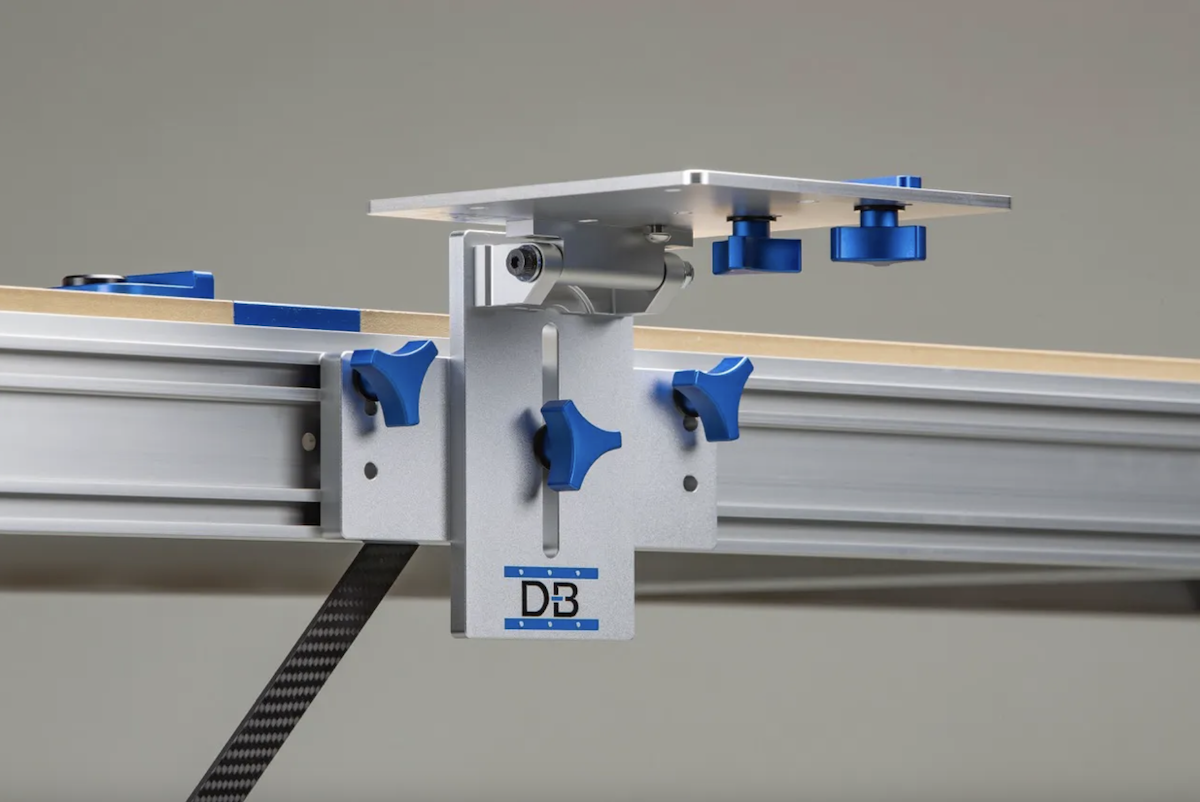
Guide rail brackets hinge your track saw rail to a fixed, repeatable 90-degree position on the bench, so you calibrate square once instead of re-checking it before every cut. Rigid, machined construction with no play is what lets the rail hold that reference through height changes and daily use, turning setup into a one-time task rather than a recurring chore.
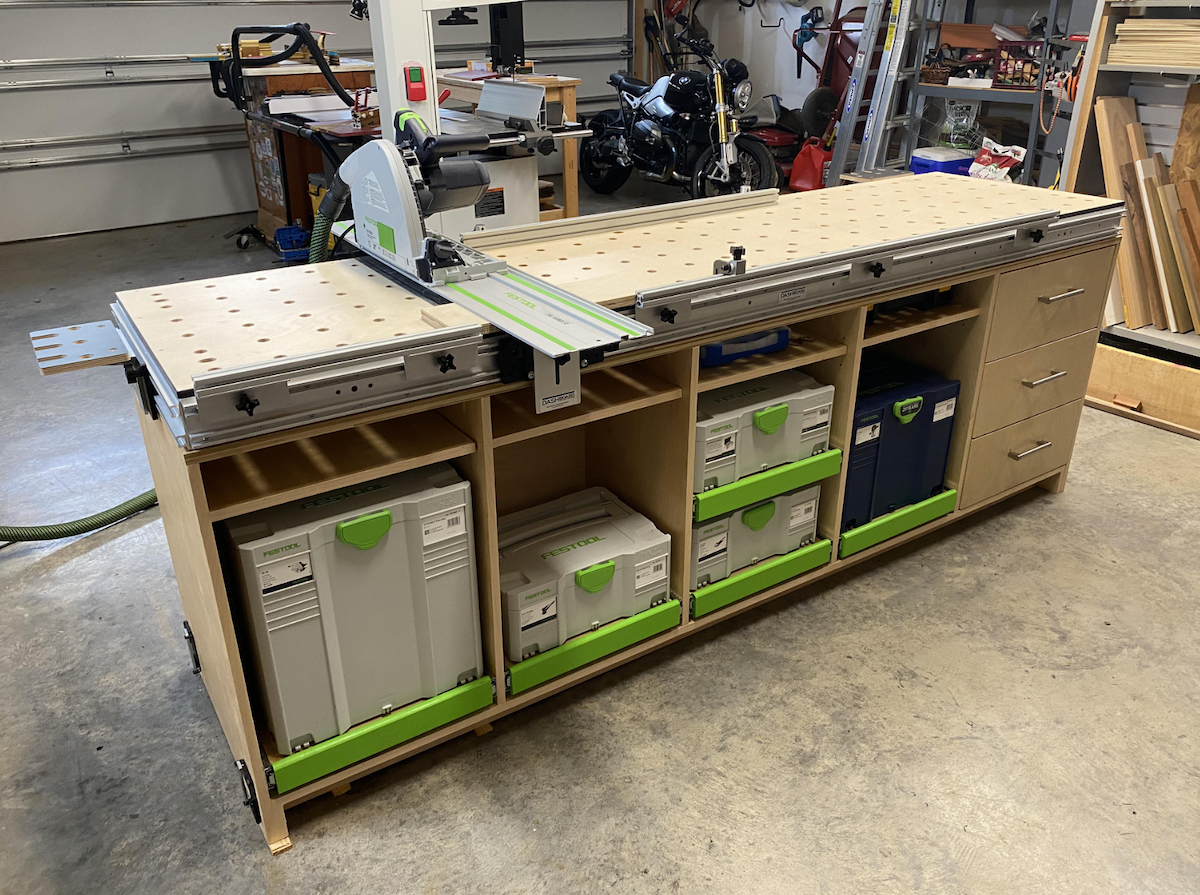
An MFT is a Multi-Function Table built around a perforated 20mm hole grid and guided cutting, letting you crosscut, clamp, sand, rout, and assemble all on one portable surface. It's a strong fit if you do precision crosscuts and sheet goods work, though drift and rigidity issues in some designs are why many owners upgrade to sturdier aftermarket benches and brackets.
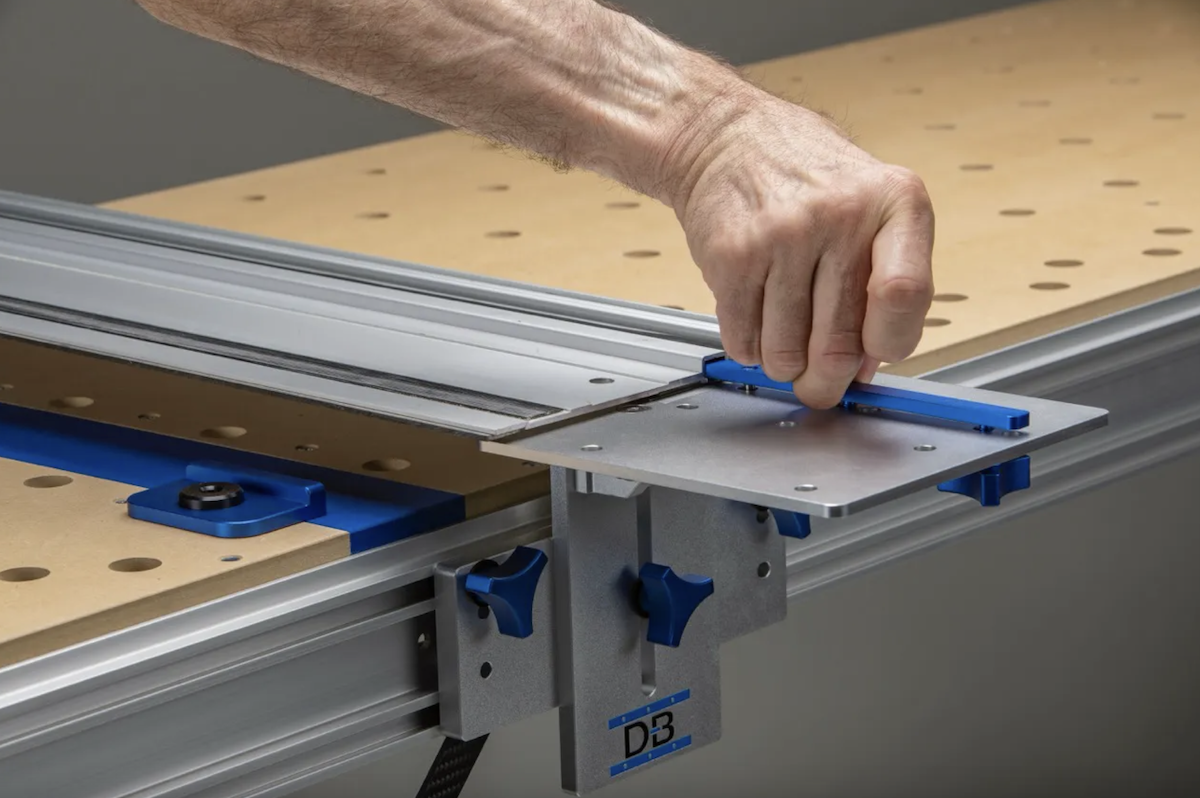
Track saw rail slip almost always comes down to dirty or worn grip strips, dusty or slick surfaces, or not enough downward pressure, and cleaning the strips plus clearing the workpiece solves most cases instantly. For repeatable, no-slip accuracy, clamps work but a fixed bench bracket system locks the rail in place for good.
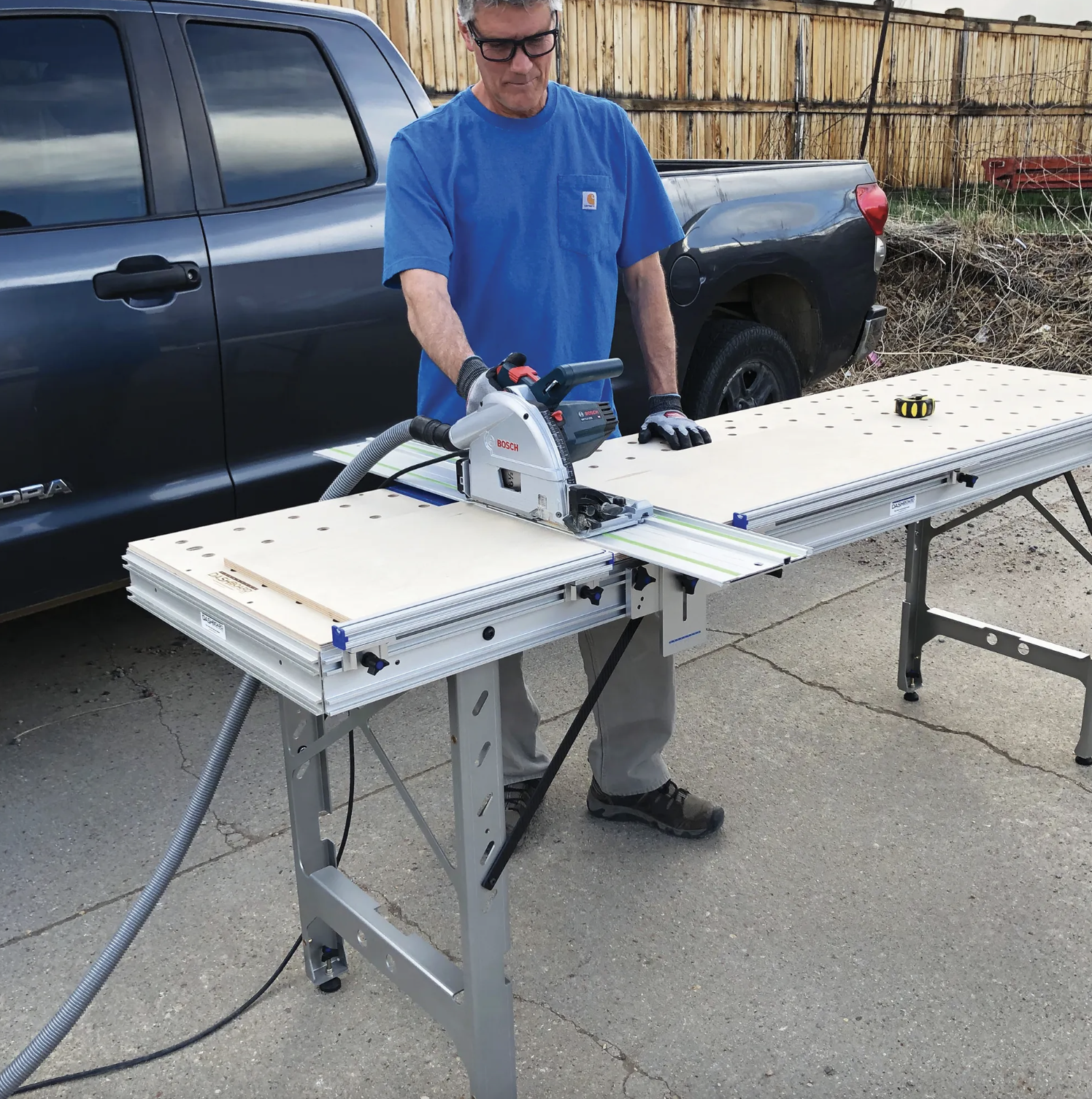
Scribing transfers the wall's true contour onto a cabinet edge so it fits tight against uneven walls and floors, and a portable bench that levels on the spot gives you the stable reference needed to mark and cut that line accurately. Level the piece, scribe to the widest gap, trim with the work fully supported, then test and refine until the fit sits flush.
Solid workholding is the whole game with edge banding, and a rigid portable bench with the right clamping accessories lets you present a panel flat or vertical for clean, even application. Lock the panel down, apply the banding steadily, then trim flush once the bond sets for crisp, consistent edges every time.

Straight edge cutting tools like track saws, guide rails, and guide rail brackets give woodworkers a fixed reference so cuts stay true instead of drifting off line. A rigid bench, squared rail, and the right accessories (fences, flip stops, parallel guides) turn one accurate cut into consistent, repeatable results every time.
