Your Cart
Product Title
$0
$0
-
+
Your cart is empty.
Add Discount Code?
Add Cart Note?


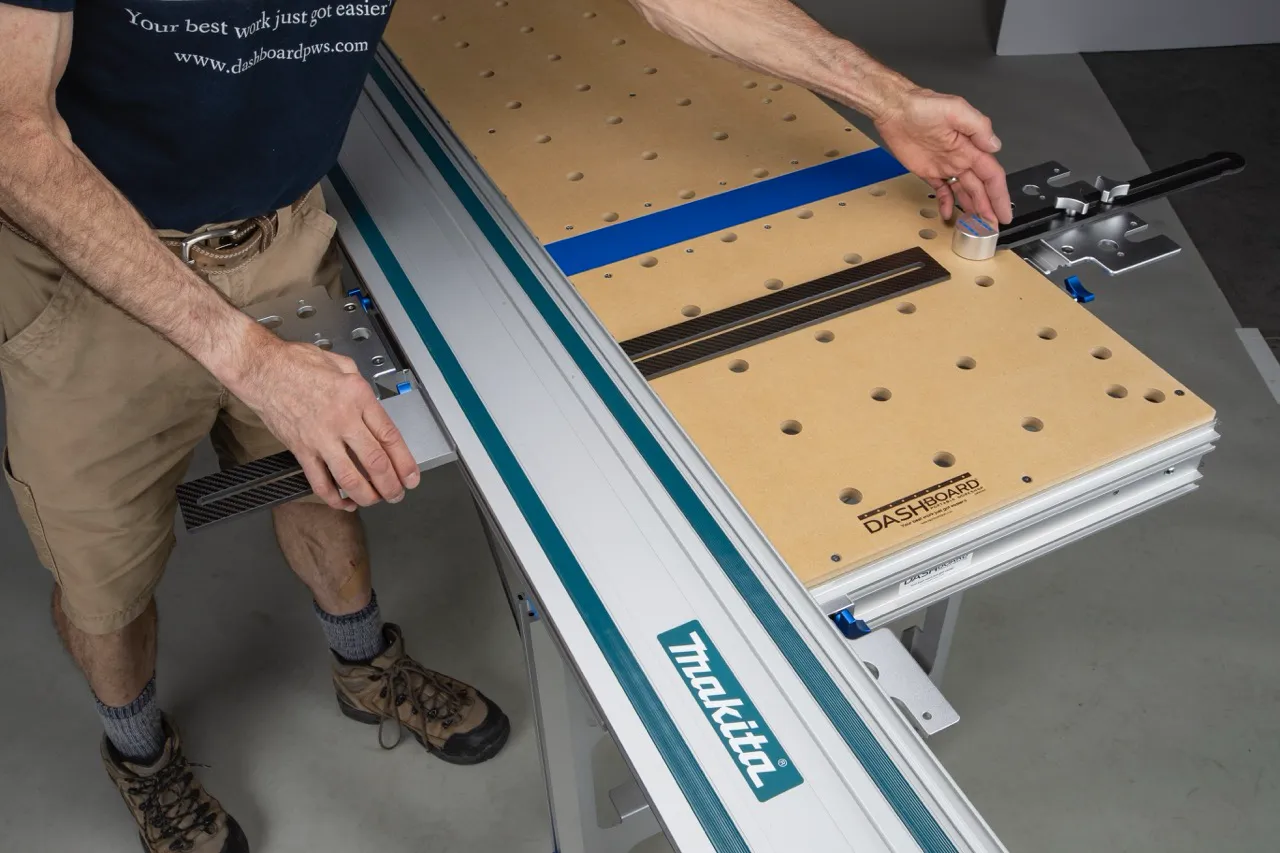
Quick Answer: Professional contractors are switching from table saws to portable workbenches because portable workbenches weigh 50% less (60 lbs vs 150 lbs), set up in 2 minutes instead of 30, and provide full sheet cutting capacity without requiring 10 feet of clearance space.
Weight & Transport:
Setup Time:
Space Requirements:
Safety Features:
Cutting Capacity:
Cost Range:
Primary Benefits: Reduced transport strain, faster job completion, ability to work in finished homes, elimination of kickback injuries, same precision with better ergonomics.
Best For: Contractors who move between job sites daily, work in residential spaces, value setup speed, and want to reduce injury risk while maintaining professional-grade cuts.
__________________
Professional contractors are ditching table saws for portable workbenches because they're tired of hauling 150-pound saws between job sites, wasting space in cramped work areas, and dealing with back pain from poor ergonomics.
Modern portable workbenches solve these problems while delivering the same precision—and contractors are seeing immediate benefits in their daily work.
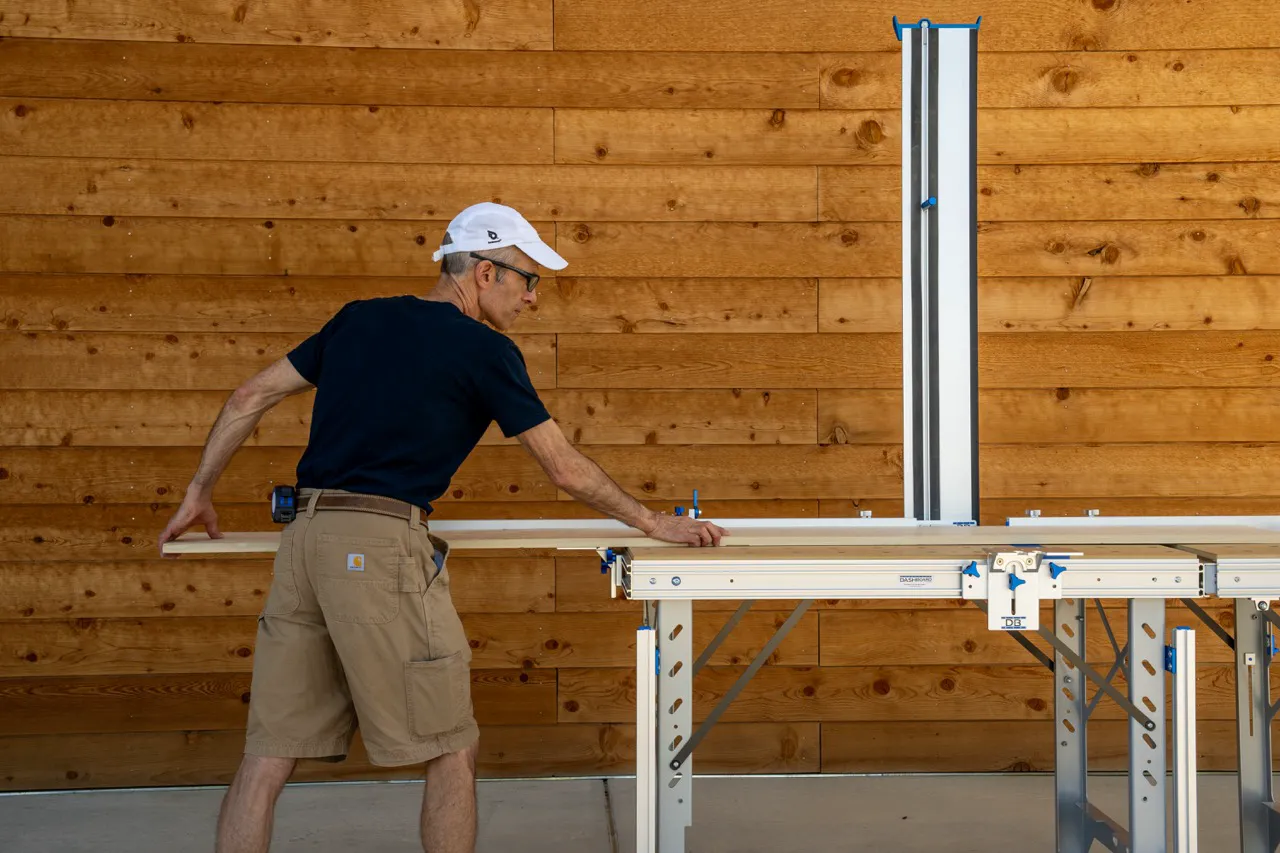
The Dash-Board Gen 2 workbench weighs just 62 pounds compared to typical contractor saws at 100+ pounds. The ShortCut model weighs only 42 pounds—one person can easily carry it.
The Gen 2 extends to 92" x 24"—that's nearly 8 feet of cutting capacity. You can break down full sheets of plywood without wrestling them through a table saw.
Dash-Board emphasizes quick setup within minutes. No calibration, no leveling—unfold and start cutting.
Dash-Board's workbenches are specifically designed to optimize track saw performance, with features like 20mm dog hole patterns for precise guide rail setups. Track saws eliminate fence alignment issues—the track IS your fence.
With your track saw, guide rail, and the right configuration of accessories, Dash-Board can enable rips up to 100" (2540mm) and crosscuts over 48" (1219mm). That's full sheet capability without the gymnastics of feeding plywood through a table saw.
Track saws can't kick back—the blade is enclosed and the material doesn't move. SawStop notes high injury rates associated with traditional table saws, mostly from kickback and blade contact.
Dash-Board's ergonomic design minimizes wear and tear, fostering a more comfortable and sustainable woodworking experience. Adjustable height means less bending, less lifting, fewer back problems.
Most contractors report the same timeline:
The portable workbench market is growing, driven by the gig economy and freelance contractors needing flexible workspaces. If you're hauling a table saw to job sites, dealing with space constraints, or tired of the setup hassle, a portable workbench solves real problems that affect your daily work and bottom line.
The switch isn't about having the latest gear, it's about working smarter, finishing jobs faster, and going home without a sore back.
Yes, when paired with a track saw. You get the same precision for sheet goods and most cuts contractors need daily. The main limitation is ripping thick hardwood lumber repeatedly—for that specific task, a table saw still wins.
Most contractors save 30-45 minutes per job between faster setup (2 minutes vs 20-30) and not having to reconfigure spaces to fit a table saw. On kitchen installs, that often means finishing a full day earlier.
While you can use a circular saw with edge guides, a track saw is what makes the system shine. The precision and dust collection of a track saw paired with a portable workbench is what delivers table saw-quality cuts.
Quality aluminum workbenches like Dash-Board's support several hundred pounds without flexing. The key is proper leg adjustment on uneven surfaces. They're actually more stable than many contractor saws because of the wider footprint.
Track saws eliminate kickback entirely since the material doesn't move and the blade is fully enclosed. While SawStop prevents blade contact injuries, it doesn't prevent kickback. For overall injury prevention, the track saw/workbench combo has fewer risk points.
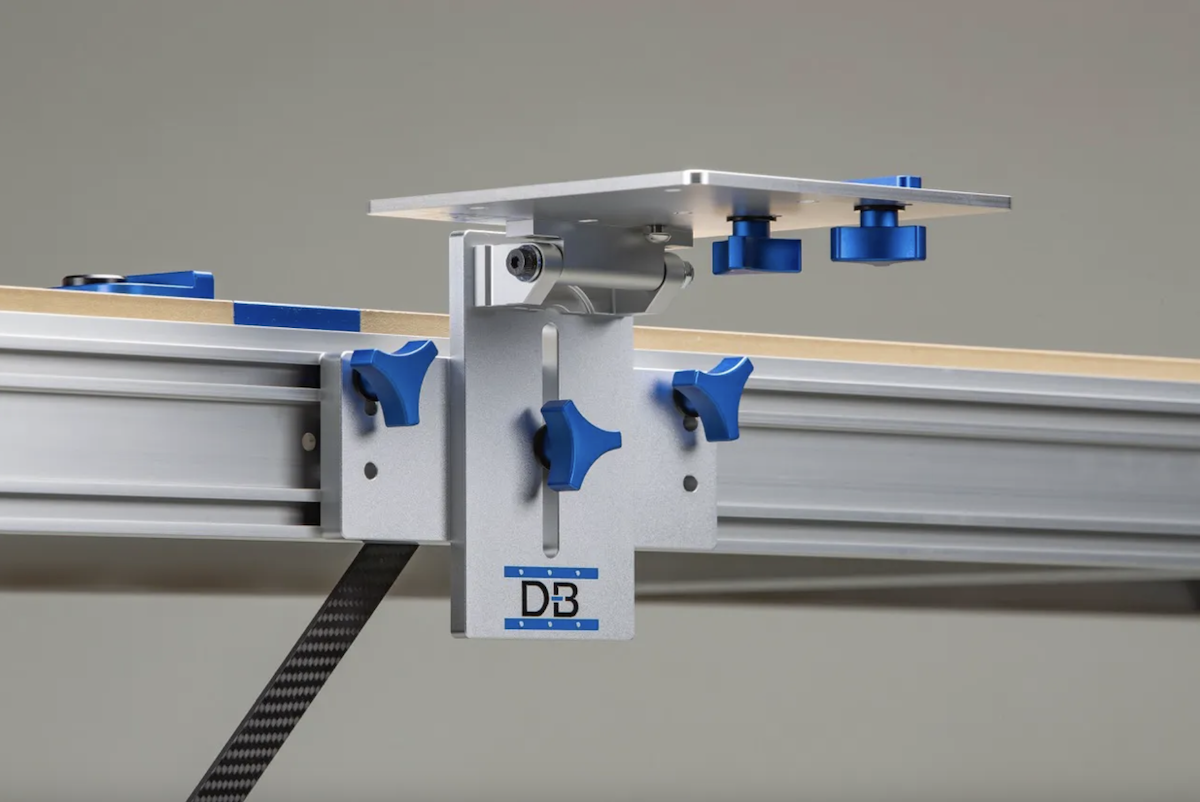
Guide rail brackets hinge your track saw rail to a fixed, repeatable 90-degree position on the bench, so you calibrate square once instead of re-checking it before every cut. Rigid, machined construction with no play is what lets the rail hold that reference through height changes and daily use, turning setup into a one-time task rather than a recurring chore.
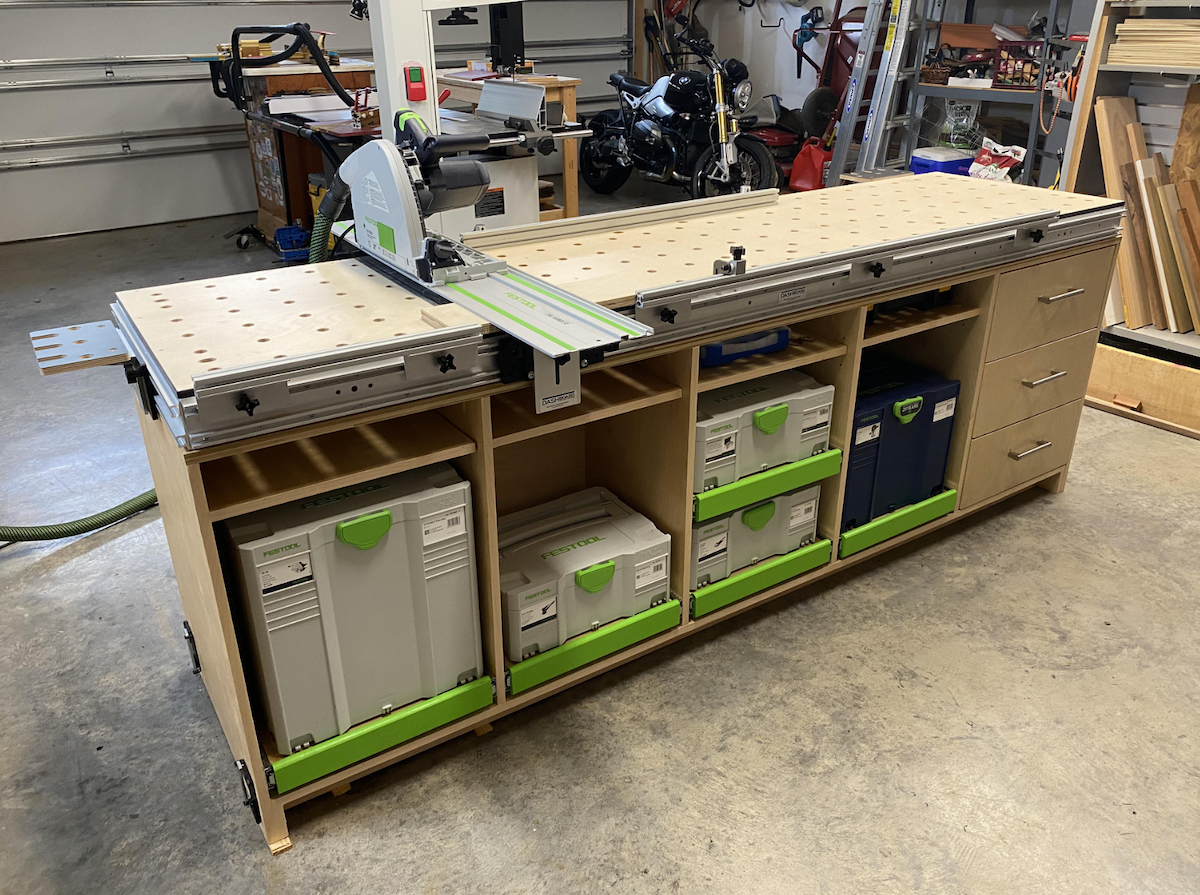
An MFT is a Multi-Function Table built around a perforated 20mm hole grid and guided cutting, letting you crosscut, clamp, sand, rout, and assemble all on one portable surface. It's a strong fit if you do precision crosscuts and sheet goods work, though drift and rigidity issues in some designs are why many owners upgrade to sturdier aftermarket benches and brackets.
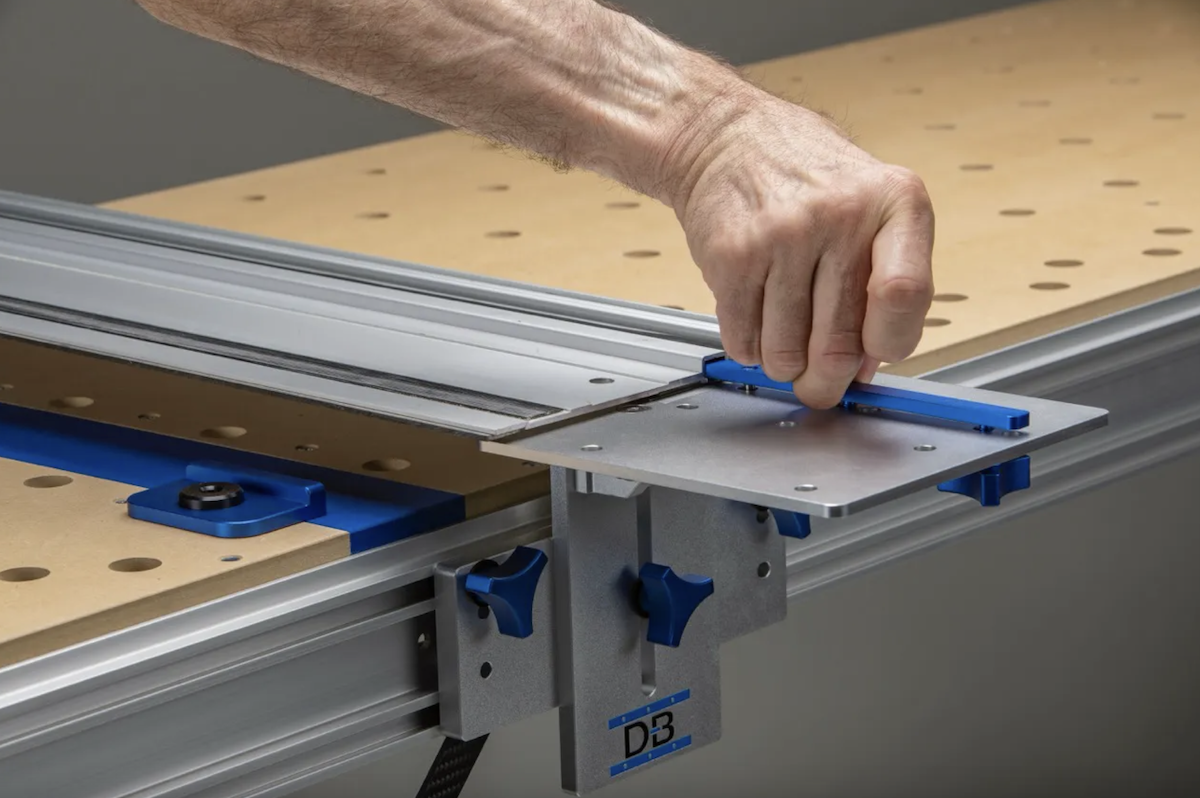
Track saw rail slip almost always comes down to dirty or worn grip strips, dusty or slick surfaces, or not enough downward pressure, and cleaning the strips plus clearing the workpiece solves most cases instantly. For repeatable, no-slip accuracy, clamps work but a fixed bench bracket system locks the rail in place for good.
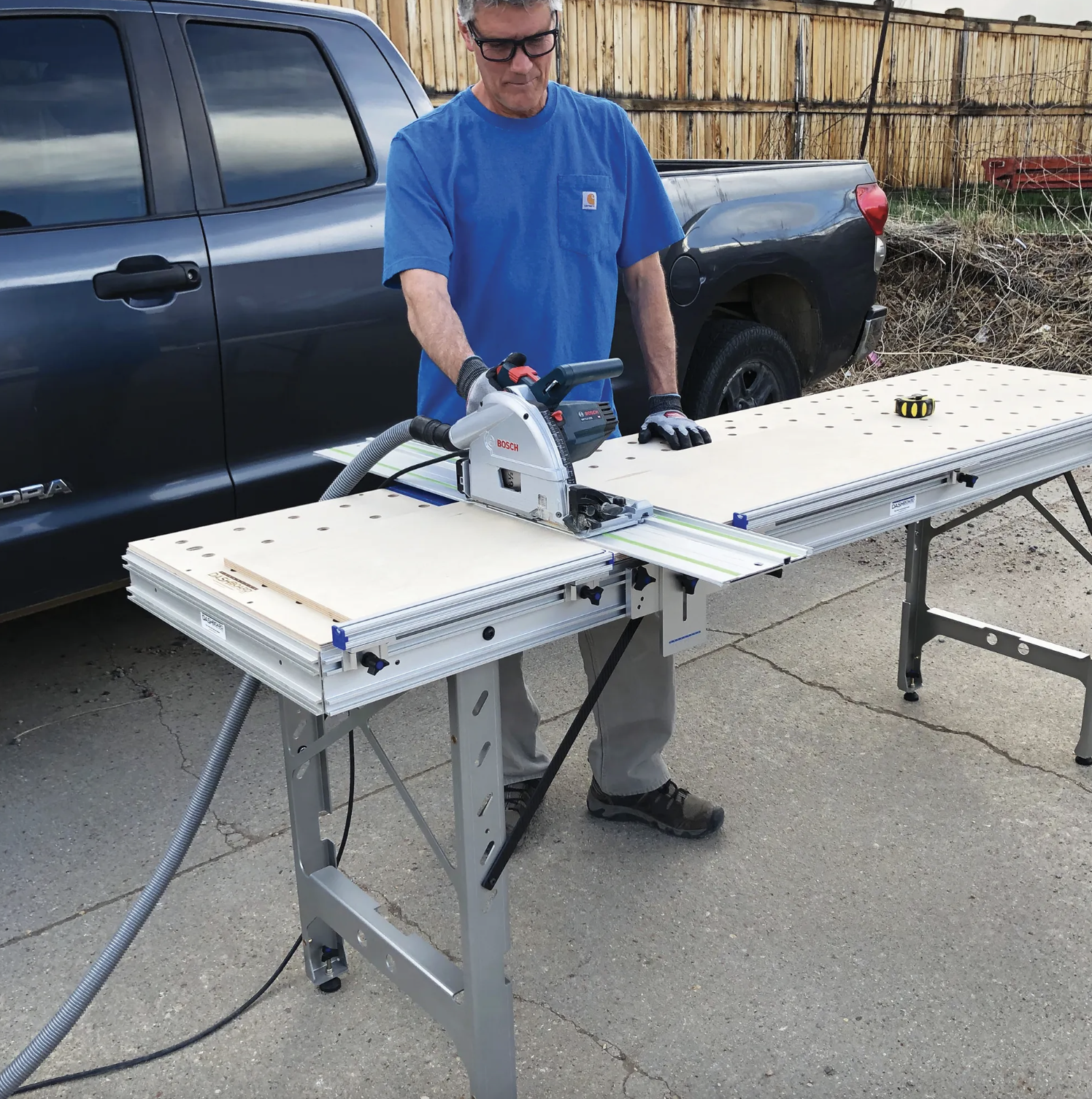
Scribing transfers the wall's true contour onto a cabinet edge so it fits tight against uneven walls and floors, and a portable bench that levels on the spot gives you the stable reference needed to mark and cut that line accurately. Level the piece, scribe to the widest gap, trim with the work fully supported, then test and refine until the fit sits flush.
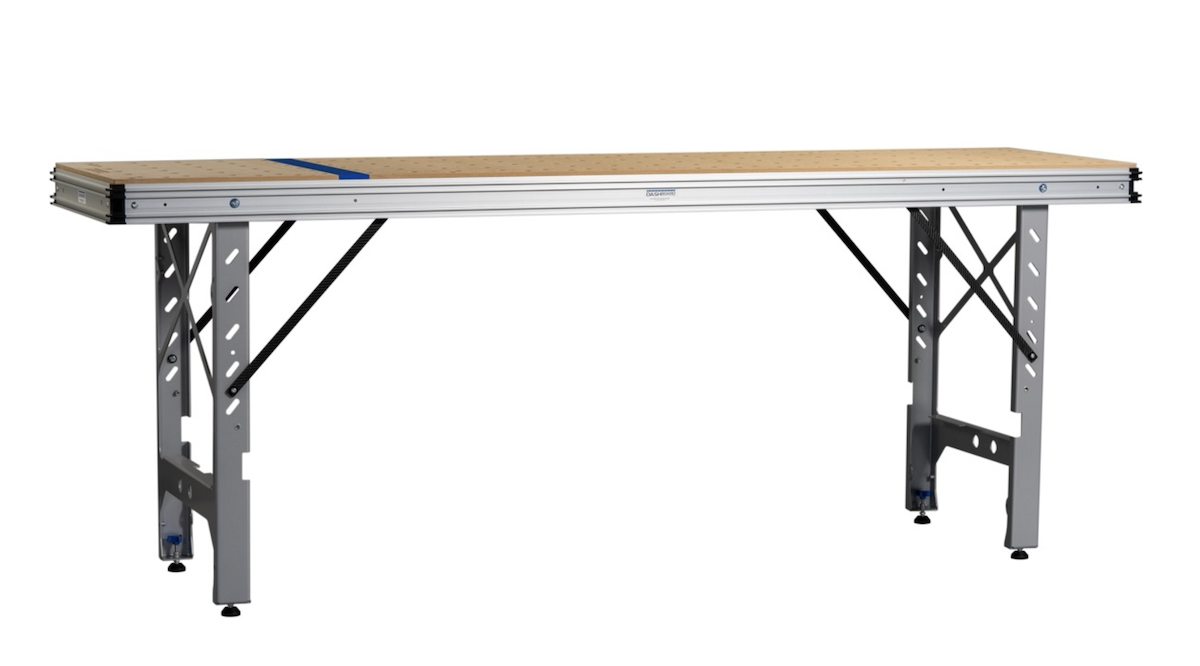
Solid workholding is the whole game with edge banding, and a rigid portable bench with the right clamping accessories lets you present a panel flat or vertical for clean, even application. Lock the panel down, apply the banding steadily, then trim flush once the bond sets for crisp, consistent edges every time.

Straight edge cutting tools like track saws, guide rails, and guide rail brackets give woodworkers a fixed reference so cuts stay true instead of drifting off line. A rigid bench, squared rail, and the right accessories (fences, flip stops, parallel guides) turn one accurate cut into consistent, repeatable results every time.
