Your Cart
Product Title
$0
$0
-
+
Your cart is empty.
Add Discount Code?
Add Cart Note?


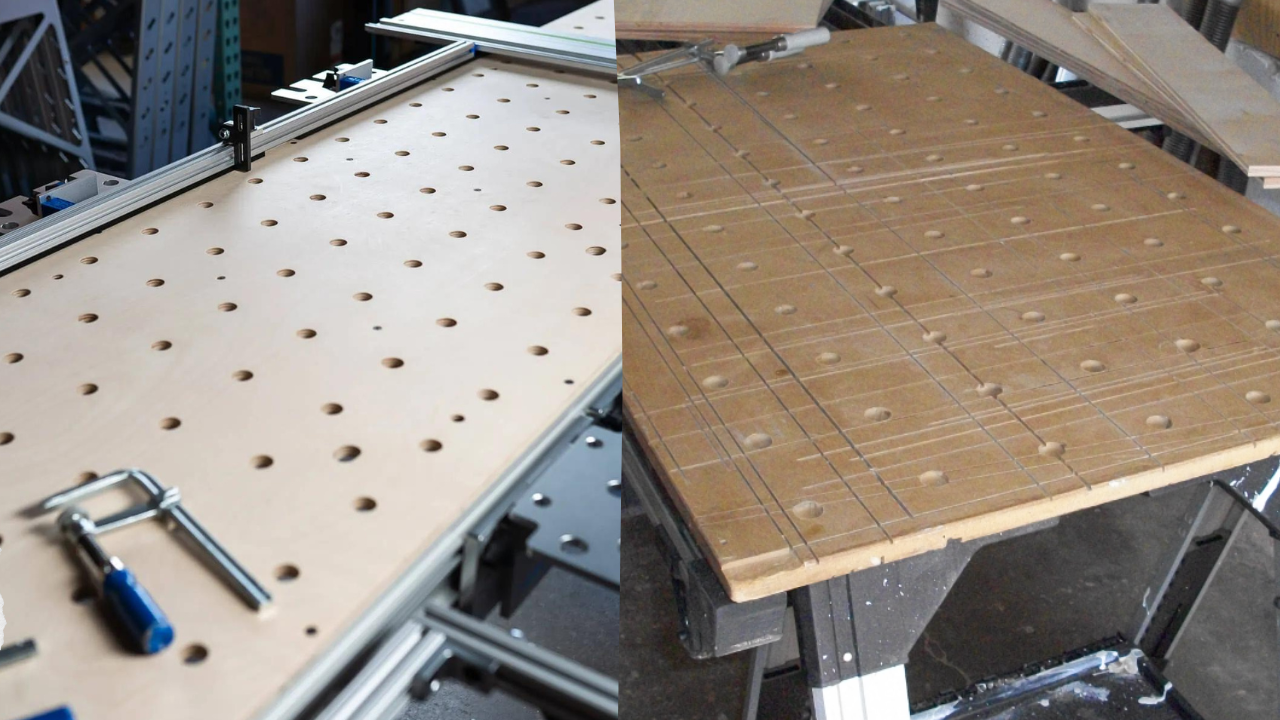
Now, whose idea was this?
The popular notion is that a multifunction workbench top is something to be carved up like so many julienned green beans, then discarded.
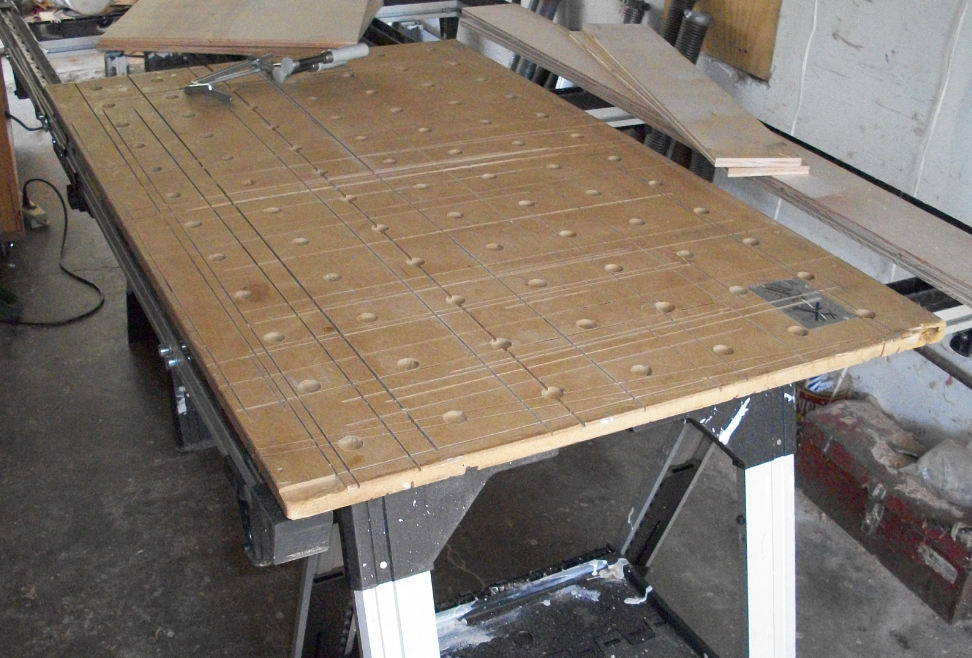
At Dash-Board, we have a different idea.
Here, our bench tops are considered precision instruments, equal partners with the custom frames they sit on, and the idea is to avoid destroying them.
With that in mind, we’ve developed a double-edged approach to cutting with a track saw that preserves the bench top by (A) locating the saw kerf on a replaceable, plastic strip, and (B) arranging the guide rail so it’s actually off the edge of the table and the blade only cuts air + the workpiece.
Our replaceable cut strip is set in a recess on the Dash-Board’s top with double-sided tape.
The setup process for Guide Rail Brackets locates the saw kerf off-center between rows of holes, so the blade will never cut beyond the strip, regardless of whether you’re doing vertical or beveled cuts. Of course you do need to be aware of your depth setting to avoid going all the way through the strip; the idea is to cut into it, not through it. With correct use, the saw kerf will go back to the same spot every time you reinstall the Guide Rail Brackets and follow the easy setup process; you’ll rarely need to replace the strip.

Our Long Rip setup puts the saw blade between the bench top and our Universal Track Stars and Outriggers, whether for vertical or beveled cuts. You cut only your workpiece and the air beneath it, so there’s no worry about any surface damage.

Now, we know some will ask “What about tearout on the bottom? I need my sheet of foam insulation for that.”
First, foam is not dense enough to provide any resistance to tearout, and we believe this popular myth has more to do with the convention that users place a piece of foam insulation under their plywood when they’re breaking down sheets, just because they either have no proper bench and they’re kneeling on the floor - so they want to prevent the blade from hitting whatever’s underneath - or they (properly) want to avoid cutting their work surface.
Second, the track saw blade is spinning up, into the bottom of the material, so tearout is a non-issue there, except in the case of some laminates that will fight you no matter what. Your best bet for that is a laminate-specific blade, and foam is certainly no match for flaking laminate.
Whether you set up to cut over the replaceable strip or off the edge of the bench, the rest of our accessories help complete the process. For cutting on the benchtop, use either 2 side-mount fences or the F2 surface-mount fence (included with our Pro and Platinum Accessory Bundles) to back up your work. Dual-Sided Carbon Fiber Flip Stops can run along those to help you make identical repeat cuts. Unparalleled Parallel Guides attach to the bench top’s 20mm holes and
Track Stars via their ExpanDogs to let you set stops in many spots for tons of uses.
Off the bench’s edge, Universal Track Stars support offcuts during rips or crosscuts.
Outriggers open up enormous potential by:
Supporting large workpieces to allow full sheet rips,

as a base for our Rip Stops, enabling accurate cuts to the right of the blade,

and by letting you install Guide Rail Brackets and Universal Track Stars on them to accomplish crosscuts up to 49”.


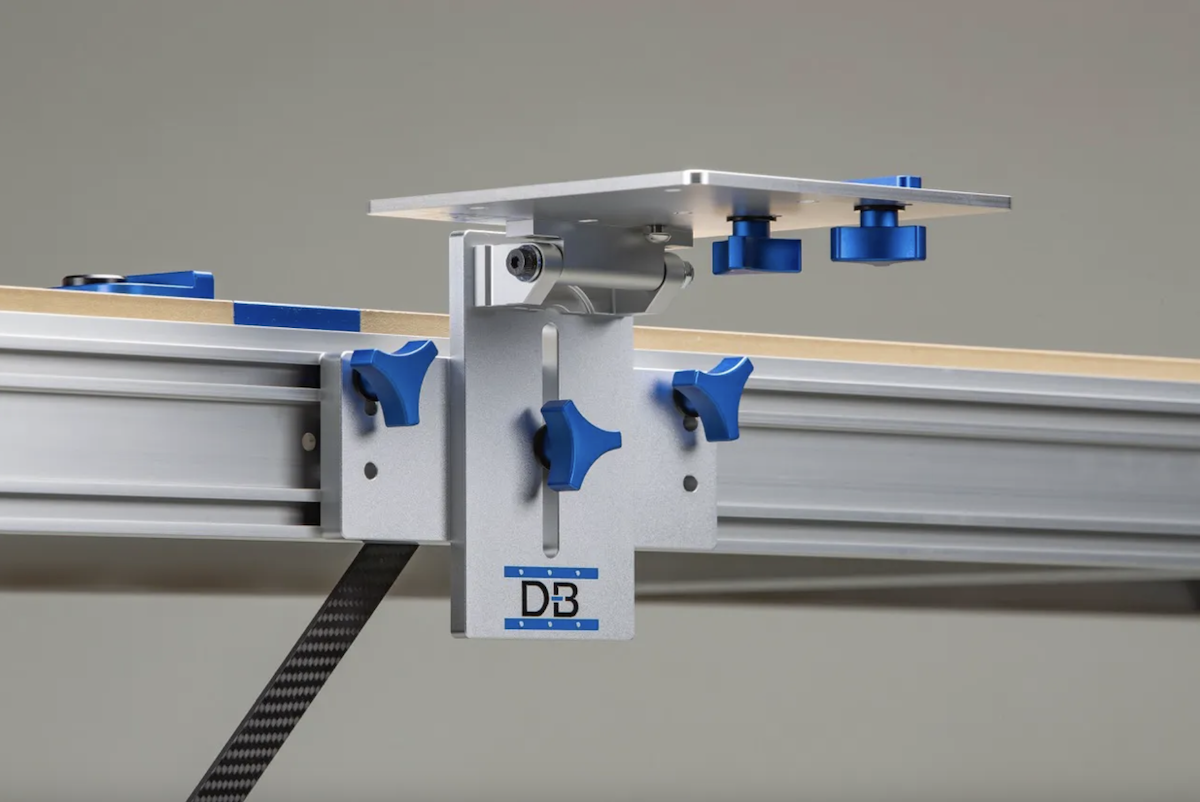
Guide rail brackets hinge your track saw rail to a fixed, repeatable 90-degree position on the bench, so you calibrate square once instead of re-checking it before every cut. Rigid, machined construction with no play is what lets the rail hold that reference through height changes and daily use, turning setup into a one-time task rather than a recurring chore.
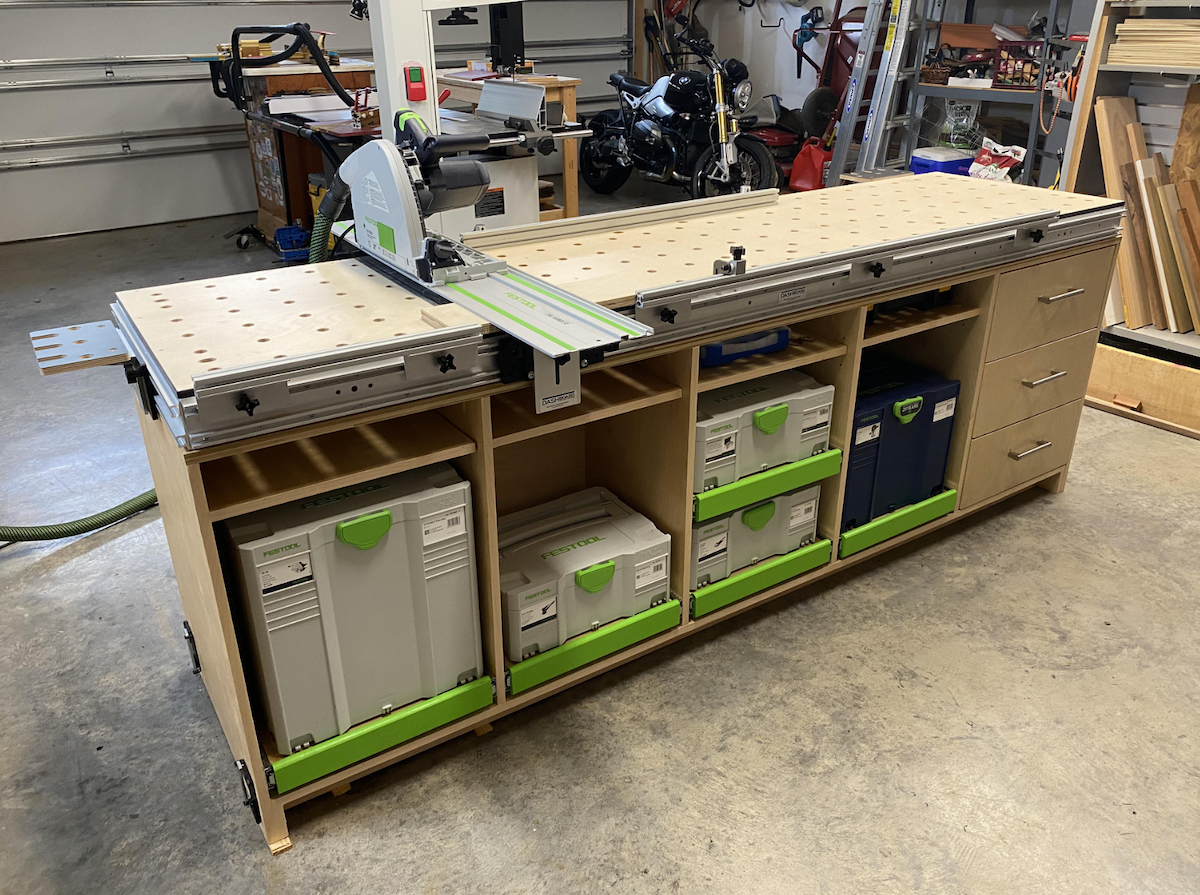
An MFT is a Multi-Function Table built around a perforated 20mm hole grid and guided cutting, letting you crosscut, clamp, sand, rout, and assemble all on one portable surface. It's a strong fit if you do precision crosscuts and sheet goods work, though drift and rigidity issues in some designs are why many owners upgrade to sturdier aftermarket benches and brackets.
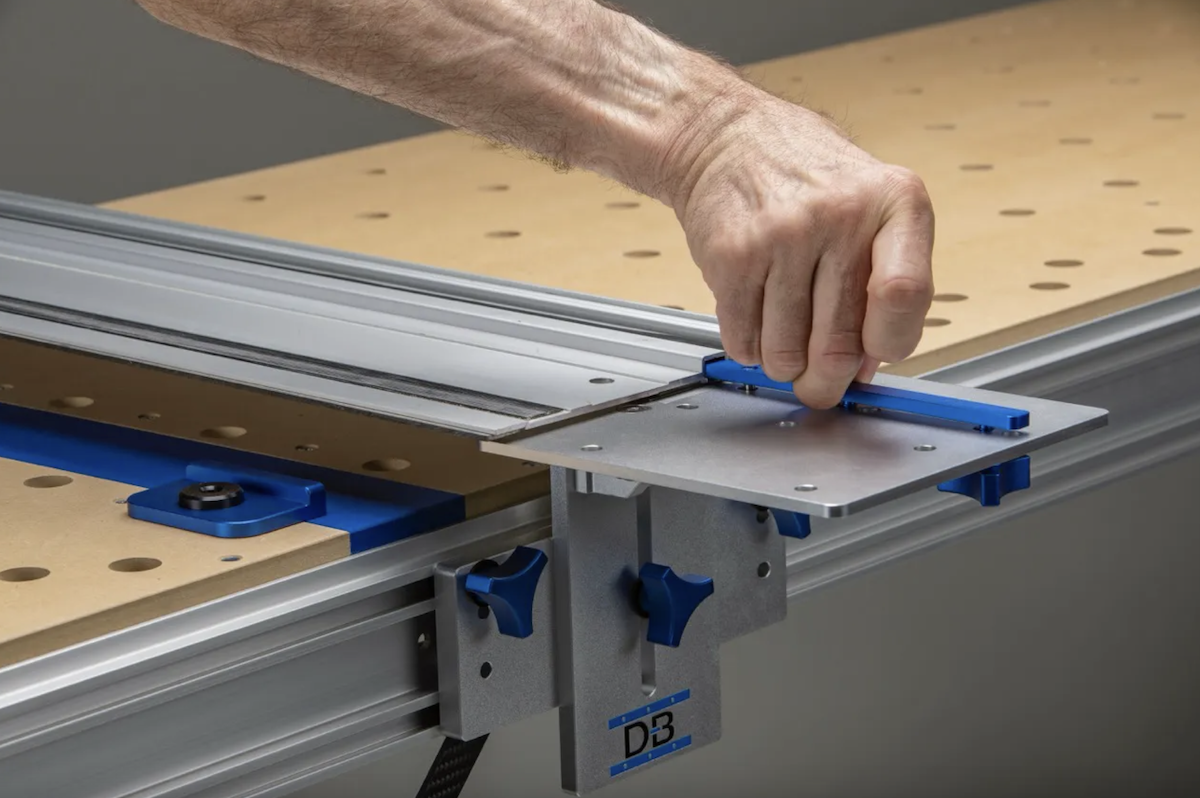
Track saw rail slip almost always comes down to dirty or worn grip strips, dusty or slick surfaces, or not enough downward pressure, and cleaning the strips plus clearing the workpiece solves most cases instantly. For repeatable, no-slip accuracy, clamps work but a fixed bench bracket system locks the rail in place for good.
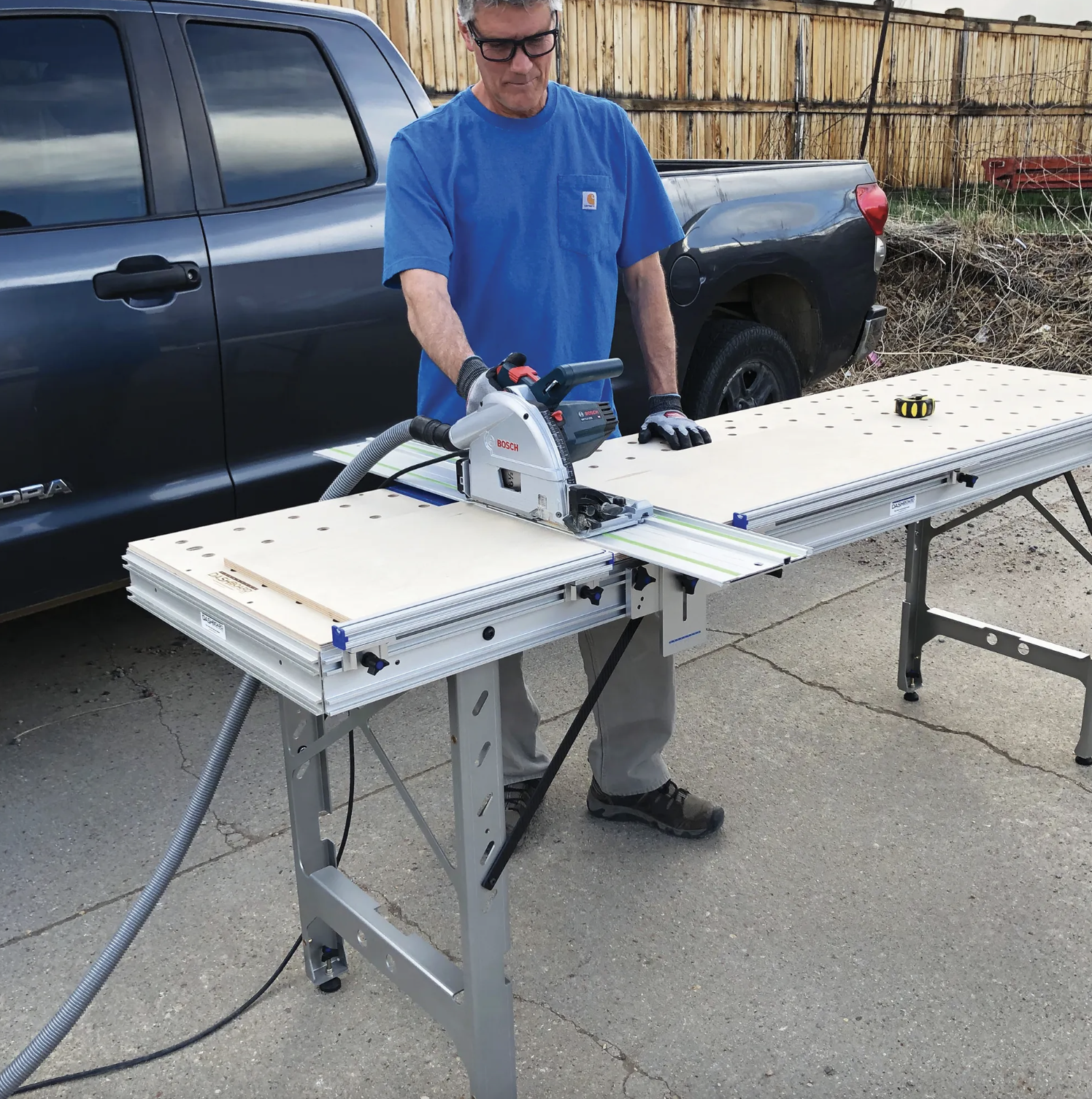
Scribing transfers the wall's true contour onto a cabinet edge so it fits tight against uneven walls and floors, and a portable bench that levels on the spot gives you the stable reference needed to mark and cut that line accurately. Level the piece, scribe to the widest gap, trim with the work fully supported, then test and refine until the fit sits flush.
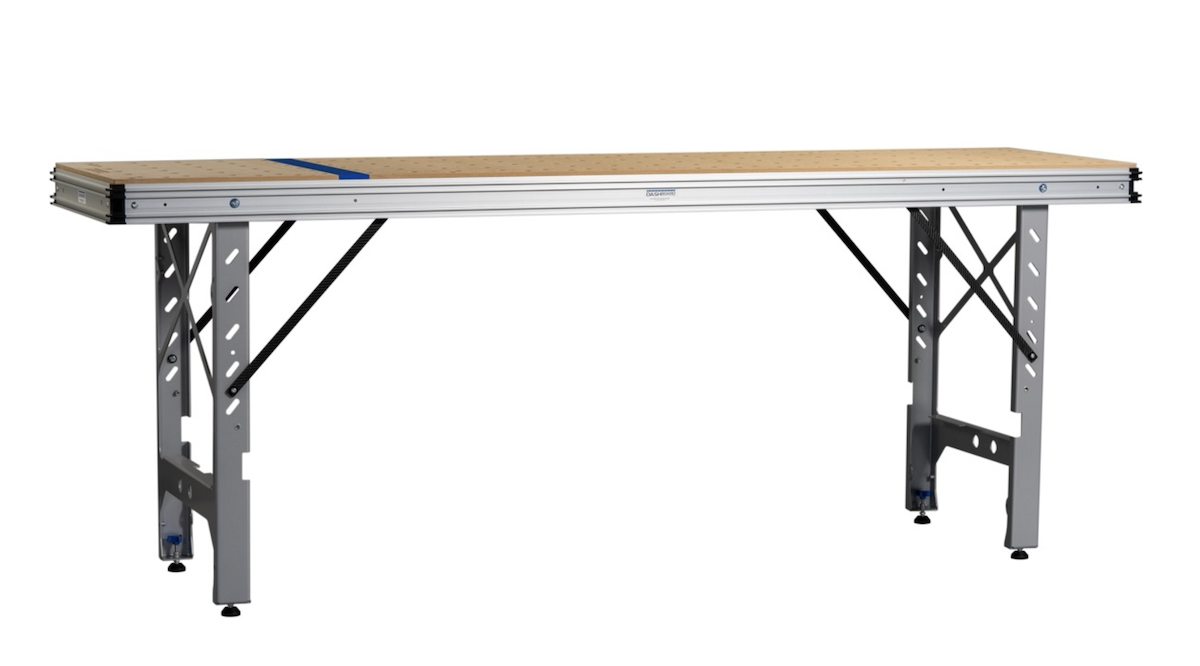
Solid workholding is the whole game with edge banding, and a rigid portable bench with the right clamping accessories lets you present a panel flat or vertical for clean, even application. Lock the panel down, apply the banding steadily, then trim flush once the bond sets for crisp, consistent edges every time.

Straight edge cutting tools like track saws, guide rails, and guide rail brackets give woodworkers a fixed reference so cuts stay true instead of drifting off line. A rigid bench, squared rail, and the right accessories (fences, flip stops, parallel guides) turn one accurate cut into consistent, repeatable results every time.
