Your Cart
Product Title
$0
$0
-
+
Your cart is empty.
Add Discount Code?
Add Cart Note?


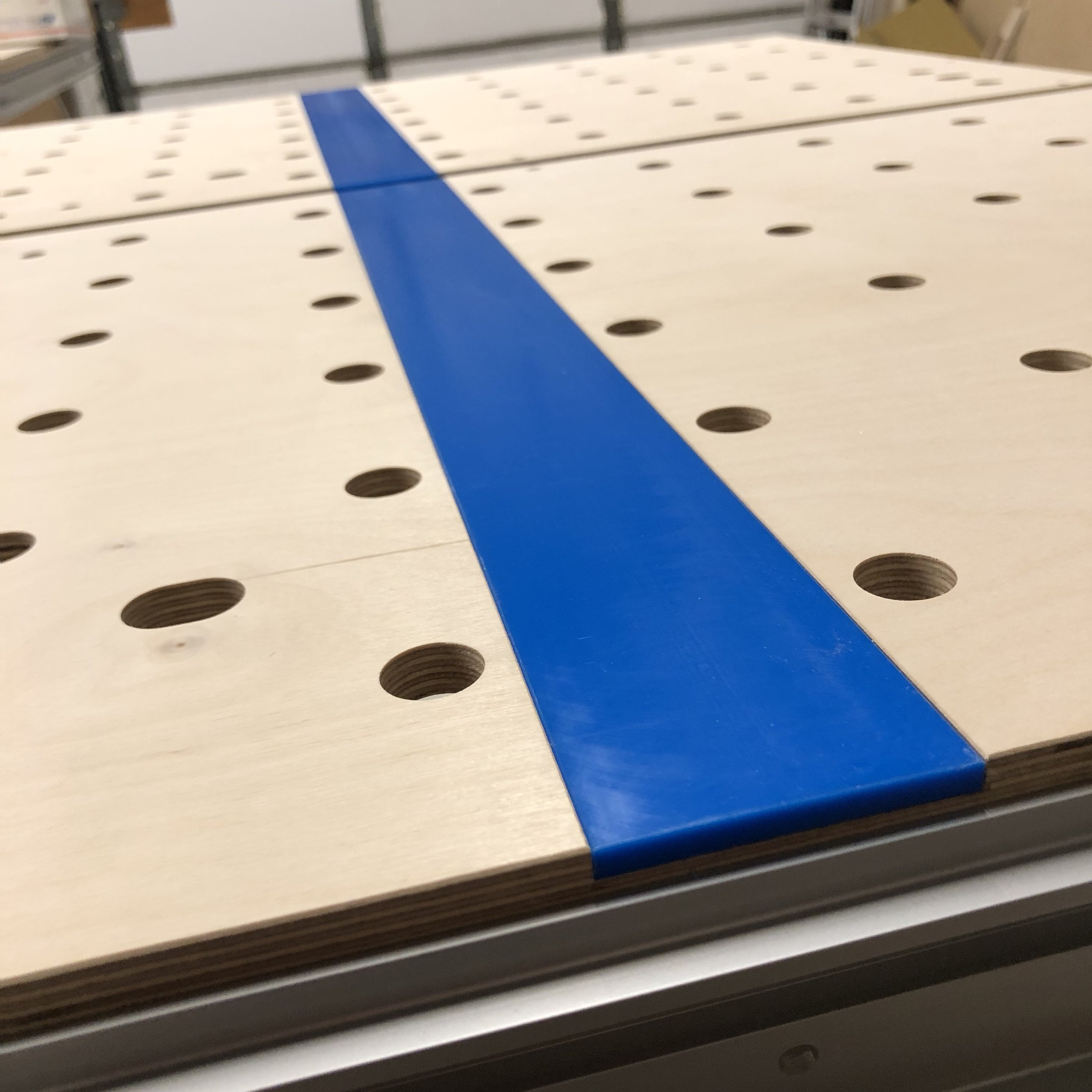
The others use MDF for their bench tops, but this was never an option for the Dash-Board. The typical 18mm thickness is super heavy, and if you try to shave weight by going thinner, it becomes so flexible and fragile that you might as well use a slice of bread.
I chose Baltic birch from the beginning because I needed a material that would be strong even in a 12mm thickness, so the bench could be a more useful size than what Herr Festool keeps pushing off the dock, while maintaining portability.
Combined with our unique, extruded aluminum frame and multiple stretchers designed specifically to be inflexible, the top is kept flat and the bench remains very light for its size, far lighter per unit of surface area than the others.
Baltic birch is also handsome and durable, especially when sealed. (I recommend EM9300 from Target Coatings as an excellent and user-friendly sealer to protect your top from moisture and dirt.) If a repair is ever necessary, a bit of putty, sanding, and refinishing is all you’ll need to restore its glory.
It’s also really helpful that, unlike the others, our concept doesn’t insist that you should carve up your bench top like you’re out to julienne a bag of carrots; all sawing operations are directed to the replaceable cut strip and off the edges of the top, where the only thing you’ll cut apart from your workpiece is air.
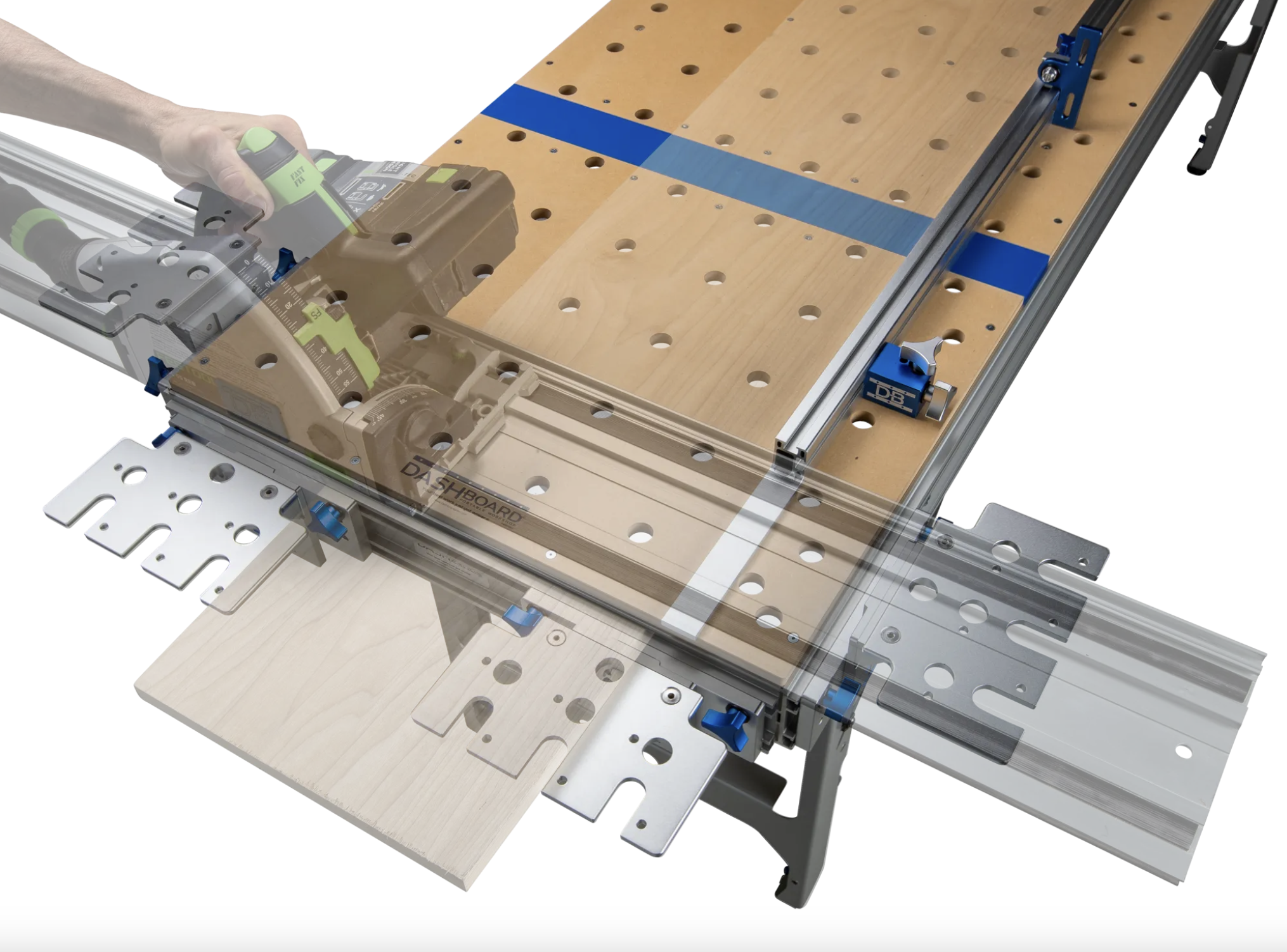
A miter comes from angling the rail or workpiece, while a bevel comes from tilting the saw. Verify your angles in scrap, lock the setup so nothing moves, and every part in the run comes out the same.
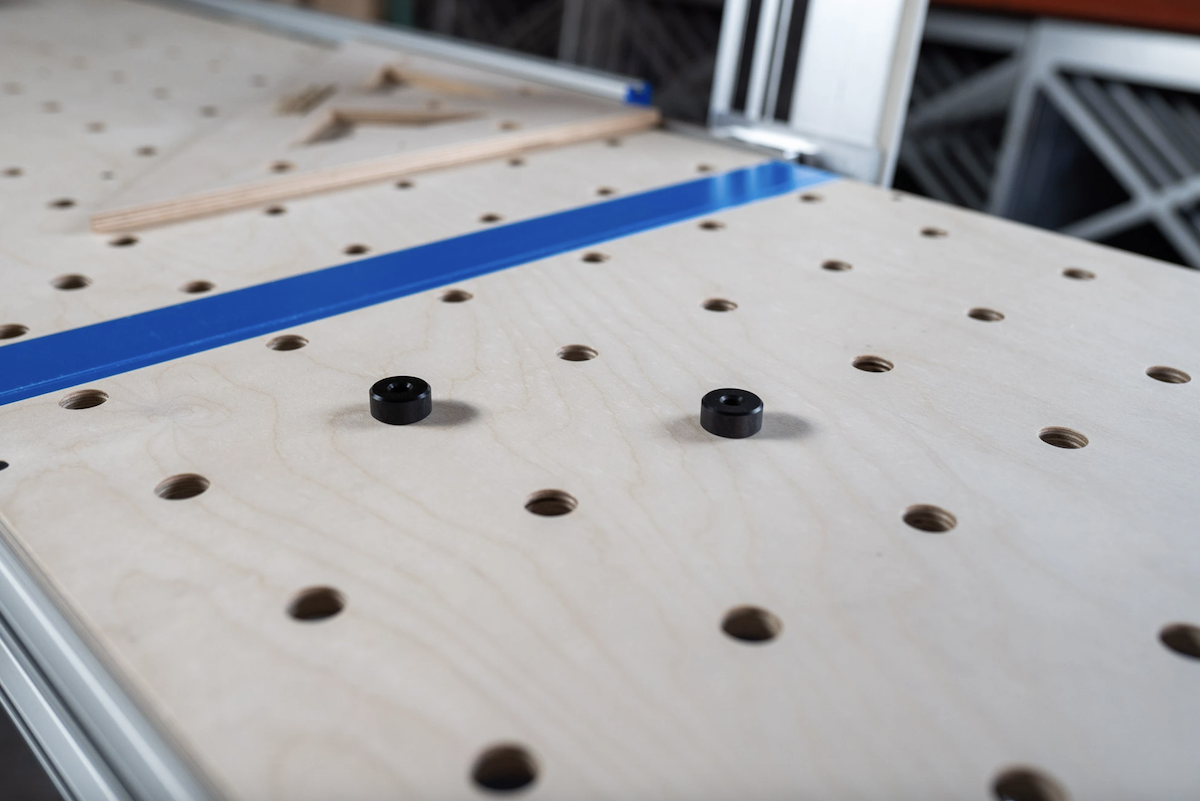
The 96mm grid of 20mm dog holes is the MFT standard Festool set, so any true 20mm/96mm bench shares the same accessories. Since the spacing is fixed, counting holes is more reliable than measuring.
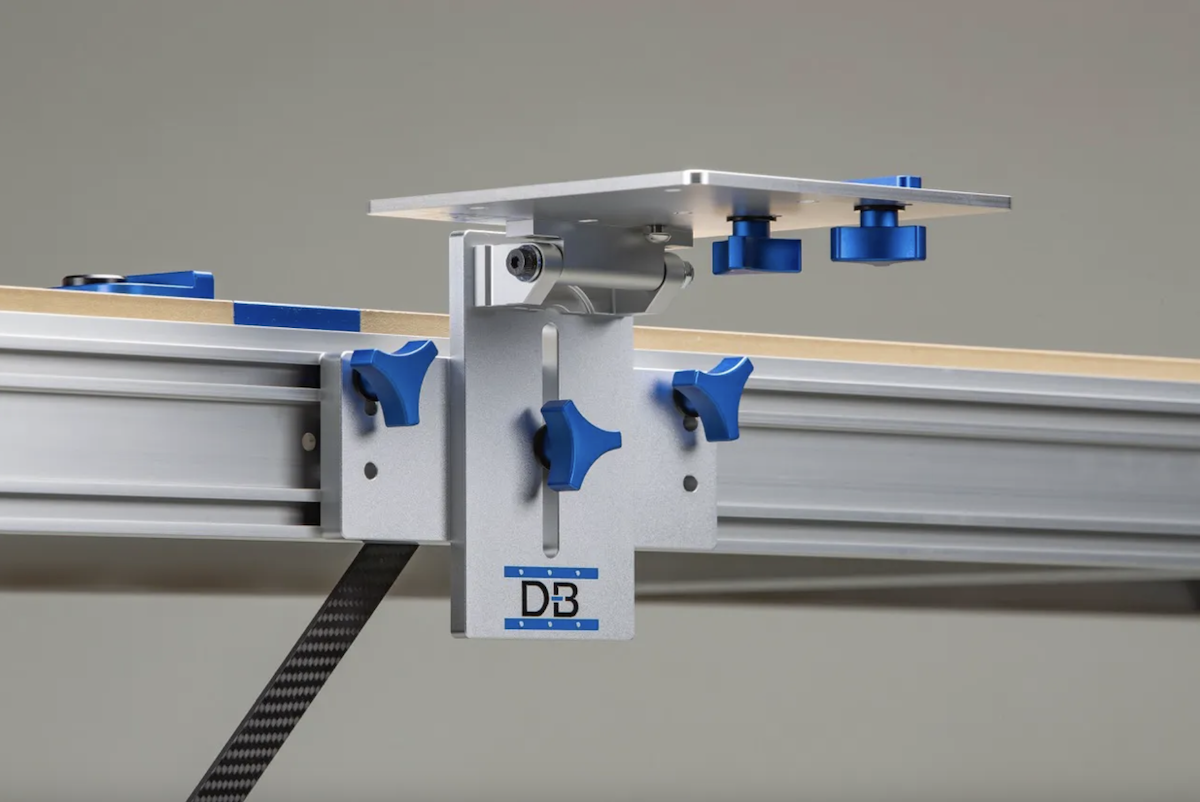
Guide rail brackets hinge your track saw rail to a fixed, repeatable 90-degree position on the bench, so you calibrate square once instead of re-checking it before every cut. Rigid, machined construction with no play is what lets the rail hold that reference through height changes and daily use, turning setup into a one-time task rather than a recurring chore.
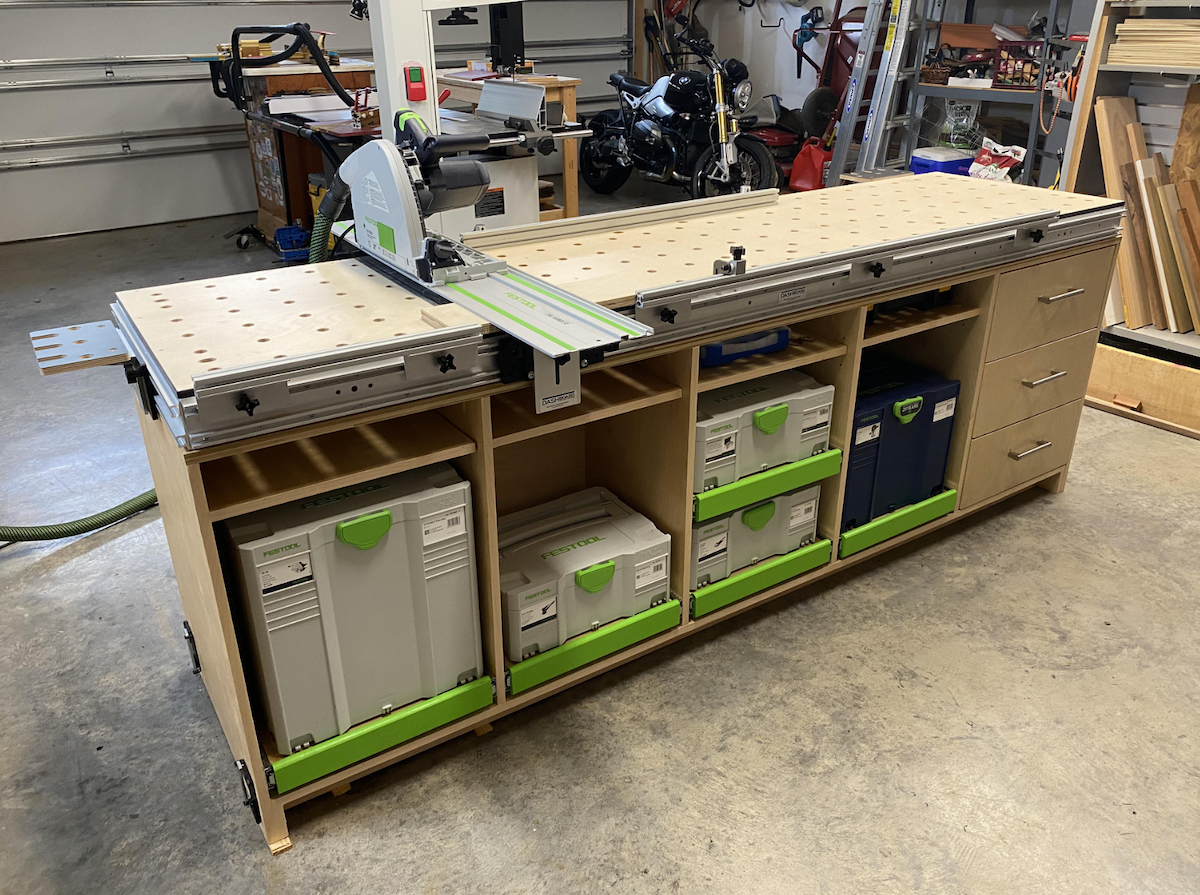
An MFT is a Multi-Function Table built around a perforated 20mm hole grid and guided cutting, letting you crosscut, clamp, sand, rout, and assemble all on one portable surface. It's a strong fit if you do precision crosscuts and sheet goods work, though drift and rigidity issues in some designs are why many owners upgrade to sturdier aftermarket benches and brackets.
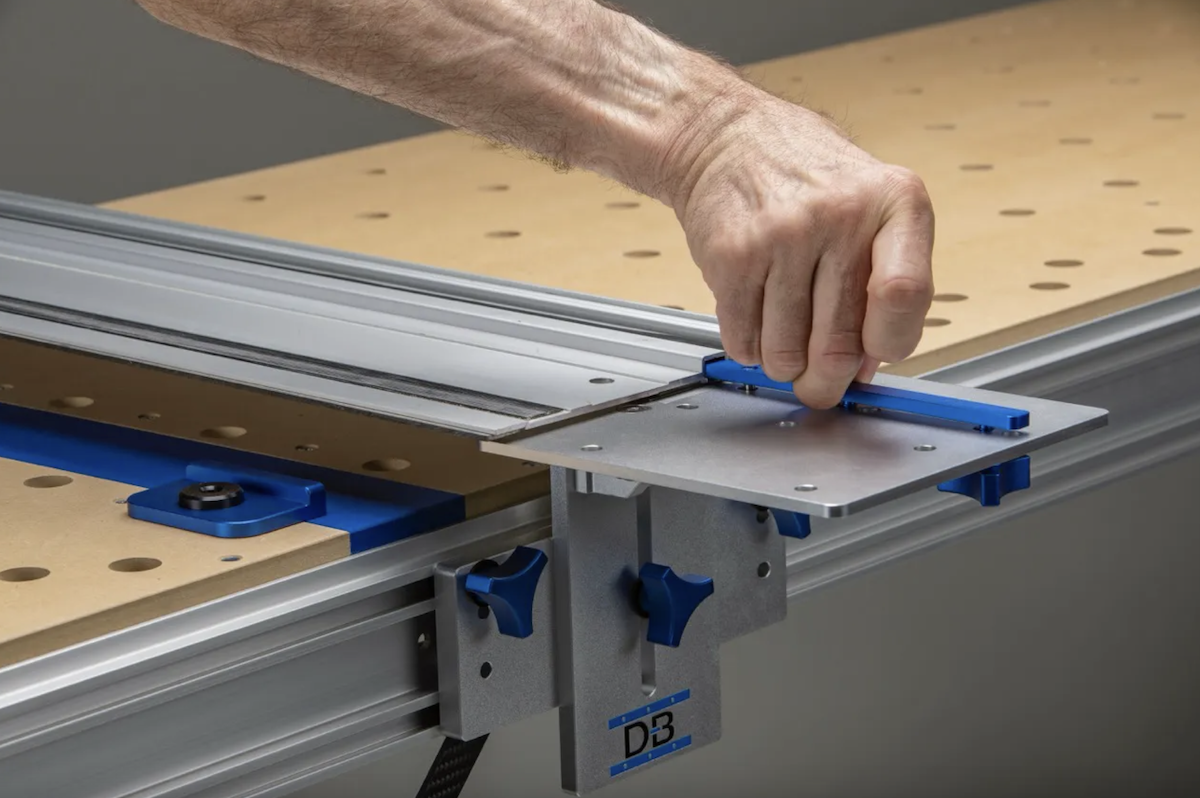
Track saw rail slip almost always comes down to dirty or worn grip strips, dusty or slick surfaces, or not enough downward pressure, and cleaning the strips plus clearing the workpiece solves most cases instantly. For repeatable, no-slip accuracy, clamps work but a fixed bench bracket system locks the rail in place for good.
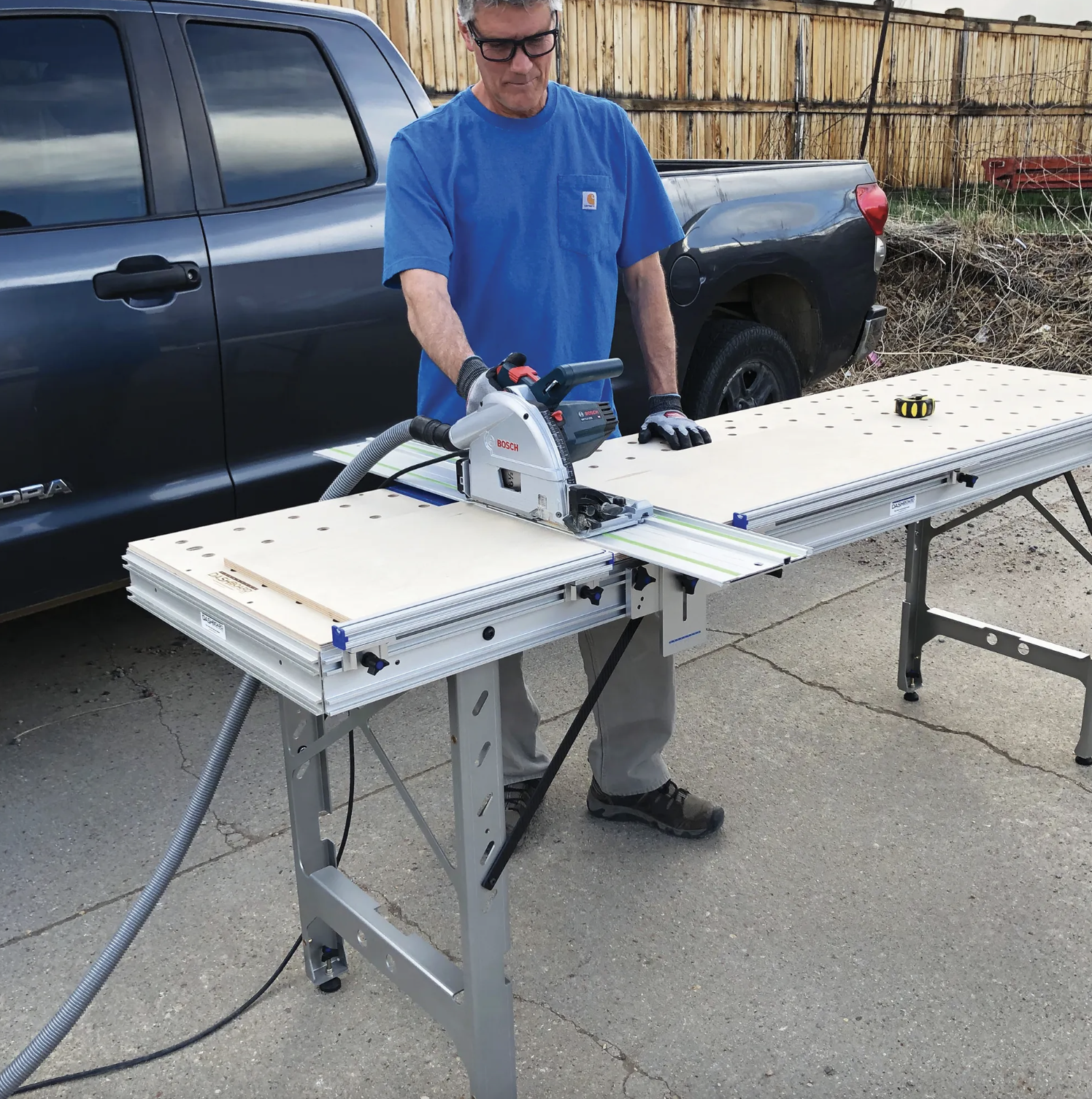
Scribing transfers the wall's true contour onto a cabinet edge so it fits tight against uneven walls and floors, and a portable bench that levels on the spot gives you the stable reference needed to mark and cut that line accurately. Level the piece, scribe to the widest gap, trim with the work fully supported, then test and refine until the fit sits flush.
